Home Blog Page 867

Men Behind Diffie-Hellman Key Exchange Receive Top Computer Science Prize

Pioneering work 40 years ago lead to PGP, TLS, and all your fav crypto protocols. On Tuesday, the Association for Computing Machinery, the nation’s leading organization for computer science, awarded its annual top prize of $1 million to two men whose name will forever be immortalized in cryptography: Whitfield Diffie and Martin Hellman.

The 2015 ACM Turing Award, which is sometimes referred to as the “Nobel Prize of Computing,” was awarded to a former chief security officer at Sun Microsystems and a professor at Stanford University, respectively.

In their landmark 1976 paper, the Diffie-Hellman key exchange was the first to explore ideas of “public-key cryptography.” 

Read more at Ars Technica

Open Source Gets an Official Spot at SXSW This Year

The famous festival SXSW is coming up in March in Austin, Texas and will hold a special event called SX Create, focused on cool gadgets and hardware projects. If you have a badge, this event will be open to you—plus, it’s free and open to the public. How very open source of them.

So, when I overheard that SX Create will host something called an “open source pavilion,” of course I was intrigued. To learn more about what this mystery event might entail, I asked a coordinator for the event, Aaron Haley, to tell me about it.

SX Create is on March 11–13, 2016 from 11:00am–6:00pm at the Palmer Events Center.

Read more at OpenSource.com

Companies that Support Linux: Apprenda

image002

Last fall, Apprenda — an enterprise platform as a service (PaaS) provider — joined the Linux Foundation and the Open Container Initiative. And, just this week, the company announced it has joined Kubernetes, a container management system developed by Google.

According to the blog post, Apprenda plans to incorporate Kubernetes into its current architecture, stating “over the course of the next few product releases, we’ll be merging Kubernetes, the open-source container orchestration system from Google, into our architecture and joining the Kubernetes community.”

As part of our series on companies that support Linux, we talked with Chris Gaun, Director of Strategy at Apprenda, to learn more about the company’s new direction and open source commitment.

What does Apprenda do?

Apprenda is the leader in enterprise Platform as a Service (PaaS). With Apprenda, enterprise development teams can securely deliver an entire ecosystem of data, services, applications, and APIs to internal and external customers across any infrastructure.

Apprenda recently joined the Kubernetes open source community and is incorporating this solution into its existing platform. The combined solution will support the thousands of existing applications that form the bedrock of the enterprise as well as cloud native IoT, next generation front ends and new consumer facing apps needed to compete and grow a business. For organizations already using Kubernetes, this strategy will help them extend the platform to their entire application portfolio.

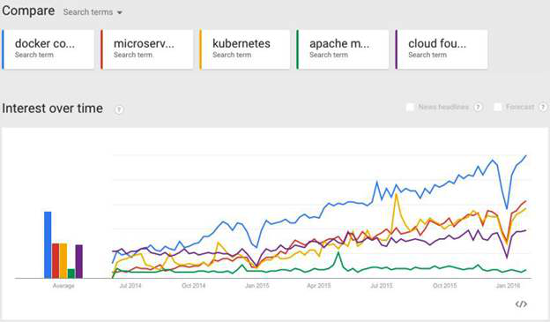
The growth of Docker containers is unmatched in open source history. Combined with orchestration tools like Kubernetes, these components are becoming the de-facto standard of cloud native architecture. The Kubernetes project has authentic groundswell with 660 unique contributors, over 30% of which are not vendors. It is the type of network-effect that cannot be forced or bought. [See the figure above.]

How and why is open source important to Apprenda?  

Apprenda has always leveraged open source projects such as ZooKeeper, Tomcat, and Red Hat Enterprise Linux. However, for existing applications, there was not a standard community-driven open source solution for orchestration. Apprenda used OSS projects and proprietary software from Microsoft to build orchestration for these traditional .NET, Java (EE and SE), and other applications.

With new projects designed under cloud native constructs, open source software like Docker and Kubernetes are providing core de facto standards to build next generation applications. Kubernetes breadth cannot be matched. The project has 12,523 changesets, 628 developer contributions, and 491 companies working on it as of last year. That core for cloud native architecture would be impossible without an open source project powered by both a genuine network effect and deep experience. Google is the largest and oldest case study for running containers in enterprise-wide production. Because they are dealing with some of the most complex problems in IT, Google has always led in defining solutions for distributed systems – Big Data (map reduce), Bigtable, SDN, etc. Apprenda believes that we can contribute to Kubernetes with our years of experience in designing a cloud platform used by Fortune 500 and government organizations.

Why did Apprenda join the Linux Foundation and the Open Container Initiative?

As open source becomes more central to our strategy for adopting cloud native orchestration, Apprenda wanted to join the top foundations for cloud native computing – including the Linux Foundation, Open Container Initiative, and Cloud Native Computing Foundation.

Why is the Open Container Initiative important to Apprenda?ApprendaLogo

The Open Container Initiative is important because it sets standards for containers that can be used by every orchestration solution. The Open Container Initiative will ensure compatibility for containers among different projects.

What interesting trends are you seeing within the project? Is Apprenda involved in other projects?

The fact that multiple foundations are connected is interesting. Apprenda is also part of Cloud Native Computing Foundation.

What do you see as the benefits of collaborative development for such projects? How does such collaboration benefit Apprenda’s customers or users?

Kubernetes had 16 major releases, with an average of 19.2 days between releases, in 2015. Organizations are looking to make their existing enterprise investments more efficient but are, in general, not looking to change the systems of records every month. However, for new cloud native projects that will drive new revenue streams and competitive advantage, delivering new cutting edge platform features is essential. Of all the open source projects for cloud native Apprenda looked at, Kubernetes was the clear leader in diversity of contributors and pulse.

What’s next for Apprenda?

Apprenda is merging Kubernetes into the existing Apprenda architecture and enhancing our cloud native capabilities to ensure an even better experience for customers. This ensures that enterprises have an on-premises PaaS that can deliver a best of breed cloud platform for both existing applications and cloud native applications for Linux & Windows, without compromises. Apprenda brings eight years of research and development around security, governance, policy, compliance and enterprise compatibility/integrations to the table. Apprenda expands beyond Kubernetes, as well, to add support for existing applications.

Apprenda will also overlay existing Kubernetes clusters that customers are using, such as Google Container Engine, and deliver full enterprise platform features.


LFCS: How to Manage and Create LVM Using vgcreate, lvcreate and lvextend Commands – Part 11

In this article we will introduced LVM (Logical Volume Management), a versatile tool to manage and create lvm storage devices that provides scalability, when combined with RAID. We will use three disks of 8 GB each (/dev/sdb, /dev/sdc, and /dev/sdd) to create three physical volumes. You can either create the PVs directly on top of the device, or partition it first.

http://www.tecmint.com/manage-and-create-lvm-parition-using-vgcreate-lvcreate-and-lvextend/

How to Install and Manage Docker on Ubuntu 15.10 & 14.04 LTS

Docker is container-based application framework, which wrap of a specific application with all its dependencies in a container. Docker containers can easily to ship to remote location on start there without making entire application setup. Below tutorial will help you to install and manage Docker on Ubuntu 15.10 & 14.04 LTS operating system.

http://tecadmin.net/install-and-manage-docker-on-ubuntu/


The Evolving Market for Commercial Software Built On Open Source

Structure event photoIt’s really hard to understate the impact of open source projects on the enterprise software market these days; open source integration became the norm so quickly we could be forgiven for missing the turning point.

Hadoop, for example, changed more than just the world of data analysis. It gave rise to a new generation of data companies that created their own software around open source projects, tweaking and supporting that code as needed, much like how Red Hat embraced Linux in the 1990s and early 2000s. And this software is increasingly delivered over public clouds, rather than run on the buyer’s own servers, enabling an amazing degree of operational flexibility but raising all sorts of new questions about licensing, support, and pricing.

We’ve been following this closely over the years when putting together the lineup for our Structure Data conference, and Structure Data 2016 is no exception. The CEOs of three of the most important companies in big data operating around Hadoop — Hortonworks, Cloudera and MapR — will share the stage to discuss how they sell enterprise software and services around open source projects, generating cash while giving back to that community project at the same time.

There was a time when making money on enterprise software  was easier. Once purchased by a customer, a mega-package of software from an enterprise vendor turned into its own cash register, generating something close to lifetime income from maintenance contracts and periodic upgrades to software that became harder and harder to displace as it became the heart of a customer’s business. Customers grumbled about lock-in, but they didn’t really have much of a choice if they wanted to make their workforce more productive.

That is no longer the case. While an awful lot of companies are still stuck running immense software packages critical to their infrastructure, new projects are being deployed on cloud servers using open source technologies. This makes it much easier to upgrade one’s capabilities without having to rip out a huge software package and reinstall something else, and it also allows companies to pay as they go, rather than paying for a bunch of features they’ll never use.

And there are a lot of customers who want to take advantage of open source projects without building and supporting a team of engineers to tweak one of those projects for their own unique needs. Those customers are willing to pay for software packages whose value is based on the delta between the open source projects and the proprietary features laid on top of that project.

This is especially true for infrastructure-related software. Sure, your customers could install their own tweaks to a project like Hadoop or Spark or Node.js, but there’s money to be made helping those customers out with a customizable package that lets them implement some of today’s vital open source technologies without having to do all of the heavy lifting themselves. Just look at Structure Data 2016 presenters such as Confluent (Kafka), Databricks (Spark), and the Cloudera-Hortonworks-MapR (Hadoop) trio.

There’s certainly something to be said for having a vendor to yell at when things go wrong. If your engineers botch the implementation of an open source project, you’ve only yourself to blame. But If you contract with a company that is willing to guarantee certain performance and uptime metrics inside of a service-level agreement, you’re willing to pay for support, guidance, and a chance to yell at somebody outside of your organization when inevitable problems crop up.

The evolving market for commercial software on top of open source projects is something we’ve been tracking at Structure Data for years, and we urge you to join us in San Francisco March 9 and 10 if this is a topic near and dear to your heart.

Tom Krazit is Executive Editor of Structure Events.

Increase your IPv4 security with Fail2Ban and Tinyhoneypot on Debian Jessie

It is a five minutes’ exercise to increase security on an IPv4 addressed machine. The purpose of the setup described in this tutorial is to lock out port scanners and malicious port openers for a period of time.

Read more at HowtoForge

More than 11 Million HTTPS Websites Imperiled by New Decryption Attack

drown-explainerLow-cost DROWN attack decrypts data in hours, works against TLS e-mail servers, too. 

More than 11 million websites and e-mail services protected by the transport layer security protocol are vulnerable to a newly discovered, low-cost attack that decrypts sensitive communications in a matter of hours and in some cases almost immediately, an international team of researchers warned Tuesday. More than 81,000 of the top 1 million most popular Web properties are among the vulnerable HTTPS-protected sites.

The attack works against TLS-protected communications that rely on the RSA cryptosystem when the key is exposed even indirectly through SSLv2, a TLS precursor that was retired almost two decades ago because of crippling weaknesses. The vulnerability allows an attacker to decrypt an intercepted TLS connection by repeatedly using SSLv2 to make connections to a server.

Viper, the Python IoT Development Suite, Is Now Zerynth

The startup that launched the tools to develop embedded solutions in Python language announced the brand change along with the first official release. Exactly one year after the Kickstarter launch of the suite for developing Internet of Things solutions in Python language, Viper becomes Zerynth.

It is definitely a big day for the startup that created a radically new way to approach the world of microcontrollers and connected devices, making professionals and makers able to design interactive solutions with reduced efforts and shorter time…. Now Zerynth celebrates its new name launching the first official release of the toolkit.

Read more at Open Electronics

6 Essential Non-Coding Careers in Open Source

A sign of the maturation of a movement is when careers in it become a possibility. This seems to be the case with open source software. 

… Today we’ve reached a point where open source software is in almost every area of technology. And while we often still think of it as code and developers, a whole ecosystem has evolved around open source—one that includes many full-time careers. These roles are much needed as open source matures, and they allow more of us who believe in the power of collaborative development to get involved.

To help those looking to get involved in open source professionally, here’s a look at some of the most popular and emerging roles.

Read more at OpenSource.com