Home Blog Page 871

90 Percent of All SSL VPNs Use Insecure or Outdated Encryption

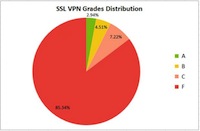
vpn-use-insecureInformation security firm High-Tech Bridge has conducted a study of SSL VPNs (Virtual Private Networks) and discovered that nine out of ten such servers don’t provide the security they should be offering, mainly because they are using insecure or outdated encryption.
Additionally, researchers also note that 74% of certificates are signed with SHA-1 signatures, and 5% with MD5 hashes, both considered outdated. 41% of all SSL VPNs also used insecure 1024 key lengths for their RSA certificates, even if, for the past years, any RSA key length below 2048 was considered to be highly insecure.

Read more at Softpedia

Yahoo Releases CaffeOnSpark Deep Learning Software to Open Source Community

The machine learning software is now open for further development and use by applications outside of Yahoo’s ecosystem.

Yahoo has opened the gates for open-source developers to take advantage of CaffeOnSpark, deep learning software which powers Flickr’s image capabilities. Based on the Apache Spark open source cluster computing framework, Yahoo says the system bolsters the Spark framework, which already comes with Spark MLib, a package of non-deep learning algorithms for classifying data. 

Read more at ZDNet News

Development Release: Xubuntu 16.04 Beta 1

xubuntu-smallThe Ubuntu Release Team has announced the availability of new beta test images for select community editions. The new development release, which carries the designation 16.04 Beta 1, is recommended for testers only and is not considered suitable for daily use.

“This beta features images for Lubuntu, Ubuntu Cloud, Ubuntu GNOMEUbuntu MATEUbuntu KylinUbuntu Studioand Xubuntu. Pre-releases of Xenial Xerus are not encouraged for anyone needing a stable system or anyone who is not comfortable running into occasional, even frequent breakage. They are, however, recommended for Ubuntu flavour developers and those who want to help in testing, reporting and fixing bugs as we work towards getting this release ready.” Additional information can be found in the release announcement

Software Freedom Conservancy Says ZFS Ubuntu Implementation Is Not Legal

Software Freedom Conservancy group has issued a statement saying that the recent implementation of ZFS in Ubuntu is actually a GPS violation. The truth seems to be a matter of perspective.

Ever since Canonical announced its plans to support ZFS (Zettabyte File System), there has been an abundance of messages from users who say they are infringing the GPL license. More precisely, the ZFS is licensed under CDDL and Linux kernel under GPL v2, which in theory would mean that they can’t ship both in the same system.

Telecoms Band Together to Virtualize and Open Source their Network Stacks

A group of telecommunication companies and their software providers have come together to bring Network Functions Virtualization their data centers. NFV is an industry-developed framework to virtualize telecom networks. The group, formed under the umbrella of European Telecommunications Standards Institute (ETSI) is called OSM, which stands for Open Source MANO.

MANO, which stands for Management and Orchestration, is the part of the NFV framework consisting of orchestrator software, virtualized network functions manager (VNFM) and Virtualized Infrastructure Manager (VIM). … The OSM community is to deliver an open source MANO stack aligned with ETSI NFV Information Models. This stack is released under Apache Public License 2.0.

Read more at The New Stack

How to install and configure Solr 5.5 on Ubuntu 14.04

Apache Solr is an enterprise-class open source search platform written in Java which enables you to create custom search engines that index databases, files, and websites. This tutorial will show you how to install the latest Solr version on Ubuntu 14.04. The steps will most likely work with later Ubuntu versions as well.

Read more at HowtoForge

Which Open Source Personality Type Are You?

BUSINESS creativityWorking in teams will naturally foster differences of opinion—and that’s a good thing. Diverse opinions help ensure all ideas are discussed, problem areas are identified, and the focus of the task at hand is in the right place.
However, things are a little different in the open source world. Open source contributors are passionate—they often give things their all and as such usually have their personalities ingrained in what the do. This happens in the outside world too, but there’s a tendency for contributors to be more passionate about something they’re doing in their hard-earned free time.

Read more at OpenSource.com

ARM Linux IoT Gateway Offers Cloud Services Support

Eurotech’s rugged “ReliaGate 10-11” IoT gateway runs Linux on a TI AM3352, offers numerous options, and is supported with an updated ESF 3.3 framework.

Eurotech, which is known here mostly for its Intel Atom-based Catalyst computer-on modules, has announced a new version of its ReliaGate Internet of Things gateway. The ReliaGate 10-11 runs on a Linux stack based on Yocto Project 1.6 and Linux Kernel 3.14, and is supported by a newly updated, Java-based Everyware Software Framework (ESF) 3.3 for remote IoT device management.

Read more at LinuxGizmos

Best Available Programs for Installing Google Drive on Your Linux Desktop.

 When google introduced drive back in 2012 it made a promise to Linux users that an appropriate version will be available in the future.

After 4 years google has still to make an official client for Linux. However, in this tutorial we are going to show you how you can install google drive on your Linux desktop even though there is no official client available. The Linux community of users has tried to come up with a variety of programs that can tackle this issue. 

gdrive

Image source

One of the programs out there is Insync. This program works like Dropbox, allowing the user to maintain his file system and offering share options as well as other features by right clicking on files. The main downside though is that it requires a one-off fee of around $20, but it is still the best product for using google drive on Linux. Instructions are provided on the main site of Insync and are the following: 1. Download the program from its official site: https://www.insynchq.com/downloads


For Ubuntu users

1. Run susdo apt – get remove insync.


2. Delete the data folder of the application at ~/.config/Insync


For Fedora users:

1.Run the sudo yum remove insync


2. Delete the data folder of the application at ~/.config/Insync.


Another good program that solves the issue of using google drive on your Linux desktop is called Rclone. Rclone is program that is built upon a familiar program for Linux users called Rsync. That characteristic is what sets this program apart from the competition. Rclone is a terminal based syncing system. This program allows you to sync your Drive account to your system without a manual procedure. One of its best features is that it works not only with google drive, but also with other cloud based programs like Dropbox, Amazon’s S3 and Microsoft’s One Drive. The process of installing Rclone to your Linux desktop is the following:


1. Download the program from its official site: http://rclone.org/


2. Because rclone comes in the form of a binary file, you need to download the relevant binary from here: http://rclone.org/downloads/


3. After you have downloaded the above files, run rclone file in the zipped folder and you are ready to use rclone.


Another solid choice is a program called Drive. Drive is a terminal push and pull drive client and is designed by a Google engineer. Drive is not designed to sync all of your files, but is more like an on demand push and pull software used mainly for storage purposes. The process of installing this program to your Linux desktop is the following:


1. Download the program from this site: https://github.com/odeke-em/drive


2. Run the cmd/drive file.


3. After you have downloaded the above files you are ready to use Drive.


All of the above programs represent the best alternatives of an official google drive client for Linux users. Users of the Linux community had managed to tackle this issue successfully, providing all the necessary features. In the future we hope that google makes an official google drive client in order to satisfy the Linux community.

ty.

OpenDaylight Beryllium Improves Network Virtualization Support

odl beBy Colin Dixon, Chair of Technical Steering Committee, OpenDaylight

I’m incredibly proud to be able to announce the fourth major release of OpenDaylight: Beryllium. Beryllium is the culmination of the work of more than 600 developers from organizations and countries around the world coming together to define the future of networking. I continue to be impressed (but not surprised) by the passion, ambition, and raw coding power of the OpenDaylight community.

The months since the Lithium release have been significant ones for OpenDaylight. They’ve marked a shift in the interest in OpenDaylight from early adopters, proofs of concept, and kicking the tires to major production deployments, significant end-user adoption, and the development of a vibrant user community. People are actively using OpenDaylight to provide automated service delivery for customers, optimize the network resource utilization of their applications, scale and automate their cloud and NFV deployments, deliver regional networks for smart cities and IoT, as well as simply providing better visibility and control of the networks they already have.

We’ve gone from AT&T announcing that they were using OpenDaylight as their Global Controller to seeing our Advisory Group take flight as a venue for network architects and operators to come together and share their experiences with OpenDaylight, as well as give feedback to the developer community about what features they need most. Perhaps most excitingly, we’ve seen Asia in general and China specifically emerge as major hubs for OpenDaylight.

Our latest user survey has provided data to back up what we’ve known for some time: OpenDaylight transcends individual use cases and geographic regions. It’s not just for data centers, just for service providers, just for enterprises, just for academics, just for North America, or just for Europe. Our users span the developed world and there are people using it in data centers, to control service provider networks as well as to distribute data for universities and academics.

Beryllium has been about living up to these realities with a significant focus on production-ready features including enhanced scale, stability, reliability and performance, but also delivering new functionality and tooling targeting our diversifying community.

Probably the biggest OpenDaylight-wide focus in OpenDaylight was around many of our applications and plugins adopting the clustering technology that we developed in Helium and Lithium as well as enhanced in Beryllium. The end result is that many of our key protocol plugins (including OpenFlow, OVSDB, and NETCONF) are now fully clustered providing highly-available service so that even if one node in an OpenDaylight cluster goes down, another node will take over for it and service will continue uninterrupted.

It’s not just the plugins that picked this up though. Applications ranging from network virtualization to policy-driven networking have completed the stack so that users can provide complete solutions in a highly-available, production-ready manner.

While network virtualization (and in particular Neutron support for OpenStack) are far from the only use case for OpenDaylight, it remains a key focus and in Beryllium we’ve enhanced OpenDaylight’s capabilities so that it can provide support not only for basic ML2 network virtualization, but do so in a highly-available way and provide advanced features including distributed L3 routing, VPNaaS, LBaaS, security groups and support for hardware Virtual Tunnel Endpoints (VTEPs) using the OVSDB protocol.

We’ve also seen enhanced tooling for developers and users alike. While not officially part of the Beryllium release, AT&T has contributed the YangIDE project which allows for easier and more powerful authoring of YANG models. The Time Series Data Repository (TSDR) and Centinel projects provide ways to extract real-time data from OpenDaylight to feed them into big data analytics tools. The NetIDE project provides ways to run SDN applications from other controllers (including Pyretic, Floodlight and Ryu) on OpenDaylight. The Messaging4Transport project provides AMQP (message bus) bindings for the core of OpenDaylight allowing for applications and tools to more easily tab into OpenDaylight events. All of these are directly targeting developers and network operators who are looking to put OpenDaylight into production and deal with the broader software and IT ecosystem around such deployments.

If you want to experience what Beryllium has to offer, you can download it and the check out our ONS Webinar—OpenDaylight Beryllium: Technical Deep Dive on March 3, 2016 at 11:00 am PT.