The developers of Simplicity Linux have announced the release of their Puppy-based distribution which uses LXDE as the default desktop interface. The new version, Simplicity Linux 16.01, ships with the Chrome web browser and DotVPN in place of the Tor Browser. The distribution is available in two editions, Netbook and Desktop: “It’s that time again! A new release of Simplicity Linux is available for download.
By the looks of it, this year, KDE users will have a bunch of awesome and powerful tools, all of them ported to the next-generation Qt 5 UI toolkit, and this is also the case of the famous digiKam image editor.
digiKam is an open-source, cross-platform and free image editor software piece, as well as a versatile image viewer and browser tool that is usually shipped by default with most KDE desktop environments setups on several important Linux kernel-based operating systems…
NayuOS is a new operating system built by Nexedi that aims to provide users with a Chrome OS free alternative.
There are a few Chrome OS alternatives out there, so NayuOS is not exactly arriving without any kind of candidates. The team doesn’t change anything at the base of the system, meaning that it’s a Gentoo and Chromium OS-based project, but the developers have made modifications to the default apps and to the settings.
There is always room for another Linux distribution
Today the European Consortium announced a step towards Exascale computing with the ExaNeSt project. Funded by the Horizon 2020 initiative, ExaNeSt plans to build its first straw man prototype in 2016. The Consortium consists of twelve partners, each of which has expertise in a core technology needed for innovation to reach Exascale.
ExaNeSt takes the sensible, integrated approach of co-designing the hardware and software, enabling the prototype to run real-life evaluations, facilitating its scalability and maturity into this decade and beyond.
Google has developed an open source infrastructure software build using its Go language. The ad-flinger has released the Seesaw load balancer for Linux, built to replace two existing systems. Code has been released to GitHub here.
Google’s site reliability engineer, Joel Sing, blogged that Seesaw would increase the availability of service and reduce the management overhead.
Explain Kubernetes in just five minutes? Impossible, thought Jamie Duncan. But he did it anyway.
In this video, Duncan says containers are “making us rethink how we deliver software.” But they have their limits. Scaling them requires an important tool for extending their purchase: Kubernetes. To some, it’s the future of IT—one in which containers play an increasingly important role.
Running rm -rf / on any UEFI Linux distribution can potentially perma-brick your system.
As a public service announcement, recursively removing all of your files from / is no longer recommended. On UEFI distributions by default where EFI variables are accessible via /sys, this can now mean trashing your UEFI implementation.
For as long as there have been data centers, they have been designed around the CPU. Now, thanks to speedy non-volatile flash storage, that topology is changing, and it may have major repercussions to the IT industry, warned an article in the Association for Computing Machinery’s flagship publication Queue.
“The arrival of high-speed, non-volatile storage devices, typically referred to as Storage Class Memories (SCM), is likely the most significant architectural change that data center and software designers will face in the foreseeable future,” wrote Mihir Nanavati, Malte Schwarzkopf, Jake Wires, and Andrew Warfield. “Piles of existing enterprise datacenter infrastructure—hardware and software—are about to become useless (or, at least, very inefficient).”
This article will discuss launching a new MySQL instance using the Tesora Database as a Service Platform, which is based on OpenStack Trove. It’s designed to run entirely on OpenStack, with the goal of allowing users to quickly and easily use the native features of a database without the burden of handling complex administrative tasks. Cloud users and database administrators can provision and manage multiple database instances as needed.
Step 1: To use OpenStack Trove, first you will need to have Guest Images for each datastore and version. These images are loaded to OpenStack Glance (where virtual machine images are stored) and registered with Trove. Some guest images for development and testing are available for download from OpenStack at http://tarballs.openstack.org/trove/images/ubuntu.
Step 2: Next, using the Tesora DBaaS platform dashboard, you log in as the admin user. To create a new instance, simply click on the “Launch Instance” button that triggers a screen where you create an instance name, the flavor – which is the kind of machine or the virtual machine – and then how big a database volume to allocate to this instance and finally type of database. If you want to increase the size of the instance later on, you can.
Step 3: One of the features of the Tesora DBaaS platform is that as you create instances, you can also specify users and database. Once the instance has been created, it requires an IP address. At this point, by clicking on the instance name, you can then see the properties, when it was created, its resources, as well as the end point information for connecting to the database.
That’s it, you’re done. It’s that simple. We’ve created this “Configuring & Managing MySQL Instances: Launching a New Instance” video demonstration, below, so you can see for yourself how easy it is to launch a new MySQL instance with the Tesora DBaaS platform — database as a service based on OpenStack Trove.
Criminals and rogue gamers have become the main sources of distributed denial-of-service attacks, as the peak attack size reaches 500G bps.
Distributed denial-of-service attacks used to be reserved as the not-so-subtle tool of vandals and hacktivists.Increasingly, however, other actors are using DDoS attacks for a variety of ends. Criminals clog networks to demonstrate their capabilities and extort money from companies. Rogue gamers attack rivals to gain advantage in online arenas.

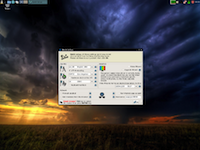 The developers of Simplicity Linux have announced the release of their Puppy-based distribution which uses LXDE as the default desktop interface. The new version, Simplicity Linux 16.01, ships with the Chrome web browser and DotVPN in place of the Tor Browser. The distribution is available in two editions, Netbook and Desktop: “It’s that time again! A new release of Simplicity Linux is available for download.
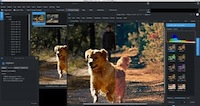 By the looks of it, this year, KDE users will have a bunch of awesome and powerful tools, all of them ported to the next-generation Qt 5 UI toolkit, and this is also the case of the famous digiKam image editor.
 NayuOS is a new operating system built by Nexedi that aims to provide users with a Chrome OS free alternative.
 Explain Kubernetes in just five minutes? Impossible, thought Jamie Duncan. But he did it anyway.
 Criminals and rogue gamers have become the main sources of distributed denial-of-service attacks, as the peak attack size reaches 500G bps.