Home Blog Page 939

How To Find Out if AES-NI (Advanced Encryption) Enabled on Linux System

The Intel Advanced Encryption Standard (AES) or New Instructions (AES-NI) engine enables extremely fast hardware encryption and decryption for openssl, ssh, vpn, Linux full disk encryption and more. How do I check support for Intel or AMD AES-NI is loaded in my running Linux in my Linux based system including openssl?

Read more…

Try a Fresh Web Browser!

The web browser market is dominated by a few mature heavyweights: Google Chrome, Mozilla Firefox, Internet Explorer, and Safari. But they are not for everyone. And there are a myriad of other web browsers that are worth investigating. With a smorgasbord of web browsers out there, there should be one to cater for your own specific requirements. If you want to experiment with some fresh and innovative web browsers, this article should be helpful.

There are good reasons to experiment with alternative web browsers. As they have a much smaller user base, they are less susceptible to being targeted by spyware and other nasties. Alternatively, you might choose to use more than one web browser for different purposes, which can help combine speed and reliability. You might want to use one for business, work and school, another for general use, one only for your social media interactions. Developers of new web browsers are often more willing to experiment with new ideas.

<A HREF=”http://www.linuxlinks.com/article/20151214050919712/NewWebBrowsers.html“>Full article</A>

Linus Torvalds Announces Linux Kernel 4.4 RC5, Final Release Coming Early 2016

A few moments ago, December 14, the father of the Linux kernel, Mr. Linus Torvalds, was proud to announce the release and immediate availability for download and testing of the fifth RC (Release Candidate) build of the upcoming Linux 4.4 LTS kernel. According to Mr. Torvalds, Linux kernel 4.4 LTS Release Candidate 5  is yet another normal release that consists of assorted bugfixes and core improvements. Nothing stands out in RC5 with the exception of a fairly bad core bug introduced in the previous Release Candidate build, which has now been fixed. 

Read more at Softpedia Linux News

Idea – Icons To Remember The Basic Programming Functions

The idea is simple. Learning a programming language as a novice can be difficult. I therefore wonder if we can make it easier for them. Maybe its easy as associate an image or an icon with the keywords. So for the control flow statement ‘for’ I made a quick example icon. Here ‘i’ is the variable that goes from start to end and ‘for’ is the keyword.

forIcon

You Can Now Have All the Fedora 23 Linux Editions Into a Single Live ISO Image

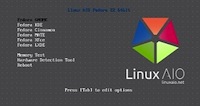
fedora-23-linux-editions-into-a-single-live-iso-imageToday, December 12, we’ve been informed by the developers of the Linux AIO project about the release and immediate availability for download of Linux AIO Fedora 23 Live DVDs.

The new build of the Linux AIO Fedora Live DVD is now based on the latest stable Fedora Linux release, Fedora 23, and includes all the important editions, such as Fedora 23 Workstation (GNOM),, Fedora 23 KDE, Fedora 23 MATE Compiz, Fedora 23 Xfce, Fedora 23 Cinnamon, as well as Fedora 23 LXDE. There are two Linux AIO Fedora 23 Live DVD ISO images available for download…

How to use snapshots, clones and replication in ZFS on Linux

In the previous tutorial, we learned how to create zpool’s and a ZFS filesystem or dataset. In this tutorial, I will show you step by step how to work with ZFS snapshots, clones, and replication. Snapshot, clone and replication are the most powerful features of the ZFS filesystem.

Read more at HowtoForge

DevopsWiki A list of Linux programming and administrator guides for those interested in Devops

The DevopWiki is a Github project with list of Bash/Python/C programming tutorials, Linux system administration Guides and Scripts. It can be cloned and used by anyone who is interested in Linux system administration. See more at 

https://github.com/Leo-G/DevopsWiki

BEGINNER’S GUIDE FOR LINUX – Start Learning Linux in Minutes

Welcome to this exclusive edition “BEGINNER’S GUIDE FOR LINUX” by TecMint, this course module is specially designed and compiled for those beginners, who want to make their way into Linux learning process and do the best in today’s IT organizations. This courseware is created as per requirements of industrial environment with complete entrance to Linux, which will help you to build a great success in Linux.

Read More: Tecmint

Linux Foundation Scholarship Recipient: Eduardo Mayorga Téllez

eduardo cropThe Linux Foundation regularly awards scholarships as part of its Linux Training Scholarship Program — totaling more than $100,000 in free training over the past 5 years. In this continuing series, we talk with recent scholarship recipients and share their stories with the hope of inspiring others.

Apply by June 30 for a  2016 Linux Foundation Training (LiFT) Scholarship. Learn more. 

Eduardo Mayorga Téllez, a Teens in Training scholarship recipient, is 17 and lives in Nicaragua. He plans to become a Linux kernel developer and use his knowledge of device drivers to help Linux support the most hardware possible. He says he often hears classmates and colleagues argue that Linux is not suitable for them because they cannot make the most of their hardware. Eduardo says he will change that.

How did you become interested in Linux and open source?

Just a few years after I used my first computer (around 12 years ago), the technical guy who helped fix my computers told me that I should try out a different operating system. He noted my general interest in computers and, of course, I was open to new experiences.

I was excited about Linux being highly customizable and well suited for programmers.

What Linux Foundation course do you plan to take with your scholarship?

I took LFD331 (Developing Linux Device Drivers) because I am curious about operating systems’ internals, and I want to help Linux support every piece of hardware out there.

How do you expect to use the knowledge you gain from the course?

I aim to become a kernel developer, and I plan to contribute to the kernel upstream. To work in such an important and big project with so many talented people is just appealing, so I want to be part of it.Lf-logo-new

What are your career goals? How do you see a Linux Foundation course helping you achieve those goals?

I want to do academic research in the field of theoretical computer science, specifically Formal Hardware Verification. I initially thought of kernel hacking as a hobby. However, I then realized training on Linux device drivers would give me a better understanding of the interaction between hardware and software. So, the benefit is not necessarily direct, but complements other knowledge I’ll get in the future.

What other hobbies or projects are you involved in? Do you participate in any open source projects at this time?

I am involved in another big community: OpenStreetMap. I like maps and geodata. I also maintain several Fedora packages, some of them being related to GIS.

Read more:

Linux Foundation Scholarship Recipient: Kyri’ay Vanderpoel, Whiz Kid

Linux Foundation Scholarship Recipient: Erich Noriega, SysAdmin Superstar

Linux Foundation Scholarship Recipient: Eva Tanaskoska, Women in Linux

Linux Foundation Scholarship Recipient: Enrique Sevillano, SysAdmin Superstar

Linux Foundation Scholarship Recipient: Anthony Hooper, Whiz Kid

Linux Foundation Scholarship Recipient: Yashdeep Saini, Developer Do-Gooder

Linux Foundation Scholarship Recipient: Kiran Padwal, Kernel Guru

Facebook to Open-Source AI Hardware Design

12057171 n copyFAIR is more than tripling its investment in GPU hardware as we focus even more on research and enable other teams across the company to use neural networks in our products and services. As part of our ongoing commitment to open source and open standards, we plan to contribute our innovations in GPU hardware to the Open Compute Project so others can benefit from them…

Big Sur is our newest Open Rack-compatible hardware designed for AI computing at a large scale. In collaboration with partners, we’ve built Big Sur to incorporate eight high-performance GPUs of up to 300 watts each, with the flexibility to configure between multiple PCI-e topologies. Leveraging NVIDIA’s Tesla Accelerated Computing Platform… 

Read more at Facebook Code