 Freescale has just announced they are joining the Real Time Linux (RTL) Collaborative Project as a Gold Member. Freescale joins Google, National Instruments, OSADL, and TI with a significant investment because they value the strategic importance of this open source project and the benefits it creates for their customers.
For years, Freescale has offered full Linux board support packages to their customers which represent a broad range of industries including robotics, telecom, manufacturing, aviation and medical.
Linux adoption for embedded applications is following a similar path to what we saw in mobile, where smartphones and their apps drove new experiences and even further commercial success of Linux (via Android) in the marketplace. In the case of embedded systems, advances in artificial intelligence, image and voice recognition are sparking massive innovations based on the power, flexibility and cost advantages of embedded Linux systems. For example, in drones and cars we are seeing a convergence of advanced image recognition and artificial intelligence giving way to pilotless and driverless navigation. From robotics, to drones, to cars, a real time Linux kernel is key to the foundation of these soon-to-be commercially available solutions.
With increased deployment of these devices in the field, support requirements escalate and mainline code gets costlier to maintain. Companies spend more and more development time maintaining patches instead of innovating. These costs and delayed innovation ultimately hurt the consumer.
The Linux Foundation helps companies solve this dilemma by helping them leverage open source to share the cost of R&D and build open source platforms that allow them to innovate faster.
The research and development required to implement full real time support in the Linux kernel mainline is substantial. The RTL Collaborative Project supports Preempt-RT maintainer, Thomas Gleixner and his team of RT experts to do this R&D and push critical code upstream to be reviewed and eventually merged into the mainline Linux kernel where it will receive ongoing support. This will save the industry millions of dollars in development and will focus their efforts on innovation instead of patching kernels.
As a Gold member, Freescale will lead at the Gold level and have voting rights on resource allocations while also participating in the quarterly code plan review, and the twice yearly face-to-face at the Embedded Linux Conference. In addition, Freescale will have the option of sending an engineer for one month to work alongside Gleixner and his team.
I applaud Freescale, a long time member of The Linux Foundation and advisory board member of the Yocto Project, for joining this important project and reinforcing their long standing commitment to the Linux and open source community.

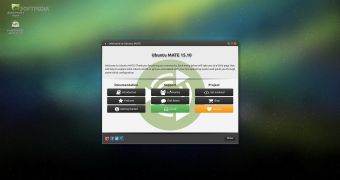 The Ubuntu MATE developers usually post details about donations from the previous month, and regardless of what people might think, it’s actually a very interesting read. The same is true for the month of October.
 MagicStick is a new PC-on-a-stick device that promises to be the most powerful launched until now, and it’s in the middle of a very successful Indiegogo campaign. To top it all off, MagicStick will also provide the users with the option of loading it with Ubuntu Core.