
 Long before former Chrome OS team leader Sundar Pichai was promoted to CEO of Google earlier this year, there was rampant speculation that Alphabet’s chief subsidiary would eventually merge its browser- and cloud-oriented Chrome OS desktop operating system with the native-app focused Android. So it was hardly a surprise last week when the Wall Street Journal reported that Google has been doing just that for the last two years, and will demo a version of the merged Android/Chrome next year in anticipation of a 2017 release. The story was based on a recent analyst call with Pichai, in which an unnamed source quoted him as saying: “Mobile as a computing paradigm is eventually going to blend with what we think of as desktop today.”
The subsequent pseudo-denial of the WSJ story this week in a Chrome blog post by Hiroshi Lockheimer, Google’s SVP for Android, Chrome OS, and Chromecast, was met with widespread skepticism. The incredulity was reinforced by comments from Alphabet Executive Chairman Eric Schmidt at a TechCrunch summit event held this week in Beijing. Speaking of a potential Android/Chrome merger, Schmidt said: “Technology can move forward where it’s possible you can wrap one into the other. I think the distinctions that are so hardcoded today are allowed to become less hardcoded.”
Yet, these apparently conflicting visions of the future of Google’s two Linux-based operating systems do not directly contradict each other. Lockheimer does not deny that the platforms are merging, and his claim that there are no plans to discontinue Chrome OS is also supported by the WSJ’s Alistair Barr, who wrote: “Chrome OS will remain as an open source operating system that other companies can use to make laptops, and Google engineers will continue maintaining it.”
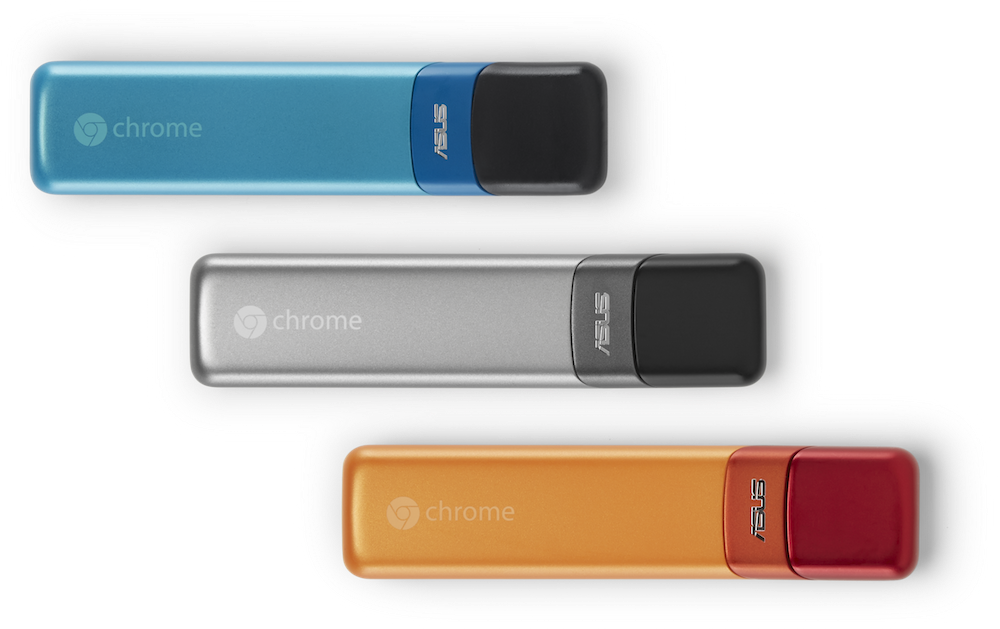
Lockheimer promises “dozens of new Chromebooks in 2016,” and notes that the Chromecast-like Asus Chromebit will arrive in the coming weeks for only $85. He also promised upcoming improvements to Chrome OS including “a new media player, a visual refresh based on Material Design, improved performance, and of course, a continued focus on security.”
Intentionally Unclear?
It’s unclear to what degree Google permitted the merger disclosure, but there’s a good possibility it was intentional, as was Lockheimer’s response. This does not appear to be an internal turf conflict. Pichai rose to the top thanks to his success with Chrome OS, and Lockheimer was previously Android’s VP of engineering.
Google’s somewhat contradictory statements about the merger may risk a decline in Chromebook sales, but it also creates uncertainty for competitors like Apple and Microsoft. Apple has made it clear it intends to keep its iOS and OSx platforms separate, while Microsoft has so far struggled with its strategy of creating a unified Windows and Windows Phone platform. Microsoft now seems more focused on moving Windows 10 into Internet of Things applications rather than pushing its phones.
Google may also want to create a moving target for Android vendors who want to steer Android in different directions or push alternate Linux OSes, but still need to maintain app compatibility. These include Samsung, which is keeping Tizen in its back pocket, as well as the growing ranks of CyanogenMod and OnePlus (Oxygen OS) licensees, and Chinese vendors like Xiaomai, which are pushing their own versions of Android.
It’s also possible that Google is still not entirely sure how its two very dissimilar OSes will be merged. Confusing matters further, Business Insider quotes an unnamed source as saying Google may actually field three different platforms: Chrome OS, Android, and a new desktop-ready hybrid.
Signs of a Merger
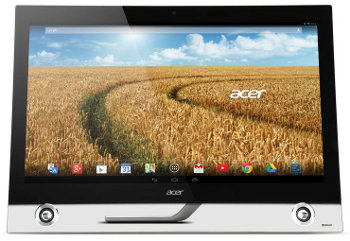 The WSJ suggests that the confluence of the two platforms will occur primarily with Android, which would add more support for keyboards, mice, and larger displays, as well as improvements to multi-windowing. Simply choosing Chrome as your default browser already brings much of the Chrome OS experience to Android.
It is unclear to what extent Android might be able to borrow from Chrome OS’s much more robust security. Limited security and lack of big-screen optimized applications have been major obstacles to Android-based desktop and notebook systems.
So far, most of the signs for a potential merger have occurred on the Chrome OS side rather than Android. In April of this year Google opened up its App Runtime for Chrome (ARC), enabling the porting of Android apps to Chrome OS. In addition, the Chrome OS Chrome Launcher 2.0 features a more Android-like Material Design, and integrates Android’s Google Now personal assistant.
There was not much evidence of a Chrome OS infusion in the most recent Android 6.0 “Marshmallow” release. However, Google recently furthered its vision of Android on the desktop with the Pixel C, a keyboard-convertible tablet developed by Google’s Chromebook team.
Android Rising
Even if Android is released as a desktop-ready OS with some Chrome OS features, there is no reason to doubt Lockheimer’s claim that Chrome OS will also continue as a separate entity — at least for a few years. Chrome OS is thriving in the educational market, and Chromebooks appear to be outselling all other PCs that ship with Linux distros. Chromebooks now comprise 3 percent of the desktop OS market, according to IDC.
Breaking into Microsoft’s desktop turf is still just as hard as carving out mobile market share from Android and iOS. So ranking third after Windows and Mac OSx, which represents 7 to 10 percent of the market according to various studies, is no mean feat.
Nevertheless, Chromebook sales pale in comparison to that of Android devices, and the platform’s advance may be blunted by a new wave of much cheaper $200 Windows 10 notebooks. Considering that user expectations have already forced Google to back away somewhat from its purist vision of Chrome OS cloud computing, it’s hard to argue with a strategy that attempts to push Android upward onto the desktop rather than pushing Chrome’s cloud-oriented vision onto Android.
If unification is Google’s goal for Android and Chrome OS, the company continues to risk fragmentation by spinning off other market-specific versions of Android, including Android Wear, Android TV, Android Auto, and the recently outed, lightweight Brillo OS for IoT. More Android spinoffs may be on the way — according to Ars Technica, Google is prepping a full-fledged Android Automotive IVI spec for cars in addition to its Android Auto connectivity spec, which principally resides on Android mobile devices.
 Vivaldi, a web browser developed by one of the Opera founders and his team, has finally moved out of the initial stages of development and into Beta. It’s a been a long road for Vivaldi, but the new browser is now taking shape, and we can get a better glimpse at what’s to come.
 The Manjaro Community announced, through the voice of Stefano Capitani, the maintainer of Manjaro-Budgie, that a new version of the Budgie flavor has been released and is now ready for download.