 After many delays, all four major mobile Linux alternatives to Android have finally arrived on smartphones. Mozilla’s Firefox OS was first out of the gate two years ago, followed by Jolla’s Sailfish OS, and this year they were joined by the first Ubuntu and Tizen phones. Yet, a fifth open source mobile Linux platform may have already eclipsed them all. The CyanogenMod flavor of Android is rapidly expanding from its role as the most popular alternative mobile phone mod for flashing onto Android phones to being a much sought after pre-installed OS.
This week, a UK-based company called Wileyfox joined a growing number of third-party vendors to tap the commercial Cyanogen OS 12.1 version of the fully open source CyanogenMod with its new Swift and Storm phones. Meanwhile, a Lenovo-backed Chinese startup called ZUKannounced plans to ship an international version of its ZUK Z1 phone equipped with the same 12.1 Cyanogen build starting in September. CyanogenMod 12.1 is based on the latest Android 5.1.1 Lollipop platform.
All three phones, which join earlier Cyanogen OS based phones, such as Micromax’s Yu Yureka and Yu Yuphoria, are notable for their affordable pricing, especially given the considerable feature set. This is particularly true of the $200 Wileyfox Swift. The $315 Storm and the $299 and up ZUK Z1 are also notably affordable in a market where high-end phablets like Samsung’s Galaxy S6 Edge+ and Galaxy Note 5 each go for $700 to $800 off contract.
Wileyfox’s Swift taps Qualcomm’s quad-core, 1.2GHz Snapdragon 410 system-on-chip, which uses ARM’s 64-bit Cortex-A53 architecture. The 5-inch, 1280×720-pixel phone ships with 2GB RAM and 16GB flash. Other features on the device include 13- and 5-megapixel cameras.
The similarly dual-SIM, 4G LTE Storm moves up to a 1.5GHz, octa-core, Cortex-A53 Snapdragon 615 with 3GB RAM and 32GB flash. The 5.5-inch IPS display advances to 1920×1080 pixels, and there are 20- and 8-megapixel cameras. Both Wileyfox models are on sale in Europe, the Middle East, and Africa, with shipments due in September (Swift) and October (Storm).
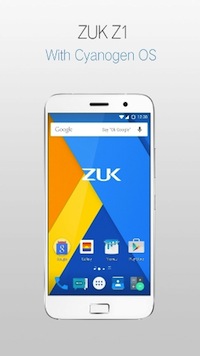 The international Cyanogen version of the ZUK Z1 is almost identical to the recently shipped Chinese version, which racked up over 2 million pre-orders in the first week alone, according to the company. The Z1 adopts a quad-core Snapdragon 801, which uses 32-bit Krait cores similar to Cortex-A15. You get 3GB RAM, 64GB storage, and a 5.5-inch HD screen like the Storm’s. Both 13- and 8-megapixel cameras are included. The phone will ship next month in “Europe, America, the Southeast Asia and the Middle East,” according to ZUK.
Cyanogen Gets Modded: OnePlus Oxygen OS
The new Cyanogen OS phones should help Cyanogen, Inc. rebound from a feud with OnePlus, which was set to ship the Cyanogen-based OnePlus phone in India earlier this year, but pulled out when Cyanogen and Micromax launched the Yu phones into the same market. The OnePlus is available with Cyanogen as an option, but the company is also pushing its own Oxygen OS version of Android, especially on the new OnePlus 2. This revised model, which has now reached 4 million reservations, according to OnePlus, offers an Oxygen OS 2 build. The 5.5-inch, octa-core Snapdragon 810 based OnePlus 2 is on sale via an invite-only scheme for $329 to $389, and will ship in the United States in the coming weeks.
According to an Androidpit comparison, the two Android clones are actually fairly different. Cyanogen OS is the most customizable, while Oxygen OS is less so, but is a bit more stock. Still, both lack the bloatware that has led some 50 million users to flash their Android phones with CyanogenMod in the first place.
For years, the CyanogenMod project has been improving its variations of the same Android Open Source Project (AOSP) codebase that fuel’s Google’s Android builds. Some 9,000 software developers have optimized CyanogenMod builds for an ever-expanding list of Android phone models, under the leadership of hacker extraordinaire Steve Kondik. CyanogenMod adds some features not available on most Android phones while still letting its technically sophisticated users strip out vendor-supplied software and UI skins.
In 2013, the open source project split off a commercial Cyanogen Inc. entity, which has so far tapped funding of more than $110 million, including a May investment from Foxconn. In April, Cyanogen announced a previously tipped distribution agreement with Microsoft, although Cyanogen didn’t say whether this included a rumored investment in the company. Later this year, Cyanogen OS phones will integrate Microsoft software and services including Bing, Skype, OneDrive, OneNote, Outlook, and Microsoft Office.
Cyanogen OS is closely based on CyanogenMod and is mostly open source; however, as explained in this AndroidCentral comparison, Cyanogen OS adds some proprietary code, as do almost all Android vendors. Cyanogen OS is only available on phones that have licensed the OS and can’t be downloaded from nightly builds, as can CyanogenMod. This also means it’s slightly less bleeding edge than CyanogenMod, which usually taps the latest goodies from AOSP before they appear on major commercial Android phones.
Android Holds Its Own in Slowing Smartphone Market
Cyanogen’s expansion is occurring in a tightening smartphone market, in which China has followed the trend of slowing smartphones sales in the United States, Europe, and other major markets. According to an IDC smartphone report released this week — the same week in which a plunging Chinese stock market rattled markets worldwide — China’s smartphone shipments will grow only 1.2 percent in 2015, compared to 2014 when they increased 19.7 percent. Worldwide, smartphone shipments are expected to grow 10.4 percent to 1.44 billion units, compared to IDC’s previous estimate of 11.3 percent growth.
The only major market left where smartphone sales continue to sizzle is India. Google’s moderately priced Android One phones are still primarily aimed at South Asia, where Samsung has had some success with its own Tizen-based Samsung Z1 phone. Jolla is also entering the market, and BQ will launch its Aquaris E5 Ubuntu Edition phones in India next week on Snapdeal.
According to IDC, Android’s current worldwide smartphone market share of 81.1 percent will continue at that rate through 2019. Then again, IDC stands out from the crowd by continuing to be fairly bullish on Microsoft’s Windows Phone, which it now projects to reach 3.6 percent share by 2019. Good luck with that. The same goes for all our beloved mobile Linux wannabes, especially those that don’t run Android apps out of the box.

 4MParted, a Linux distribution based on the 4MLinux and GParted, is now at version 13.1 Beta and is ready for download and testing.