
Home Blog Page 1092

Community Blog Series: INSTEON

Share

INSTEON logoINSTEON provides networking technology for the connected home. Its product line includes more than 200 devices, from lamp dimmers to thermostats and LED bulbs. With its dual-band and simulcast mesh technology for wireless communication, INSTEON has created an Internet of Things platform for lighting control, leak, door and motion sensing, garage door control and other applications.

Why did you join the AllSeen Alliance?

In November 2014, Insteon joined the AllSeen Alliance to utilize its collaborative and transparent forum to help develop the future of the Internet of Things. The AllSeen Alliance provides an open, universal language that supports the booming home automation industry and Insteon’s ultimate goal is to make life simple by bringing all connected devices into elegant command, so it’s a perfect alignment of efforts.

What does your company hope to achieve through its participation in the Alliance?

Above all, Insteon wants home automation to be simple. Our incorporation into the Allseen Alliance furthers that goal. Insteon joined the AllSeen Alliance to continue to expand its 200+ offerings and provide seamless integration with new devices for current and future Insteon customers. With the countless connected devices coming to market, Insteon is working with the AllSeen Alliance to provide simple and reliable technology that can be leveraged by others.

Read more at AllSeen Blog
VMware Unleashes Linux on the (Virtual) Desktop

Hey, boss, there’s no reason to keep your penguinistas caged! Or pay Microsoft

VMware’s released Horizon 6 for Linux, thereby making it possible to deliver virtual Linux desktops.…

Read more at The Register

Apple’s Decision to Open Source Swift Met with Developer Applause

swiftApple this week made an announcement worthy of applause and, indeed, the news received the loudest applause of opening day at WWDC. The company said it will open source its programming language Swift and allow developers to compile programs on Linux.

This is a smart move for Apple and a big win for the developer community. Apple has long valued developers, but this week adopted a key strategy that has become the defacto approach to programming languages: open source. For broad adoption, technology companies have realized they need to temper friction. By open sourcing Swift and allowing developers to innovate with it on any platform they use, Apple will benefit from increased innovation. With open source, you never know who will use your technology and that is a good thing. Open sourcing a programming language means easier adoption but also more collaboration as coders can share more easily, identify bugs and use the language on their platform of choice.

It’s inspiring to see companies like Apple and Microsoft validate the work we’ve been doing for more than two decades. As we move deeper into the complexities of the Internet of Things (IoT), mobile computing and automotive technologies (key battlefields in tech), Apple, Microsoft, Facebook, Amazon, Google and many others look to open source software to advance innovation in these areas. Equipping the developer community with what it needs is the right way to go. Congratulations to Apple on this important move.

Rancher Labs Raises $10 Million for Docker Container Cloud Tech

VIDEO: Shannon Williams, co-founder of Rancher Labs, discusses how the open-source startup is building new technology to distribute and scale containers across the cloud.

Read more at eWeek

2016 Cadillac Models Will Get CarPlay and Android Auto

CarPlay and Android Auto announcements are finally starting to pick up in recent months — and the latest is Cadillac, which just announced it’ll be deploying both across the line starting with 2016 models. The add-ons come on the heels of an upgrade for Cue, Cadillac’s homegrown connected car platform, which gets a faster processor to try to alleviate some of the lag woes that the current system has been derided for.

CarPlay comes first, which will be in 2016 models with Cue’s 8-inch display at launch; this leaves out the current-generation SRX crossover, which is getting redesigned early next year. Android Auto follows later on. (A Cadillac spokesman tells The Verge that owners will be able to bring their 2016 cars into a dealership…

Continue reading…

Read more at The Verge

Distribution Release: Clonezilla 2.4.2-10

Steven Shiau has announced the availability of a new version of Clonezilla. The Clonezilla distribution is a Debian-based live disc for manipulating, copying and restoring images of hard disks and disk partitions. The new release, Clonezilla 2.4.2-10, offers bug fixes for restoring partitions on machines with UEFI support….

Read more at DistroWatch

Dell XPS 13 with Ubuntu Has the Most Awesome Boot Animation You’ve Ever Seen

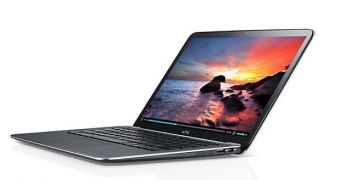
The new Dell XPS 13 Developer Edition that ships with Ubuntu is a great piece of hardware, but another cool thing has been revealed about it. From the looks of it, the laptop comes with the greatest boot animation you have ever seen.

Boot animations on Linux systems have been used for a long time, but they have become increasingly rare in the past few years. Now that many of the PCs and laptops come with SSDs, you don’t even get a chance to see the animation loading as ever… (read more)

How to Install Scilab 5.5.1 on Ubuntu 15.04

Scilab is a free and Open Source software for numerical computation providing a powerful computing environment for engineering and scientific applications.

Read more at HowtoForge

How IBM Watson Apps are Changing 7 Industries

Watson transforms industries
0 watson intro title

Since IBM opened IBM Watson to the world last year, it has been building a developer and entrepreneur community around the development platform. The community now consists of more than 280 commercial partners, as well as tens of thousands of developers, students, entrepreneurs and other enthusiasts that are generating up to 3 billion monthly API requests on Watson.

To read this article in full or to leave a comment, please click here

Read more at IT World

Mesosphere Community Edition Now on AWS, Google and Azure Up Next

A community edition of Mesosphere DCOS, the first cluster-based, container-oriented operating system, is being made available to customers for deployment on Amazon’s AWS platform, Mesosphere executives confirmed to The New Stack. This, as a commercial edition of Mesosphere for on-premises and hybrid cloud deployment, exits public beta and enters general availability.

“There are no limits to it. It’s a very robust package,” said Mesosphere Senior Vice President Matthew Trifiro, “and it’s available for free. We’re also accepting early access applications to Google Cloud Platform and Microsoft Azure.”

Mesosphere makes use of the Apache Mesos scheduler to orchestrate the distribution of related and unrelated processes over clusters of disparate servers. With this first general release of the community edition, this distribution will take place over Amazon’s servers, although technically the system was designed to extend container-based and microservices deployments across clouds. Once the Google and Azure licenses become generally available, conceivably all three public clouds can be leveraged by a single cluster scheduler simultaneously.

Read more at The New Stack