Home Blog Page 1094

This IKEA Table Has Ubuntu-Powered Multitouch PC Inside

There is a site out there that list and catalogues the work of people who modify IKEA furniture. One of the latest coffee tables posted on IkeaHackers runs Ubuntu GNOME 15.04.

Even if IKEA furniture is not the best stuff that you can manipulate and modify, it seems that there is a real trend. Numerous people buy pieces of furniture from IKEA and modify or repurpose it. In this case, a small and cheap coffee table has been modified to be a Touch Coffe Table. Its creator, Jul… (read more)

5 Practical Ways for Legal Counsel to Advise Developers on Open Source

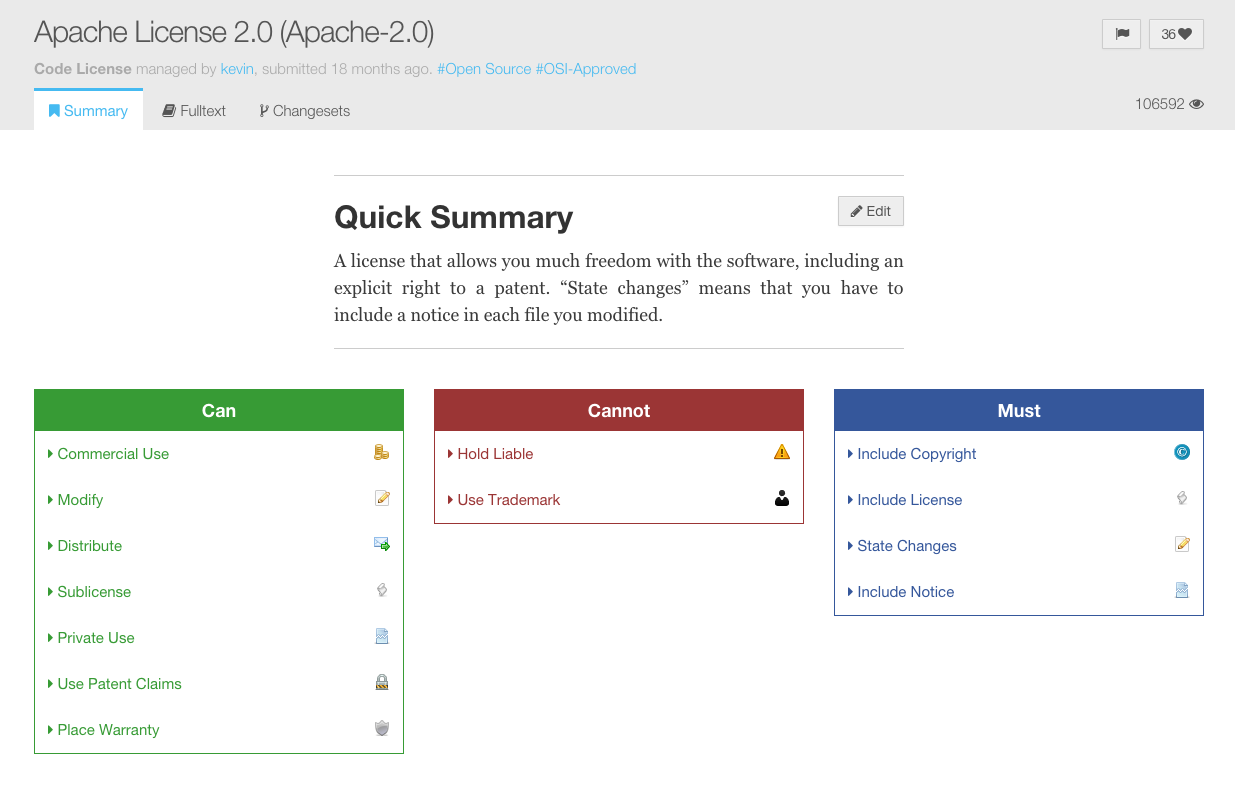
Apache license playbook

As an essential member of an open source compliance program’s advisory board, legal counsel provides numerous services to ensure a company’s products comply with open source copyright and licenses. They provide approval around the use of FOSS in products, for example, advise on licensing conflicts, and advise on IP issues associated with the use of FOSS. (See the previous article, 5 Essential Duties of Legal Counsel in an Open Source Compliance Program.)

But legal counsel also provides practical advice to a company’s software development team that enables developers to make daily decisions related to open source licenses without having to go back to the legal counsel for every single question. These resources may not answer every single question or concern that arises from engineering teams working with FOSS. But they provide a good basis from which developers can operate largely independently with occasional recommendations and guidance from attorneys directly.

5 Practical Ways for Legal Counsel to Advise Developers

1. License Playbooks: An easy to read and digest summary of FOSS licenses intended for software developers.

License Playbooks are summaries of most used or most popular FOSS licenses. They provide easy to understand information about these licenses such as license grants, restrictions, obligations, patent impact and more. License playbooks minimize the number of basic questions sent to legal counsel and provide developers with immediate information about these most-used licenses.

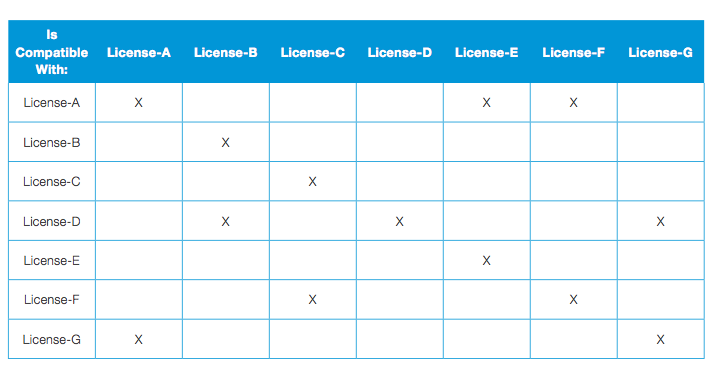
2. License compatibility matrix: An easy method to learn if License-A is compatible with License-B. Such a matrix can be used by software developers as they merge code incoming from different projects under different licenses into a single body of code.

Many of the FOSS licenses, while different, may be compatible such that certain uses or combinations may be allowed. One example is the 3-clause BSD license (also referred to as the “modified BSD license”) is compatible with the GNU GPL. This means that 3-clause BSD source code can be combined with a source code that is licensed under the GNU GPL; the new program resulting from the combination would have to be licensed under the GNU GPL terms however. Other FOSS and proprietary software licenses are not GPL-compatible since they have conflicting terms and conditions. There are good references on the Internet for pointers to compatibility, but it’s often best if internal counsel create a matrix based on the company’s view of compatibility. References such as the Free Software Foundation’s GPL-compatible Free Software List can be helpful.

license compatability matrix

3. License classification: Some companies opt to classify the most used licenses in their products under a few categories to provide an easy way to understand the differences and the course of action needed when using source code provided under these licenses.

Example categories include:

  • Pre-approved Licenses, along with any practical guidance, internal conditions or policies on usage, or other requirements to use without approval in your company’s solutions.

  • Licenses Requiring Manager’s Approval

  • Licenses Requiring Legal Counsel Approval

  • Prohibited Licenses.

Some companies with larger scale FOSS operations will often use an Open Source Review Board as a required review step before approving certain licenses.

4. Software interaction methods: A guide to understand how software components available under different licenses interact, and if the method of interaction is allowed per company compliance policies.

As part of the compliance process, there is usually a step in the process where your legal or  Open Source Review Board conducts an architecture review of the software component in question. The goal of the architecture review is to understand how that specific software component interacts with other software components and the method of interaction which may trigger license clauses in various free software or other open source licenses.

5. Checklists: An easy way to remember what needs to be done at every gate in the development and compliance processes. When it comes to open source compliance, several checklists can be developed and used before approving the open source code being merged into the product’s source code repository.

The following checklist is an example used before developers make source code available on the website (license obligation fulfillment):

  • All source code components have a corresponding “compliance ticket” in your bug/issue tracking system.

  • All compliance tickets have to be approved by engineering and legal (or appropriate per your pre-approved/required review policy).

  • All compliance tickets are clear from any sub-tasks attached to them. (all other issues/questions/requirements have been resolved)

  • Notices for all of the software components (e.g. attributions) have been sent to Documentation team and included in product documentation (including written offers, if required).

  • Legal has approved the written offer notice (if required) and overall compliance documentation.

  • Source code packages have been prepared and tested to compile on a standard development machine.

  • Source code provided is complete and corresponds to the binaries in the product and is ready to post to your website.

Many of these elements will also become part of your company’s core compliance training and should be used to educate developers in your company about your policies and process for implementing FOSS into products or solutions. Many companies that have been implementing FOSS at scale will require their developers to complete a FOSS compliance online training course that the legal team will be involved in reviewing and or preparing. FOSS compliance does not have to be difficult and with clear processes, training and practical guides for your developers it can become a simple streamlined part of your product development cycle.

For more on this I recommend Ibrahim Haddad’s full white paper, Practical Advice to Scale Open Source Legal Support.  I’d like to hear how your company is handling compliance and what areas in the industry could use more focus. You can find me on Twitter at @mdolan.

Read more:

Part 1: Why Companies That Use Open Source Need a Compliance Program

Part 2: 5 Essential Duties of Legal Counsel in an Open Source Compliance Program

The Open Compliance Program at the Linux Foundation aims to help organizations achieve compliance faster and cheaper by providing a number of resources that are accessible via http://compliance.linuxfoundation.org.

3 Financial Companies Innovating With Open Source

Bloomberg professional

The financial industry is on the verge of an open source breakthrough, say three companies on the cutting edge of the trend. Traditionally very secretive about their technology, banks, hedge funds and other financial services companies have begun in the past few years to talk about how they use open source software in their infrastructure and product development. They have also been steadily increasing their contributions to upstream projects in the form of user feedback and code. And some companies have initiated their own open source projects or released portions of their own code to the open source community.

“The finance industry is just starting to catch onto open source and the open source way of developing software,” said Andrew Phillips, director of technical operations at LMAX Exchange, the world’s leading MTF for electronic foreign currency trading (FX) based in London. “In the next few years, there may be a bit of a sea change as people start pulling together and providing more of a common platform.”

Though many financial institutions have the same basic infrastructure requirements – largely based on Linux – they’ve long employed their own engineering teams to build these systems from the ground up, and at great expense. But stricter regulations on the finance industry after the 2007/08 financial crisis have caused IT departments to tighten their belts. So IT managers are starting to leverage open source tools and components to cut down on custom development costs and maintenance overhead.

This trend is most evident in the adoption of open source automation tools as institutions move to the cloud, says Vinod Kutty, senior director at CME Group. Enterprises are now looking to big web companies such as Google, Amazon Web Services, and Facebook as the model for their own cloud migration – adopting the same open source tools for devops and continuous integration such as Puppet, Chef, and Ansible.

“We’re starting to question what’s really necessary to keep proprietary and what’s not,” Kutty said. “If we don’t need to build it ourselves, then we might as well use open source tools.”

LMAX Exchange, Bloomberg, and CME Group are three companies in the financial industry that are innovating with open source tools and components, and moving past merely consuming open source software to becoming contributors. Below is more information on how they’re using open source today in vastly different markets and how they plan to increase their use and contributions in the future.

LMAX Exchange
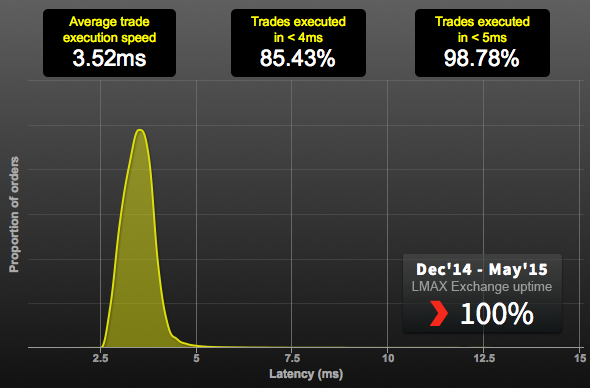
LMAX-low-latency-dataRanked as the UK’s fastest growing technology firm in 2014, LMAX Exchange is the first to introduce exchange-style execution, with complete pre and post-trade transparency, to the FX market. Servicing brokers, funds, corporations, asset managers and banks, LMAX Exchange is the emerging benchmark for global FX and is creating a level playing field for all market participants.

Launched in 2010, LMAX Exchange has been intentionally built on Linux and open source from the start, a departure in an industry ingrained with secrecy. The company has released the code for seven of its own components – including a Java library for “high performance inter-thread communication” that helps speed transaction times in massive, data-intensive applications. And its engineers contribute back upstream to the open source components they use, as well.

“We’re very open – we tell people what we’re running and how we’re running it. We speak at events and set up our own seminars,” said Phillips.

“There’s been some discussion among senior techies that we should open source the entire platform and we have various thought experiments about what would happen if we did that,” he said. “We don’t think the world would change much for us. It’s how we put the components together and our low latency magic that sets us apart. The source code is an incidental by product of what we built.”

LMAX Exchange has benefited greatly from its open source approach. It’s seen steadily increasing contributions to its projects from other financial services firms using them. The company has an easier time recruiting developers. And customers tend to come to them now, having heard about the company from their IT departments which use LMAX Exchange open source components.

“As time has gone by, just like the Linux kernel itself, a lot of people have contributed improvements that benefit them and the whole thing has gotten faster,” Phillips said. “Some core components are now running at tens of millions of transactions a second.”

It’s only a matter of time until the rest of the financial industry catches on to the benefits of open source, he says.

“The financial industry is realizing that if they don’t get on board, they’ll be left behind,” Phillips said. “They’re going to be producing buggy software and it will take them longer and get more expensive, when they could be applying the state of the art. And the state of the art is open source.”

Bloomberg

Bloomberg is a global software, data, and media company based in New York that delivers real-time financial data, news, and analytics through the Bloomberg Professional service (also known as The Terminal), as well as its media properties. Though the company is largely a consumer of open source technologies throughout its infrastructure and products, it is also increasingly contributing to open source projects like Hadoop and Solr, and is a member of the Linux Foundation and the Core Infrastructure Initiative. Bloomberg has even released some of its own technologies to the community.

“We’re not at the point where we have a formal open source program, but over the last three or four years we have begun to strongly encourage developers to use open source tools to solve problems, especially if we can contribute back to those projects as well,” said Kevin Fleming, an open source evangelist in the CTO office at Bloomberg.

Within the past year, for example, Bloomberg started using Hadoop to access its price history databases – essentially a spreadsheet that contains hundreds of billions of rows of security pricing data. Many Bloomberg applications query the database in order to generate charts of historical data on demand.

In the past, all of Bloomberg’s data crunching was done using databases and tools built internally. But in seeking open source alternatives to help lower development and support costs, their engineers found that Hadoop had great potential. The catch was that it didn’t quite meet the sub-second response times needed to produce the actionable information their customers needed to give market advice and make trades. The software could take minutes to respond if one of the data containers needed for the batch job was unavailable, Fleming said.

“We needed to figure out how to make the machine notice that a node isn’t responding and re-do that query on a different node so we could get a response back more quickly,” he said.

They found an open feature request for the same functionality from within the Hadoop community and decided they would tackle the problem. In collaboration with Hortonworks – which provided the development time while Bloomberg did the testing – they made the necessary changes and switched to Hadoop.

By working with the community they were able to make changes to the software that improved their products faster, and ultimately lowered their development costs.

“Our primary focus is to try to leverage as many of those open source projects as we can,” Fleming said.

CME Group

CME Group started using Linux more than ten years ago in order to scale out its IT infrastructure and lower costs at the same time. In the process the company learned that moving off of proprietary systems yielded performance benefits as well, said CME Group’s Kutty. So they became increasingly engaged in working with the Linux community to implement changes that further improved performance.

Open source technologies have since moved up the stack and CME Group has begun evaluating its open source options as it moves to the cloud, Kutty said. The focus has primarily been on adopting open source automation tools but the company is also interested in advancing common open source components in the financial industry focused on open, highly performant messaging, such as Aeron.

As a result, he said, “over the past few years our legal team has become more familiar with open source licenses, and we’ve gradually given more employees the ability to contribute to open source projects.”

The company plans to continue to develop software internally that’s core to its business, and divest itself of the commodity tools that it doesn’t need to build from scratch. Over time he expects they’ll begin to engage more with the open source communities surrounding the tools they’re using.

“Different open source communities have different maturity levels,” Kutty said. “What you find is that when some communities are young, if they’re not exposed to large customers they have a narrow perspective of how the operational concerns work.”

Developing a good working relationship with new open source communities takes time for companies, and CME Group is in the early stages of this now with cloud and automation tools. When the company first started working with the Linux community, for example, CME Group would request a feature and a kernel developer would ask why they needed it, he said. “Now they understand there are practical concerns in different environments. There’s usually a good reason why we ask for a feature. The conversation has gotten easier.”

Kutty expects CME Group’s relationship with open source communities further up the stack to continue to evolve, as well. If CME Group isn’t directly contributing code to an open source project at first, it’s often supporting the project financially. Contributions come as the relationship develops.

“Most people think contributing to open source means you actually write code and submit it but there’s an advantage as a customer to asking vendors to do that for you,” Kutty said, “and in many cases that’s what we’ve done.”  

BFQ Is One Step Closer To Being Merged Into The Linux Kernel

For years the BFQ I/O scheduler has been trying to get in the mainline kernel and it looks like they have an action plan for getting accepted upstream…

Read more at Phoronix

Introducing RapidDisk 3.0

Being a new contributor to this site, I wanted to take a bit of time to introduce myself and my project. My name is Petros Koutoupis. I am a software developer by profession and for years have been developing and maintaining my open source Linux project, RapidDisk.


What is RapidDisk?

A simple answer to a simple question: RapidDisk is a collection of kernel modules and a binary administration utility. It enables the user to dynamically create, resize & remove RAM drives while also enable RAM as a front end Write-Through cache to slower devices. As of version 3.0, RapidDisk now supports the ability to map non-volatile regions of memory as persistent RAM-based block devices.


Why use RapidDisk?

The idea is simple. Leverage high speed hardware to achieve higher than normal speed storage drive throughput. Besides, you can use your existing hardware; that is, you need not purchase anything new to use it. Deploy it in your data center or your home office, the funcionality and the outcome are all the same. The best part of the software is that it is free. Another advantage is when enabling it over volatile memory, it allocates memory only as it is needed. For instance, if you enable a RAM drive that is 32 Gigabytes in size but are only using 4 Gigabytes, only 4 Gigabytes of system memory is consumed.


How simple is it to use RapidDisk?

If you wish to create a new RAM drive of 2 Gigabytes type:

$ sudo rapiddisk –attach 2048

To remove it:

$ sudo rapiddisk –detach rxd0

Looks pretty straight forward, right?


What else can you tell me about RapidDisk?

Also introduced with release 3.0 is a RESTful API for third parties to integrate the technology into their environment or products.

The project and its features continue to grow and more individuals / companies are starting to leverage those features in both production and development. For more information, please visit: RapidDisk.

How To: Install/Upgrade to Linux Kernel 4.0.5 in Ubuntu/Linux Mint Systems

The Linux Kernel 4.0.5 is now available for the users, announced Linus Torvalds. This Linux Kernel version comes with plenty of fixes and improvements. This article will guide you to install or upgrade to Linux Kernel 4.0.5 in your Ubuntu or Linux Mint system.

Read more at YourOwnLinux

Linux 4.1-rc7 Kernel Officially Released

Another Sunday, another Linux kernel update. Linus Torvalds just tagged the Linux 4.1-rc7 kernel release…

Read more at Phoronix

Some Basic Linux System Commands

Some Basic Linux System Commands


Display Linux System Information


[root@web-server ~]# uname -a

Linux web-server.novalocal 3.10.0-229.4.2.el7.x86_64 #1 SMP Fri Apr 24 15:26:38 EDT 2015 x86_64 x86_64 x86_64 GNU/Linux


Display Kernel Release Information


[root@web-server ~]# uname -r

3.10.0-229.4.2.el7.x86_64


Shows how long system has been running plus system load


[root@web-server ~]# uptime
 09:36:13 up 17 days, 15:25,  1 user,  load average: 0.05, 0.09, 0.14


Shows system hostname


[root@web-server ~]# hostname
web-server.novalocal


Display IP address of host


[root@web-server ~]# hostname -i
fe80::f816:3eff:fee7:bf9b%eth0 172.25.1.104


Shows system reboot history


[root@web-server ~]# last reboot
reboot   system boot  3.10.0-229.4.2.e Wed May 20 18:11 - 09:35 (17+15:24) 
reboot   system boot  3.10.0-123.9.3.e Wed May 20 13:00 - 18:10  (05:10)   
reboot   system boot  3.10.0-123.9.3.e Tue Feb 24 17:59 - 18:10 (85+00:11) 
reboot   system boot  3.10.0-123.9.3.e Wed Nov 19 11:09 - 18:10 (182+07:01)
reboot   system boot  3.10.0-123.9.3.e Sun Nov 16 14:36 - 11:09 (2+20:32) 
reboot   system boot  3.10.0-123.9.3.e Fri Nov 14 14:54 - 11:09 (4+20:15) 
reboot   system boot  3.10.0-123.8.1.e Fri Nov 14 12:45 - 14:53  (02:08)    


Shows current date and time


[root@web-server ~]# date
Sun Jun  7 09:37:40 IST 2015


Shows current date and time in UTC


[root@web-server ~]# date --utc
Sun Jun  7 04:07:56 UTC 2015


Shows calendar of the month


[root@web-server ~]# cal
      June 2015   
Su Mo Tu We Th Fr Sa
    1  2  3  4  5  6
 7  8  9 10 11 12 13
14 15 16 17 18 19 20
21 22 23 24 25 26 27
28 29 30


Display who is logged in


[root@web-server ~]# w
 09:38:56 up 17 days, 15:27,  1 user,  load average: 0.08, 0.12, 0.14
USER     TTY      FROM             LOGIN@   IDLE   JCPU   PCPU WHAT
cloud-us pts/0    x.x.x.x  09:35    0.00s  0.10s  0.14s sshd: cloud-user [priv]


Display who you are logged in as


[root@web-server ~]# whoami
root


Swapnil Jain [RHCA, RHCI, CEH]

Swapnil (at) linux (dot) com

https://www.mask365.in


Linux 4.1 Offers Potentially Dazzling Performance

Besides presenting a lot of new kernel features and functionality, the upcoming Linux 4.1 kernel release is potentially very exciting if you’re an owner of certain classes of Intel hardware that offer better performance under this new kernel — and in some cases, better battery life. Here’s some tests from yet another system I found exhibiting some promising results from this new 2015 summer kernel version.

Read more at Phoronix

Replace SourceForge with these Better Alternatives

SourceForge is a long established web-based service that offers source code repository, downloads mirrors, bug tracker and other features. It acts as a centralized location for software developers to control and manage free and open-source software development.

SourceForge has been recently touting controversy with a bizarre move to added bundled commercial projects with ‘unmaintained’ code from open source projects; in particular GIMP was affected. Following media outrage, SourceForge has since vowed to discontinue this practice, although there remain other practices that are questionable to open source developers, such as the transfer of project pages they deem are inactive, and malvertising. Is it time for developers to look elsewhere to host projects? Fortunately, there are some excellent alternatives.

<A HREF=”http://www.linuxlinks.com/article/20150606161447912/Alternatives.html“>Read more</A>