
Want to run your favorite Android apps on your Windows desktop, laptop, tablet or 2-in-1 system? American Megatrends – yes, that same company you’ve been seeing on PC BIOS screens since the 1980s – has a utility for you.
Read more at ZDNet News
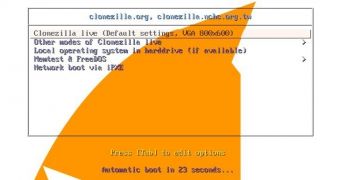 Clonezilla Live, a Linux distribution based on DRBL, Partclone, and udpcast that lets users back up their systems and give them access to a number of maintenance tools, has been updated once more and a number of packages have been updated.
Clonezilla Live is a distribution that needs to run on any new hardware configuration, and the Linux kernel is usually one of the main components that gets updated, but t… (read more)
 Establishing an Open Source Review Board is one key way that companies can help ensure compliance with open source licenses, community norms and requirements (see the previous article, Why Companies That Use Open Source Need a Compliance Program, for more details.) In larger companies, a typical board is made of representatives from engineering, product teams and legal resources in addition to a Compliance Officer (sometimes called Director of Open Source).
While FOSS compliance is more of an operational challenge related to execution and scaling than a legal challenge, legal counsel is an essential component of any review board and compliance program. Companies may choose to use internal legal counsel, or utilize external counsel on a fee basis. Regardless of how it’s achieved, there are five essential duties of an open source lawyer to ensure that a company observes all of the copyright notices and satisfies all the license obligations for the FOSS they use in their commercial products.
1. Provide approval around the use of FOSS in products.
The approval of the legal counsel is required when using FOSS in a commercial product. Typically, the legal counsel reviews the compliance ticket, the source code scan report, and the license information provided with the source code package. They then evaluate any risk factors based on the feedback provided by engineering and the open source compliance officer. As part of this exercise, the legal counsel decides on the incoming and outgoing licenses of the software component in question.
2. Advise on FOSS licensing.
Typically legal counsel will offer guidance about FOSS license obligations that must be fulfilled. Your legal counsel will be important in advising on potential license conflicts or incompatibilities. Some of the more common questions we see are often, “can I combine X FOSS-licensed code with Y FOSS-licensed code.” To many developers and product architects, these are critical questions to resolve early in building a product based on FOSS. Doing so later can lead to expensive and time intensive re-engineering. Your legal counsel should be well integrated with engineering teams to provide recommendations and guidance on FOSS questions and concerns.
3. Review and approve updates to end-user documentation.
This form of legal support is related to ensuring that appropriate FOSS notices are provided to users in relation to any FOSS included in the product (e.g. proper attribution statements) along with any other requirements (e.g. for GPLv2 licensed code, a written offer on how to obtain the source code).
4. Contribute to establishing and running the FOSS compliance program.
Your FOSS obligations or concerns won’t stop the day you ship your product. Many software products are updated over time. Those updates will likewise require a similar review and process to ensure the FOSS obligations are met. Your legal counsel will be helpful in establishing and maintaining a FOSS policy and process across products and product teams. This should include directions for how to handle compliance inquiries sent to the company in relation to FOSS compliance.
One example we have seen in compliance activities that fail is users will contact technical support and the technical support personnel lack guidelines or scripts on where to direct users seeking the source code for a GPL licensed product. A long term FOSS compliance program will also provide training around FOSS licenses, company policies and guidelines that your legal counsel will be instrumental in drafting and evolving over time.
5. Participate in legal community programs and activities
One helpful role of your legal counsel will also be to participate in the broader legal community focused on FOSS issues and topics. The organic communities that have sprung up are based on lawyers sharing practical, pragmatic topics with each other. These support communities enable your legal counsel to learn best practices and new ideas that can be incorporated back into your internal FOSS compliance program. Without your counsel accessing these communities, your company may fall behind on best practices and accepted norms, or miss critical issues that should be factored into your compliance program.
In part three of this blog series, we’ll cover practical ways for legal counsel to advise software developers. For more detail, download the full white paper, Practical Advice to Scale Open Source Legal Support. You can find me on Twitter at @mdolan.
Read more:
Part 1: Why Companies That Use Open Source Need a Compliance Program
Part 3: 5 Practical Ways for Legal Counsel to Advise Developers on Open Source
The Open Compliance Program at the Linux Foundation aims to help organizations achieve compliance faster and cheaper by providing a number of resources that are accessible via http://compliance.linuxfoundation.org.
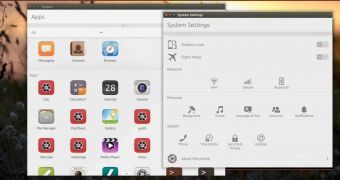 Canonical has made it possible to install and test the latest Unity 8 desktop environment on any Ubuntu system just by adding a PPA and installing the appropriate packages.
Currently, the only two ways of testing the latest Ubuntu Next version with Mir and Unity 8 were to download the ISO and do a Live boot or to run in a VMWare. Or so we thought. None of the solutions mentioned is too appealing, but there is a third way, much more elegant, and it works on any supported Ubu… (read more)
 The Linux Foundation partnership with edX platform is expanding, and users will now get the Essentials of Linux Systems Administration (LFS201) online course, which should help prepare the SysAdmins of tomorrow.
The Linux Foundation is so much more than just a nonprofit organization that is tasked with the development and promotion of the Linux kernel. In fact, The Linux Foundation also organizes various courses that help people make a career out of Linux. Recent reports an… (read more)
 Project Soli is a new project from Google that aims to integrate radar technology into a small chip that can be used to track hand motions, and from the looks of it, the engineers are using Ubuntu.
Before getting too excited about yet another Google project, you should remember that Google had a lot of projects that weren’t all that successful. The company has made its share of mistakes, but we can only hope that Soli is not one of them.
From what Google has shared until… (read more)

When I was a young girl, I remember my dad showing me Linux on his computer.
He was showing me what was known then as Red Hat Linux—it was a fresh version of Colgate 4.0 from Best Buy. At that time, I was familiar with Windows 95 and knew how to use a computer, but Linux was new to me. It looked like a bunch of code and too technical. So, it was many years later, in January of 2009, that I finally made the switch.
This is my Linux story.