
Home Blog Page 1099

First Open Automotive Grade Linux Spec Released

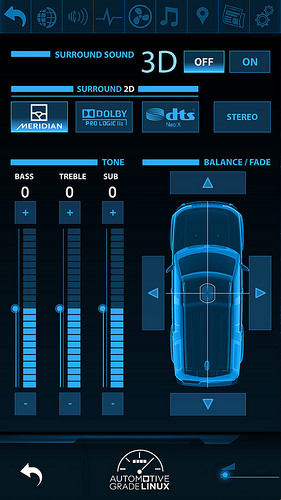
AGL IVISince its inception, the Linux Foundation’s Automotive Grade Linux project has promoted itself as a collaborative open source project. With the release of the first AGL Requirements Specification for Linux-based in-vehicle infotainment (IVI), AGL has earned that description more than ever.

In July 2014, AGL released its first AGL reference platform built on the Tizen IVI platform running HTML5 apps. The new release instead details precise specifications and requirements for any AGL-compliant IVI stack. For the first time, automakers, automotive suppliers, and open source developers can collaborate on refining the spec — the first draft of a common, Linux-based software stack for the connected car.

Announced this week at the Automotive Linux Summit in Tokyo, the specification allows OEMs and suppliers to identify gaps between code and requirements. Automotive companies can then provide input to the developer community for resolution in future AGL releases. This will be particularly helpful for supporting multiple architectures, says Dan Cauchy, general manager of automotive at the Linux Foundation, in an interview with Linux.com.

The Tizen IVI stack released last year was based on draft version 0.82 of the spec, which was not published at the time. Since then, the reference stack has been updated with improvements such as moving to a Crosswalk runtime and adopting Smack as the default security framework. Smack is now being considered for the full Specification, as well, says Cauchy. There has also been considerable progress on supporting the Renesas R-Car platform, he adds.

While the specification defines a standard, as opposed to supplying a reference platform, Cauchy says there is no plan to implement a compliance program at this time. “The specification is used to identify the gaps between what is required and what is in the code,” he says. “Where there are gaps, we will implement those features and functions. Our aim is still to use existing code whenever possible.”

Cauchy emphasizes that the spec is “more than just a technical document.” The document is “a clear indication that the automakers and suppliers are adopting an open development methodology for the first time,” says Cauchy. “This will allow the industry to leverage and interact directly with thousands of open source developers, by providing requirements directly to the developer community.”

According to Cauchy, the AGL spec differs from the Linux-oriented GENIVI Alliance spec in that AGL is “completely open source, both in the specification and the code.” This also relates to governance, he says. “Anyone can participate in AGL’s development,” says Cauchy.

Another difference is that AGL “is focusing on a complete reference platform, and not just components,” says Cauchy. The platform includes the Linux kernel, board support package, middleware, application framework, and support for both native-Linux and HTML5 apps. “Also, there are plans to have multiple profiles of the same base platform so that we can address functions such as instrument cluster, heads up display, and telematics,” says Cauchy. “Basically, if the car runs Linux, we want it all to be based on AGL, no matter the application or function.”

Despite the distinctions Cauchy makes in regard to GENIVI, there is hope that the two projects could collaborate, as Cauchy suggested might happen last July. At the Automotive Linux Summit, the AGL announced that it has started building a “Unified Code Base, whereby we will be taking the best of AGL, Tizen, and GENIVI projects and combining them into a single AGL distribution for the entire industry,” explains Cauchy. “The Unified Code Base will be based on creating an architecture of multiple Yocto-based meta layers. This will be a big step forward in eliminating the fragmentation in the industry.”

So far, there has been no official announcement from either the AGL or GENIVI camps, and no further explanation from Cauchy. Further details will be forthcoming, he adds.

AGL: IVI now, clusters and telematics tomorrow

For now, AGL is primarily focused on IVI, defining requirements for services such as WiFi, Bluetooth, multimedia, application lifecycle management, windowing, power management, and location based services. It does, however, define connectivity and interaction with CAN- and MOST-based vehicle buses, complete with APIs for middleware and applications.

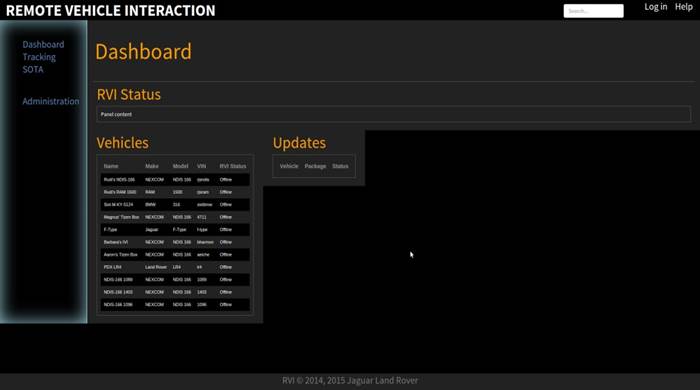
“There are also growing requirements for aligning with IoT efforts for seamless connectivity to other devices and the cloud,” says Cauchy. He notes that on the AGL’s related Tizen IVI platform, “there has been a lot of work on the Remote Vehicle Interaction project. The RVI sub-project is said to “build a reference implementation of the infrastructure that drives next generation’s connected vehicle services.”
rvi backend

There are no current plans to add Android Auto or Apple CarPlay support to AGL, says Cauchy. However, he notes that “an AGL based system is perfect for implementing a CarPlay or Android Auto solution. It is up to the automotive OEM to port CarPlay or Android Auto and take care of the necessary agreements with Apple and Google.”

Cauchy also went out of his way to correct the common misperception that these “projection” technologies are complete IVI specs like AGL, GENIVI, or proprietary platforms such as Windows Embedded Automotive. While Google has suggested that Android Auto could evolve into such a full-blown stack, it is currently limited to defining interactions with Android smartphones and tablets within the car.

A week ago, Hyundai announced the first Android Auto implementation from a carmaker. The technology will appear in its 2015 Sonata cars.

This week, Mitsubishi announced it would add both Android Auto and CarPlay support to the European version of the 2016 Pajero SUV, known as the Montero in the U.S. It’s unclear if this is related to Mitsubishi’s recently announced, FlexConnect.IVI system, which runs Android on a Texas Instruments Jacinto 6 SoC. FlexConnect.IVI is notable for controlling IVI, heads up display, and cluster displays simultaneously. Finally, Pioneer recently announced Android Auto support in some of its NEX aftermarket multimedia receivers.

Cauchy had no comment on the progress of the GlobalLogic-backed Automotive Grade Android (AGA), which we reported on last summer. This offshoot of AGA, of which GlobalLogic is a Silver member, is a Jacinto 6-based Android reference platform that uses Xen virtualization technology.

At the Automotive Linux Summit, AGL also announced four new members including Sony, Alps Electric, Konsulko Group, and Virtual Open Systems. They join several dozen other members, led by gold members Intel, Jaguar/Land Rover, Panasonic, Renesas, ST, and Toyota.

Cauchy wouldn’t say when the first cars with AGL-compliant systems would hit the road. However, he noted that Toyota and Jaguar/Land Rover are both very active in the project. Other carmaker members include Nissan and Mitsubishi.

The open source AGL Requirements Specification v1.0 is now available for public download. Participants can call upon collaborative tools such as Git repositories, Gerrit code review, Jira bug tracking, and a Doors database.
Qt 5.4.2 Officially Released

The second point release to Qt 5.4 is now available with various fixes and minor improvements…

Read more at Phoronix

HP Helion CloudSystem Broadens its Reach Into Hybrid Clouds

HP launches the ninth version of its Helion CloudSystem suite of tools for automating, orchestrating, and controlling private and public cloud infrastructure.

Read more at ZDNet News

Cinnamon 2.6 Yields Lower CPU Usage

While Cinnamon 2.6 was tagged a few weeks back, this morning it’s finally being officially announced by the Linux Mint team…

Read more at Phoronix

The Ubuntu Phone That Transforms into a PC Will Be Built by BQ

Canonical is still quite eager to have a “convergence” device out into the wild and it looks that BQ will be the company to build it.
It’s been a long time since Canonical was showing us Ubuntu for Android and its capabilities. Having a phone that is powerful enough to transform into a full PC when docked with a monitor, keyboard, and mouse could be a game changer, but Canonical is still working to make this happen. They haven’t abandoned the idea of having this kind of dev… (read more)

Take Control of Your File Systems Wtih Konqueror

Penguins gathered together in the Artic

Having briefly discussed eight Linux file managers in my previous article, this article concentrates on my favorite GUI-based file manager.

Konqueror is an amazingly versatile and powerful file management program that is also a very good web browser and FTP client. It is provided with Red Hat Enterprise Linux, Fedora, CentOS, and many other Linux distributions as a part of the KDE Desktop Environment. I find Konqueror an indispensable tool because it can do so many things very well.

read more

Read more at OpenSource.com

Shell Scripting Part V: Functions in Bash

Welcome to part 5 of HowToForge’s shell scripting tutorial series. In this part, you will learn how to efficiently structure your scripts by creating functions. By the end of this tutorial, you will be able to know how to create functions in the Linux Bash Shell, pass parameters to your functions and return some values from a function to your main code.

Read more at HowtoForge

Intel Updates Fifth-Gen Core Chips With Iris Pro Graphics

Intel has revamped its fifth-generation Core lineup of silicon for desktops and mobile, adding an Iris Pro 6200 graphics chip to the CPUs.

Read more at ZDNet News

Why Companies That Use Open Source Need a Compliance Program

compliance paperCorporate use of open source software is now the norm with more than 60 percent of companies saying that they build their products with open source software, according to the 2015 Future of Open Source survey. But that same survey also revealed that most companies that use FOSS in their products don’t have formal procedures in place for ensuring that their software complies with open source licenses and regulations.

This is a dangerous trend for these companies and the open source community as a whole. Open source compliance failures leave companies, their suppliers and customers, vulnerable to lawsuits and often require costly engineering solutions to fix the problem. See the 2013 Fantec decision in Germany as an example of the potential liability for not managing a supply chain appropriately. Companies that don’t manage compliance also erode an open source community’s trust, which can diminish a company’s influence in the projects they rely on for their products and inhibit open source developer recruitment and retention — a critical competitive edge.

What is FOSS Compliance?

Most companies that have successfully integrated free and open source software (FOSS) and practices into their products create a FOSS compliance program. In its simplest definition, FOSS compliance means that users of FOSS must observe all the copyright notices and satisfy all the license obligations for the FOSS they use in commercial products. The complexity of achieving FOSS compliance increases slightly because you may also want to protect your intellectual property or possibly a third party supplier’s (whose source code is included in your product) from unintended disclosure.

FOSS compliance is typically more of an operational challenge related to execution and scaling than a legal challenge. Achieving compliance requires the aggregation of policies and processes, training, tools and proper staffing that enables an organization to effectively use FOSS and contribute to open source projects and communities. The goal is a FOSS compliance program that enables your business while respecting the rights of copyright holders who have offered you the ability to use the code freely. The R&D savings alone associated with the benefit your company derives would likely cover the internal process costs associated with complying with license obligations, and at the same time helping create a chain of compliance trust between your customers and suppliers.

The key to many successful FOSS compliance programs is a centralized core team, typically called something like the “Open Source Review Board” (OSRB). This team is usually comprised of knowledgeable experts in FOSS (e.g. from development and legal) plus representatives from engineering, product teams and supply chain. Well run programs often have a Compliance Officer (or sometimes called Director of Open Source) who owns the mission of compliance for the organization and who coordinates between product teams and business units. In addition to the core OSRB team, you may also find benefits from establishing an extended team that consists of various individuals across multiple departments (Documentation, Corporate Development, IT, Localization, etc.).

In this arrangement, legal counsel often provides practical advice to the software development team that enables developers to make daily decisions related to open source licenses without having to go back to the legal counsel for every single question. Much of this has been covered in our white paper, “Practical Advice to Scale Open Source Legal Support” where Ibrahim Haddad (now at Samsung Research Americas) discussed the role of legal counsel in ensuring FOSS compliance. He also examined practical advice that attorneys can provide to the software development team.

Free FOSS Compliance Resources

There are also several free resources available to help companies address the operational challenges of FOSS compliance, including:

The Linux Foundation offers hands-on training from compliance experts for individuals and companies responsible for achieving compliance with open source licenses and establishing an open source compliance program, as well as for those who simply want to learn more about compliance. Options available include live onsite training in addition to instructor-led live remote training. A certificate is provided to all who complete the training.

Developed by the SPDX workgroup hosted by the Linux Foundation, the specification helps facilitate compliance with free and open source software licenses by providing a standard format for communicating the components, licenses and copyrights associated with a software package.

A new Linux Foundation work group that aims to create a set of compliance best practices for companies to use not only internally, but with their supply chain. OpenChain seeks to embed best practices for FOSS compliance into supply chains, using a shared standard and best practices that form an auditable standard for FOSS compliance.

Developed by the Linux Foundation, the FOSS Bar Code Tracker, Dependency Checker Tool, and Code Janitor Tool are among several open source compliance tools available to help track important information on the FOSS stack contained in a product.

Each of these tools address topics on their own. Over the next few months I hope to dive deeper into various aspects of FOSS compliance that we often see multiple companies struggling to address. Further, I’d like to hear how your company is handling compliance and what areas in the industry could use more focus. You can find me on Twitter at @mdolan.

Download the full white paper, Practical Advice to Scale Open Source Legal Support.

Read Part 2: 5 Essential Duties of Legal Counsel in an Open Source Compliance Program

Part 3: 5 Practical Ways for Legal Counsel to Advise Developers on Open Source

Google’s Project Vault Is A Secure Computing Environment On A Micro SD Card, For Any Platform

Project Vault is a secure computer contained entirely on a micro SD sized device. Google’s ATAP said the micro SD format made sense because there’s already advanced security features on your phone, contained in the SIM card, which protects the things important to carriers. Vault is designed to be an equivalent, but designed to project a user’s important content…

Said file system includes just two files, one for read and one for write, that any app has to go through in order to communicate with Vault. This also means that it works with any operating system, including Android, Windows, OS X and Linux, since essentially it’s just a generic storage device to the host computer or phone.

Read more at TechCrunch.