
To no surprise, this morning AMD officially announced the AMD A10-7870K “Godavari” as the new high-end APU…
Read more at Phoronix
 Dell has been moving a lot of interesting moves lately and it’s focusing on the Linux side of the business, which can only be a good thing for the open source platform.
Dell is one of the big companies that sell PCs and laptops with Ubuntu preinstalled. This also means that it’s one of the ways which made Ubuntu famous around the world. Now, Dell has spotted that the interest of the Linux users has been growing lately and they have made a number of interesting announcement … (read more)
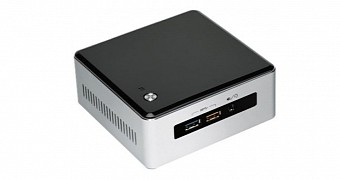 Aura from Entroware is new mini-PC powered by some very powerful hardware and shipping with either Ubuntu 15.04 or Ubuntu MATE 15.04.
The new PCs from Entroware were revealed a while ago, and now we get to take a closer look at some of the customization options. Unlike other companies that sell this kind of hardware, users can customize it a great deal and choose from a large number of components, like the CPU, the HDD, and RAM. It has a very small form factor, and it even … (read more)

Well, it’s happening — GoPro is officially getting into the drone game. Following rumors last year, GoPro CEO Nick Woodman announced at the Code Conference that the company was going to build its very own quadcopter, with plans to launch in the first half of 2016. “The quad is in some ways the ultimate GoPro accessory,” Woodman said. He then went on to note that the devices are core enough to their business for it to make sense to go out and build their own.
Woodman wouldn’t give an official price yet, but he did note that GoPro was a “consumer focused company” — so it seems logical the GoPro quadcopter will be in the same price range as drones from DJI, Parrot, and 3D Robotics. He also said that letting people fly their cameras “sparks…
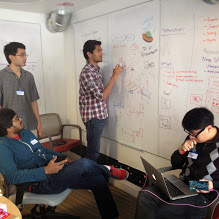 NASA has long had an interest in Linux and other open source technologies, and has used Linux in a variety of systems, including the R2 humanoid robot now at work at the International Space Station. With its International NASA Space App Challenge, the space agency is tapping into the maker gestalt to come up with new ideas, as well as inspire future space engineers. In this year’s two-day Space App Challengehackathon, which ran April 10-11 in 133 cities around the world, NASA greeted participants with over 25 challenges split into Earth, Outer Space, Humans, and Robotics categories.
A number of projects used the Intel Edison computer-on-module in their designs, including the two highest scoring projects at the April 10 event in San Francisco — Team ScanSat and Team AirOS. They both advanced to the global competition, but did not make the final list of winners. Both projects ran Yocto-based Linux code on the Edison’s dual-core Intel Atom processor. Intel donated the modules to the event, and Intel’s Grace Metri posted a report on the event with more details on both projects.
Intel’s Wai Lun Poon, meanwhile, posted a blog entry highlighting the many Edison-based projects at the New York City event. These included a device that maps space debris (Team Kessel), a spacebase sensor platform (Team SpaceBase), a high-tech glove with heat sensors (Team FirstHand), and a drone for collecting temperature data on Mars (Team DEMS), among others.
Here, we take a closer look at the ScanSAT project, which developed a CubeSat satellite designed to launch from an interplanetary Dragon-sized spacecraft to do visual inspections of the craft and other objects of interest. In the next article we’ll look at AirOS, the runner-up at the San Francisco event. AirOS is a sensor-laden, augmented reality headgear device for NASA ground inspection personnel, combining an Intel Edison with an Oculus Rift VR headset using Leap Motion APIs.
Team ScanSAT took on the Deep Space CamSat Challenge, which asked for designs for CubeSat nano-satellites stored in a larger spacecraft to support deep space missions. These “CamSats” would launch from the spacecraft during interesting events, such as a planetary flyby, orbit the ship, and take photos of the ship and nearby objects on a hypothetical mission to Mercury. The CamSat would then return to the spacecraft and dock for later reuse.
Team ScanSat’s Anand Biradar, an aerospace engineer who had previously worked on CubeSats at Planet Labs, answered our questions about the project on behalf of his team members. These include Krishna Sadasivam, a Microsoft computer engineer; Sheen Kao, a mechanical engineer who had worked with CubeSats at Cal Poly; and Robert Chen, a computer scientist who had done remote sensing work at NASA/Jet Propulsion Laboratory.
The members had previously entered several other hackathons together, but had never worked with the Intel Edison. They did have some Arduino experience, however, which was all they needed.
“It was a huge plus that the Intel Edison came with an Arduino-compatible expansion board, with level shifters to support both 3.3v and 5v components,” said Biradar. “This greatly expanded the number of peripherals we could integrate, given that the Edison itself only supports 1.8v on its I/O pins. We enjoyed the amount of control we had over the platform, being able to program behavior at a low level without having to use the Arduino IDE, which most of the teams used. This allowed for more advanced functionality, such as image processing.”
Biradar also lauded the Edison for its support sensors such as accelerometers and gyroscopes, which he said were “crucial” for satellite control systems. Intel provided a Grove starter kit add-on to the Edison, with components including a Smart Relay and Base Shield that “allowed us to quickly prototype and build our project,” said Biradar.
Biradar also liked working with Yocto-based Linux. “Yocto was great in that it worked right out of the box without the need for additional software tools,” he said. “Setup consisted of simply plugging in a USB cable and logging in through the serial port USART. The package manager for Yocto had OpenCV-Python builds available, and the camera worked as soon as we plugged it in. A script made it a breeze to set up WiFi for remote access, and we started developing with the built-in vim editor in less than 10 minutes.”
The design used a webcam as a stand-in for a GoPro camera, which were not available to them at the time. To develop the image processing functions, the team used an OpenCV Python binding.
“We first developed the functionality on our personal computers using our webcams, and were able to easily transfer the code over to the Edison for deployment without any changes,” said Biradar. “The algorithm captured images from the perspective of the CubeSat, and ran it through several image processing techniques to pick out the largest red object in the image, which would ideally represent the docking port on the mothership.”
The team established a virtual bounding box in the image to determine if the dock was within the target area. If it was too far to the left, a signal was sent to pivot the CubeSat to the left or vice versa. The signals were received by a reaction wheel mounted in the demonstration CubeSat, which was essentially a plastic lunchbox equipped with the camera, Edison, control components, a motor, and the reaction wheel.
“The prototype floated virtually frictionless on water,” explained Biradar. “When the reaction wheel spun, the prototype pivoted in the opposite direction in order to orient itself to dock.”
One of the key innovations in the design was in the docking and magnetic propulsion mechanisms that enabled the ScanSat to undock and re-dock with the main craft autonomously.
“The CubeSat has one ion thruster, so it can only accelerate forwards,” explained Biradar. “The repulsive force for undocking is applied by magnetic coils mounted on the mothership. We chose ion thrusters because they have minimal mass loss, and can be recharged while docked with the mothership. This allows it to be reused for a higher number of operational cycles than conventional thrusters.”
Team ScanSat also chose a novel conical design for the craft. “The conical design allows for a more flexible angular approach by the CubeSat, and helps to avoid unneeded complexity in the docking mechanism,” said Biradar.
According to Biradar, his team is planning to build a complete working prototype for control systems and image processing using the Edison. “We would love to see an Edison powered CubeSat in orbit.” He added, however, that to fit into the 10 x 10 x 10cm CubeSat, ScanSat would require an even smaller footprint than the module’s 35.5 x 25mm, while offering the same 3.3v and 5v level I/O.
Considering the rapid rate of miniaturization in the embedded board business these days, with the Edison, Intel’s upcoming Quark-based Curie, and Samsung’s ARM-based Artik, Team ScanSat’s wish may come true sooner than it thinks.
 In my last article for Linux.com, I explored a few ways newcomers to open source projects can get started. While there are many resources to explore open source project communities, choosing which project to contribute to can still be a quite daunting task. You could go searching in the more than 23 million repositories on GitHub, the world’s largest source code hosting platform. But there are better ways. This article is meant to be a short guide to help novice open source practitioners more easily identify the first project they’d like to contribute to.
With some time and training – be it in university classes, via online tutorials, enrollment in a coding workshop, etc. – you can learn a different programming language or work effectively with the new framework of your choice. To be most successful contributing to an open source project, choose one that not only appeals to you technically but socially. You’ll be spending time and effort getting involved, so look for a project that matches your interests and values.
Project’s Mission
Many projects will explicitly state their mission on the website’s About page, so take a look there first. Are the contributors trying to solve a technical or social problem that inspires you to get involved? For example, I volunteer with the Privly Foundation, a non-profit organization that both develops software and creates online & offline educational materials and events to educate users and developers about online privacy. As the person who is always asked by family and friends just what those complicated permission settings on each social networking site actually do, Privly’s mission deeply resonates with me.
Depending on your interests, you can find open source projects dedicated to the democratization of online publishing to tracking the health of honey bee populations worldwide. If you’re interested in working on projects with humanitarian aims, there are over 25 listed in this recent article. While the well worn “scratch your own itch” phrase originally referred to solving a bug that impacts the developer personally, I find it’s more valuable to think of it more expansively; work on something that passionately interests you and knowledge will follow.
Contributor Community
Finding a community working on a problem you’re invested in solving is actually much easier than figuring out if it’s the right community for you. Off the top of my head, I can think of at least a dozen open source projects focused on making content creation easier for bloggers and citizen journalists, written in everything from PHP to Python to JavaScript. So how can one narrow down from there?
Figuring out whether or not you get along well with a project’s community can seem tough when many of your interactions occur online, but there are a few pointers that can make sifting through the many choices faster and easier.
How Are New People Treated?
Is there an explicit space on the website with guidelines for new contributors? Does the project have a listing on OpenHatch with an offer to provide mentors to new participants? Are questions in the project’s IRC channel or discussion forums met with useful advice or are the answers along the lines of “read the manual” or “go search the internet”?
If you’re looking for a good place to get started contributing, look for a group that provides an onramp to new folks that’s both immediately useful and inherently welcoming.
Does the Project Value Contributions Beyond Code?
Many contributors to a project get started by working on so called “peripheral contributions,” e.g. something other than source code; perhaps a developer first contributes a fix to the project’s documentation or gives a how-to lightning talk at a local user group. Does the project celebrate these successes? Are they even acknowledged on the project’s website, newsletter or in its social media streams?
If the answer to these questions is no, you may find that the amount of time that passes before you feel well integrated and rewarded for your work on the project is longer. When getting started with something new, a small amount of immediate reward keeps you motivated to continue. Plus, no one wants to spend their free time working on someone else’s free software unless they feel appreciated. Seeing that a project values all contributions to it is a strong sign that you’ve found a great community to spend time with.
What’s It Like to Hang Out with This Community IRL?
If you’re just getting a feel for a project’s landscape, try spending some time with its community members offline. Many open source projects and their members regularly convene events, from large global user conferences to smaller regional events. Before making arrangements to attend, you may also want to see if the conference or event has a Code of Conduct for attendees. (Providing these ground rules to all participants helps ensure a safe and productive space for everyone. Personally, I will neither speak at nor attend events without a CoC in place.)
If time constraints or travel costs are an issue, you can also spend time with your would-be project community at user group meetings. Check the project’s website for user group listings or check out sites like meetup.com to find local meetings within your area of interest. When attending the meetings, do you enjoy the atmosphere? Feel like you’d enjoy spending time with some of the group members outside of the user group? Like you can ask questions without prefacing them with the words “Sorry for the stupid question?” If you’re answering yes to these questions, chances are good that you’ve found your tribe.
If you are unable to make evening meetings due to family or work obligations, there’s nothing wrong with politely asking the organizers if they ever set up meetings as lunch and learns or weekend breakfasts. Chances are they’ll ask you to help organize, which can be an excellent very first contribution to both the open source project of your choice and its local community.
Using these tips can help you get started finding a project to contribute to, but one of the greatest things about participating in the open source world is the opportunity to benefit from the collective wisdom of many peers and mentors. If your open source project is searching for new contributors or you’ve interacted with a project community and found it particularly rewarding, I hope you’ll share your knowledge in the comments section of this article.
Happy hacking!
Read more:
Getting Started in Open Source Software