
Linux 4.1 will feature an updated Multiple Device (MD) driver to improve the RAID 5/6 potential for those relying upon Linux Software RAID…
Read more at Phoronix
 Canonical has been maintaining an Ubuntu Next version that features the Unity 8 desktop environment and the Mir display server, which is designed to work on the desktop. They have announced that the current .deb based version of Ubuntu Next will be replaced with a version based on Snappy.
Canonical is releasing Ubuntu 15.04 (Vivid Vervet) today and everyone is looking forward to it, especially since it comes for numerous platforms and flavors. The developers have decided to… (read more)
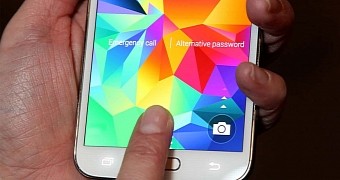 The Samsung Galaxy S5 was the first device from the company’s S lineup to boast a fingerprint scanner, and people were pretty excited about it. But as it turns out, the fingerprint scanner inside Samsung’s previous flagship houses a very dangerous flaw.
Hopefully, you have never used the fingerprint scanner and continued to rely on the good old, traditional password when accessing you mobile device. Why?
The folks over at read more)
 The Debian Project, through Steve McIntyre, announced on April 23 that the Debian CD/DVD/BD team is ready for the Debian 8.0 (codename Jessie) release, urging users to test the images before the unveiling of the final release of the highly anticipated operating system on April 25, 2015.
Therefore, we can report that Debian 8.0 Jessie will bring support for two ne… (read more)

After debuting its PC-on-a-HDMI-adapter at CES, the chip giant is readying it for shipment — and has already delivered the first wave of units to tech reviewers.
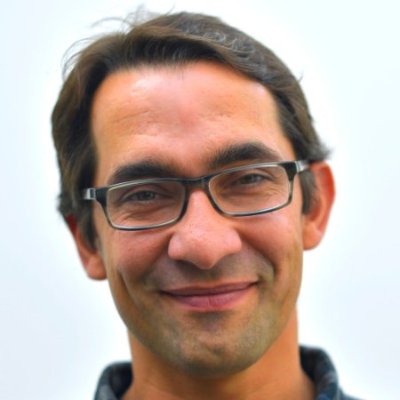 I have known Sam Ramji since his days spreading open source religion at Microsoft. At that time, Linux and Microsoft were clearly on opposite ends of the spectrum, but Sam had the courage to step into the lion’s den and keynote the Linux Foundation Collaboration Summit. His bravery, honesty and intelligence impressed me very much, so I was incredibly pleased to have him join the Linux Foundation Federation of Collaborative Projects as CEO of the Cloud Foundry Foundation. Sam’s enthusiasm over Cloud Foundry is infectious, and I believe CF has the power to unlock the holy grail of application development — true portability — in ways we haven’t seen before. Sam will be keynoting the Cloud Foundry Summit on May 11 in Santa Clara. He recently spoke to me about taking the job, the conference’s stellar program and Matt Damon. If you’re interested in the future of app development, I encourage you to attend.
1. I was thrilled when you decided to join this project but somewhat surprised you would leave such a great position in the private sector. Can you tell me about why you chose to become the CEO of Cloud Foundry Foundation?
I got a call from Jim Zemlin. He said “You know what’s great about working in open source and driving collaboration through foundations? Waking up every morning knowing that you’re on the right side of history.” That argument really seized my imagination and aligned with not just the different projects that the Linux Foundation is now starting to represent — covering everything from network functional virtualization to SDN — but the fact that Cloud Foundry, in particular, has the possibility of transforming enterprise computing. It’s the first time we’ve created userspace for the datacenter. Having a stable set of APIs and infrastructure that can give you portability for data center applications…it was too amazing to pass up. So I made the difficult choice to leave the private sector and move into not-for-profit. And I haven’t looked back for a second.
2. I’ve noticed that you and your team use the term “cloud native application platform” instead of PaaS to describe Cloud Foundry’s category. Why do you think that’s an important distinction and what does that tell us about the future of application development?
Cloud native application platforms are ones that support microservices and twelve factor apps. Things that are fundamentally built to support a world of devices, web browsers and mobile – everything that we’ve built and everything that we haven’t imagined yet. It’s fundamentally different from old style architectures which were designed to just support the web or thick clients, for example. PaaS as a term is a little bit loose. There are a lot of different kinds of PaaS. I think Gartner established that there are six different kinds of PaaS. (laughs) From Cloud Foundry’s perspective, we don’t really care about all of those. We’re focused on making sure that you can come and code in any language and run microservices and twelve factor apps directly inside a platform that was designed just to scale cloud native applications while being friendly to IT Ops.
3. The Cloud Foundry Summit is coming up next month and the agenda looks amazing. Can you tell me about Andy Weir’s keynote on “How I accidentally used open source methodology to create a best selling novel”? The story behind the book is so compelling and I love that you have him keynote. (Also does this mean Matt Damon will be there?)
Andy built this novel bit by bit — open source, effectively. He blogged it a bit at a time and got feedback from his readers, and iterated the chapters based on feedback. It was just sort of a hobby almost. But as he continued to build it out and do research and get feedback from readers, he built a following and audience. He ended up getting demands to make it more professional and publish it as a PDF and then do it as an ebook and then it ended up on Amazon. I won’t steal his thunder, but he really used the power of community and iterative development to turn this idea of what would happen if an astronaut were stranded on Mars into this incredibly gripping novel which is now a movie starring Matt Damon in the role of Mark Watney. So I know he’s thrilled to come and speak at the conference and talk about how he stumbled into success using open source methods. To use an old open source term, he was “scratching an itch” and the quality he produced through community development made his work a New York Times bestseller.
As for Matt showing up, one can only hope. I’d be amazed. Matt is clearly a very intelligent person and a diehard nerd if you’ve seen his interviews. Andy says he’s pretty damn funny.
4. Who do you think should attend Cloud Foundry Summit? What type of developers from what industries?
Anybody who’s interested in the future of cloud applications should attend. Most particularly if you’re a developer, if you’re an IT operations manager or if you’re in the line of business and focused on continuous innovation.
What we’re doing is bringing all three parts of what makes a digital business today — developers, operators and business people — together so they can collaborate on “two-pizza” teams. How do you have business capabilities? How do you get stories about building business capabilities? How do you deliver it all the way through production on a constant and iterating basis and move your enterprise into the future? This concept of continuous innovation is the north star for Cloud Foundry. If you care about that, you should attend. But very practically, these are the three audiences we’re looking for.
In terms of industries, every industry that I’m aware of is represented — from financial services to healthcare to transportation to oil and gas to consulting to big pharma — there’s really sort of no end to cloud-native applications. But each speaker is going to be landing precisely on their experience. It’s going to be a very pragmatic conference. So come to learn things, come to walk away with new connections, come to learn things. Get knowledge that is practical and be able to do something that you weren’t able to do before you came to the Summit.
5. In five years where do you see the world of application development and how will Cloud Foundry fit?
Five years is a really long time. You can’t make predictions on that horizon, but you can establish a vision.
Our vision for cloud computing in five years is that we see a world of cloud computing where Cloud Foundry is ubiquitous: where you can find a cloud foundry anywhere you go, whether it’s a public cloud or on premises within a Global 2000 or startup. It’s portable, so you can leverage all of the work you’ve put into your apps on each cloud foundry and move them around. It’s a vision of creating a vibrant and growing ecosystem where you know based on ubiquity and portability that you have a large market of opportunities for new developers and packaged apps.
Our aspiration is to take the incredible outcomes from Linux — where you had collaborative development, applications and ubiquity — and take that up one level of architectural abstraction so that we can support datacenter level applications. Ideally, Cloud Foundry can be the Linux of the cloud and five years from now it’s passed into ubiquity, and we’re starting to answer higher value questions like “How do apps need to communicate?”, “What kind of information should they share?” and “How does this all tie into continuous innovation for enterprises?”
6. What’s the hardest part of the job so far?
The job is demanding, but it’s joyful. There is something worth getting out of bed for in the morning. I think the hardest thing is knowing that we’ve got so much responsibility and so much opportunity and so little initial time. Feeling like we’re making the right decisions as we’re executing constantly, I think that’s the hard part. There’s an old soccer expression which says when 5-year-olds play soccer you know where the ball is because all the players are on that part of the field – it’s clusterball. But as you look at a professional team, you see a different posture, it’s “heads up, see the field.” Bringing that aspect and making execution of Cloud Foundry Foundation a beautiful game, that’s the challenge right now. Keeping our eye on the horizon while moving down the field and passing effectively. It’s a great time to be here.