The enterprise application software market can be segmented based on: types, organizational size, and verticals. Types of application software include digital content creation (DCC), web conferencing,enterprise resource planning (ERP), business intelligence (BI), enterprise content management (ECM), customer relationship management (CRM),supply chain management (SCM)and project &portfolio management (PPM) software.Categories by organizational size include small business, medium business, enterprises and large enterprises. Verticals include BFSI (banking, financial services and insurance), manufacturing, telecom, media &entertainment, transportation, healthcare, energy &utilities, retail, distribution and public sector.
Read More Info @ http://www.futuremarketinsights.com/reports/details/mea-enterprise-software-market
Some of the drawbacks are high licensing and support cost, flexibility and customization issues and difficulty in migration of existing data. Overlooking these issues, the benefits of using enterprise application software would actually aid an enterprise in information sharing, process automation, complete visibility of all important processes across various departments, reducing information technology complexity and increasing agility.
There is a growing need to capture, organize and exploit the use of big data which can give internal and external business processes a competitive edge. Enterprise mobility such as the Bring-Your–Own-Device (BYOD) trend to enhance employee flexibility in the organization across MEA has resulted in an increased uptake of enterprise platforms. Further, analytics and business intelligence have also become important factors driving enterprise planning, mainly when it comes to collecting and assessingunstructured data on enterprise networks, or business related information posted on social networking sites etc. Another driving factor in the enterprise software market is the shift towards cloud computing, where an enterprise moves some or its entire infrastructure to the cloud, reducing total cost ownership (TCO) infrastructure and provisioning time.These dominating factors are expected to drive the enterprise application software market in the MEA region, in the near future.
The enterprise application software market can be segmented based on: types, organizational size and verticals. Types of application software include digital content creation (DCC), web conferencing,enterprise resource planning (ERP), business intelligence (BI), enterprise content management (ECM), customer relationship management (CRM),supply chain management (SCM)and project &portfolio management (PPM) software.Categories by organizational size include small business, medium business, enterprises and large enterprises. Verticals include BFSI (banking, financial services and insurance), manufacturing, telecom, media &entertainment, transportation, healthcare, energy &utilities, retail, distribution and public sector.

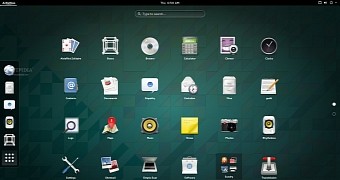 We can bet that many of you are eagerly awaiting for the forthcoming GNOME 3.16 open-source graphical desktop environment, which is used with great success on numerous Linux kernel-based operating systems, including Fedora, openSUSE, and Ubuntu GNOME.
 Linux Kernel 3.18 is still used in numerous distributions of GNU/Linux, despite that fact that Linus Torvalds announced the final release of Linux 3.19 kernel on February 8, 2015, so it is time to update it to version 3.18.7, which was announced by Greg Kroah-Hartman a few hours ago, on February 11.
  While Fedora 21 has been officially released on December 9, 2014, and users worldwide still enjoy the powerful operating system on their desktop or server computers, the time has come to look at the future and see what the forthcoming Fedora 22 release has prepared for its dedicated users.
  “Alongside the increasingly high demands of streaming bandwidth in HPC storage solutions, there is a growing need for higher levels of metadata performance for various applications and workloads. The Lustre parallel file system provides a distributed namespace, divided across multiple metadata servers, that allows the metadata throughput to scale with increasing servers. This presentation addresses meeting the increasing requirements for high performance metadata in Lustre environments with the ultimate aim of reducing the time to results and improving overall efficiency.”