Home Blog Page 1372

Linux Kernel Developer Dmitry Monakhov Arrested for Protesting Ukraine War

Linux kernel developer Dmitry Monakhov was detained for 15 days for disobeying a police officer on Saturday. The debacle came about when Monakhov decided to protest the recent invasion into Ukraine by Russian armed forces.

This was not the first incident of aggression towards Monakhov. During a rally in July of 2013 he was reported to have been beaten in one of the police vans most likely for participating in expressing his discontent with Putin’s policies regarding human rights.

Read more at The Mukt.

Trying Intel OpenCL On Linux For Video Encoding

Following my testing and reporting last weekend about Intel Beignet starting to provide very usable open-source OpenCL support on Linux, one of the most common requests was to next see if this Intel OpenCL Linux supprot benefits x264 encoding at all…

Read more at Phoronix

You Have Your Windows in My Linux

Although there are those who think the systemd debate has been decided in favor of systemd, the exceedingly loud protests on message boards, forums, and the posts I wrote over the past two weeks would indicate otherwise. I’ve seen many declarations of victory for systemd, now that Red Hat has forced it into the enterprise with the release of RHEL 7. I don’t think it’s that easy.

Yes, we saw systemd rise in Fedora, and we knew it was going to be part of RHEL 7. We saw systemd’s inclusion in Ubuntu and Debian, and that was that — for a certain segment of the Linux user base. The rest of us who run big Linux-based services and application stacks on CentOS and RHEL were possibly derelict in not speaking out about our disdain for systemd before these developments came to pass. But it’s not too late to speak out.

Read more at InfoWorld.

Low-Spec Hardware? Try these Desktop Environments

I have selected my pick of desktop environments that are excellent candidates for older hardware. They typically run well on low-spec machines, even a system with a Pentium II 266MHz CPU, a processor that is now 16 years old. All of the desktops are released under freely distributable licenses. If your Linux box feels sluggish in general use, try one of the desktops featured below. It may just save you from discarding a perfectly good machine.

Read more at LinuxLinks.

Mozilla’s $33 Firefox OS Phone Draws Notice in India

Mozilla recently announced that the first smartphone running its Firefox OS mobile operating system is now on sale in India, following earlier reports that a low-cost phone would arrive there in July. One of the big surprises with the Cloud FX phones is that, while the rumor mill had set the price at $50, these phones are actually priced at a rock-bottom $33. In India’s fast-growing mobile market, that could put phones in the hands of many new users and help Firefox OS become entrenched.

Around the web, there is much discussion of the promise of Mozilla’s strategy in India.


Read more at Ostatic

GSoC 2014 Yielded Some Improvements For Mesa/X.Org This Year

Google’s annual Summer of Code project ended last month and I’ve been meaning to write a brief update about the work done by the student open-source developers on their X.Org-related work…

Read more at Phoronix

Understanding Exit Codes and How to Use Them in Bash Scripts

Lately I’ve been working on a lot of automation and monitoring projects, a big part of these projects are taking existing scripts and modifying them to be useful for automation and monitoring tools. One thing I have noticed is sometimes scripts use exit codes and sometimes they don’t. It seems like exit codes are easy for poeple to forget, but they are an incredibly important part of any script. Especially if that script is used for the command line.

What are exit codes?

On Unix and Linux systems, programs can pass a value to their parent process while terminating. This value is referred to as an exit code or exit status. On POSIX systems the standard convention is for the program to pass 0 for successful executions and 1 or higher for failed executions.


Read more at bc-log

Camera Pi – How Raspberry Pi Can See

Robots provided with autonomous operation capabilities and, particularly,  those sporting sense organs similar to the human ones, have always tickled the fancy of science fiction writers and screenwriters. As always happens, from a certain point in history, even official science has started to deal with the subject, at first with the so-called “strong thesesâ€, whose […]

Continue Reading

 
Read more at Open Electronics

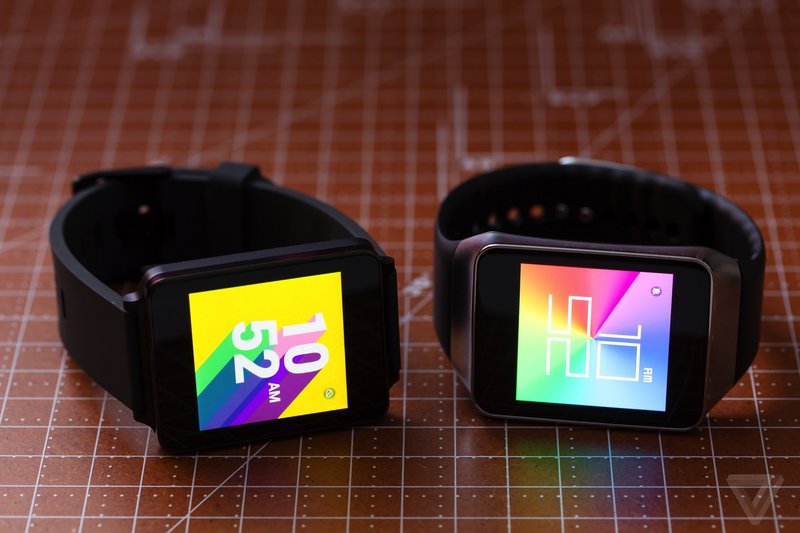
Google Plans Multiple Android Wear Updates as Apple’s Wearable Looms

Google’s first update to Android Wear is coming this week, and several more will follow it before the end of the year as Google moves to quickly iterate on its new wearable software platform. In an interview with CNET, two leading Android engineers lay out what we should expect to see in some future updates. This first one sounds as though it may not be much — just some navigation and voice control improvements — but a few useful features are coming down the road. That includes Google officially beginning to support custom watch faces from third-party developers: some developers have already figured out how to build them, but Google is working on a toolkit for developers that will allow watch faces to easily be made. Google previously t…

Continue reading…

Read more at The Verge

OpenStack Manila project Approved for Incubation

Internet News: So what is Manilla? It’s an OpenStack File Share service project, sponsored by Red Hat and NetApp.

More importantly, Manila is now an officially incubated project within the OpenStack Foundation. As an incubated project, Manila could one day land as an official integrated project, though don’t look for that until at least 2015.

Read more at Internet News.