
Release candidates are out for Mint with the “other two” desktops. Here is a brief look at each of them, and some information about alternate kernel management in Linux Mint.
Read more at Enterprise Open Source Toolkit
 Frank Karlitschek is founder of ownCloud and maintainer of the project’s general architecture.
There I was, 4 years ago (this past January) at CampKDE in San Diego, giving a talk on data privacy, warning the audience about the risks to their privacy from cloud vendors – in particular, Dropbox. So, build it yourself they said. Sure, I’ve built things in the past, so sure, I’ll do it. And there is where I started my odyssey, first, to protect myself, my friends and my colleagues from the snooping of governments, and other bad guys, and later – as I saw the worldwide interest grow – to build a real and successful project.
I had to decide a few things before I got started of course, including what it is I wanted ownCloud to do, what development platform to use, how I wanted to structure ownCloud, and of course, to name it ownCloud.
My friends and I needed a way we could sync our pictures, documents and even videos to our various devices (instead of using a thumb drive), and even to share those files with friends and family. Dropbox was by then becoming very popular, but I just didn’t want to send my data through a third-party service to be stored who-knows-where. I wanted to create a platform that friends could use the storage they already had – instead of the cloud — but not just for syncing and sharing, but a platform flexible enough to build apps beyond that.
Of course ownCloud would be open source.
Open source is my background, but it was for more than this. Using open source I would create code that would be completely transparent (so unlikely to contain “back doors” to my data). And I could draw upon so many like-minded people to help me build ownCloud, so I wasn’t alone. And I could reuse the technology from other projects. Like SABREDAV, which is the WebDAV framework we use for the server WebDAV communication (CalDAV, CardDAV and WebDAV are all used by ownCloud), and we also used jQuery. Then we used csync for the desktop client bi-directional sync capabilities, and Qt for the cross platform desktop user interface. I didn’t have to reinvent the wheel over and over again, instead, I could just plug and play.
But as I said before, I knew I wanted ownCloud to be more than just an “app.” Sure, storing data in a safe and secure way is important. But at the end of the day people want to do something with their data so I wanted to provide more functionality through ownCloud Apps. Apps are extensions that can implement features like virus scanning, logging of file access and changes, read and write files in other storage, file versioning and encryption, files editing and much more. This kind of integration of file storage with other services is essential in the future.
I wanted my project to be flexible, so that people could build ON to ownCloud (and many have, with a “Google News” type app, a video streamer, a music player, a calendar app – and more) and so that ownCloud could integrate into many different environments. For example, any WebDAV client could access ownCloud from the beginning, and the concept of internal apps was there from the start.
Of course, we are more advanced now – there are APIs for Sharing and Provisioning, there are internal APIs for apps using OCS, there are mobile libraries (which we open sourced) to integrate into other mobile apps, a key value store for general purpose data storage and syncing and more. Further, there are backend integrations into external storage like FTP, S3, SWIFT, CIFS, iRODS and a lot more. But even back then when we started, the intent was clear – build something flexible enough so people could create solutions we haven’t even thought of yet.
And THIS is the power of open source.
We (my ever-expanding community and I) evaluated different options to find the right technology that runs on every relevant platform, scales from tiny servers to big clusters, has all the needed features and is known by a big number of developers. So we choose PHP and JS for the server part, C++ for the Desktop Syncing Clients, Objective-C for iOS and Java for Android.
There were several architectural goals from the start: cross platform, easy to extend, leverage existing high availability infrastructure of off the shelf components in wide use.
So, we chose PHP for the most common, proven LAMP stack available that provides all that.
Also, this is an open source project and PHP is freely available, easy to find, works cross platform (Windows and Linux variants, IIS, Apache and more Linux server variants). There is a massive existing developer base as well, with lots of highly experienced developers. Finally, it is a language that is easily accessible for the community. With all that, it was a no brainer.
Because this project started by me talking about security and privacy, it was also essential to have the best possible security for all APIs. I chose strong SSL encryption for all WebDAV and REST APIs. Authentication is done via basic auth, which is very simple and easy to manage. We also can use SAML, provided through the Shibboleth implementation of the standard. In addition, OAuth and 2-factor authentication is available, and we even take advantage of ownCloud’s flexibility to integrate with custom back ends, using tokens instead of standard passwords.
I believe that file storage is not just another web service or IT infrastructure. This is where people and companies store and manage their most important data. Because of that it is essential to have it as secure and safe as possible. With proprietary software you can never be sure if there are any back doors or other security problems with the software. Open source is the only option for file storage that is really safe and secure.
So this is what I did, and why. It has been a labor of love that have gotten a great deal of attention too!
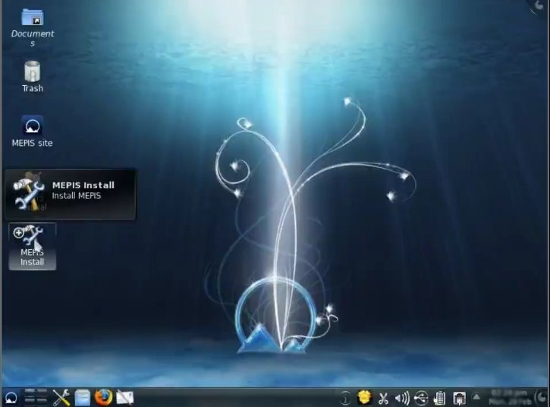
Once upon a time SimplyMEPIS, Mandrake Linux, and Lindows were popular and generated a lot of attention. Where are they now?
Way back around 2003 entrepreneur and technologist Warren Woodford released the first version of SimplyMEPIS. Mr. Woodford felt that the popular desktop Linux distros had too many rough edges, so he built his own sleek distro based on Debian and KDE 3.1.2. New releases appeared every 6-12 months, and each release was more polished and user-friendly. Nice helper utilities like MEPIS X-Windows Assistant, MEPIS System Assistant, and MEPIS Network Assistant made system administration easier. It hit the upper range of the DistroWatch rankings and stayed there for several years. My friend and colleague Steven J. Vaughan-Nichols called it SimplyMEPIS: The best desktop Linux you haven’t tried.
But that was then, and now MEPIS appears to be defunct. SJVN observes that “Back in the day, I loved MEPIS. It was a great desktop distribution. But its founder, Warren Woodford, couldn’t make it pay so he’s gone on to other projects, and the community he left behind hasn’t been able to keep improving it. It really is a shame, but sometimes one person really is essential to a project’s success, and that has proven to be the case with Woodford and MEPIS.”
MEPIS had a lot of fans, and also detractors as Mr. Woodford started charging subscription fees and selling CDs, and making controversial comments about the GPL, like “Some people call me a whiner about the GPL, while from my point of view they are the whiners. The GPL deserves to be scrutinized closely and to be debated, as does any legal document that restricts people’s rights.” Then MEPIS got caught up in GPL compliance issues because they didn’t maintain their own source code respositories, but rather expected that users could fetch sources from upstream. (See A GPL requirement could have a chilling effect on derivative distros by Bruce Byfield.) As if that weren’t enough drama, there were also questions about the licensing of the proprietary tools in MEPIS; for a long time there was no license, and copying and re-distributing MEPIS CDs was restricted to “You can make copies of the SimplyMEPIS bootable CD and give them away for non-commercial purposes only.” Which is a GPL violation.
Later releases of MEPIS were built on a combination of Ubuntu and Debian sources. antiX Mepis was developed for older, less-powerful hardware. The current stable release is Mepis 11, which was released in 2011. It’s usable, but old, with a 2.6.36 kernel and KDE 4.5.3. In comparison, Ubuntu 14.04 has a 3.13.0 kernel and KDE 4.13. A MEPIS 12 beta was announced last year, 11.9.x, and if you poke around you might find a download. The active MEPIS community has moved to mepiscommunity.org, which hosts the newest antiX release, MX-14.
MEPIS had two domains: mepis.org, the community site, and mepis.com, the commercial site. mepis.org is still up with all  the old archives and occasional announcements, but mepis.com is now MEPIS Patent Monetization.
Mandrake Linux was the easiest introduction to Linux for a whole lot of new Linux users, including me. Back in the 1990s, when there were both chain and mom and pop computer stores all over the place, you could buy Mandrake boxed sets in actual stores. It had a nice installer that knew what to do, and superior hardware detection, which was a big deal then because configuring audio and video could be a real nightmare. It came in many flavors: Mandrake Linux Free, which contained only Free and no-cost software, Mandrake Linux One, which included non-Free codecs and drivers, Discovery for novice users, Corporate Server and Desktop, Firewall, and portable versions for CD and USB sticks. The good Mandrake people were all full of ideas, and pushed out a steady of stream of excellent graphical tools for system and network administration, and nicely-polished releases.
Mandrake lost a trademark lawsuit brought by King Features, who for whatever weird reason felt that Mandrake Linux infringed their Mandrake the Magician character. So they became Mandrakelinux. Then they bought Conectiva, which was a nice Brazilian distro, and merged the names to become Mandriva.
Mandriva has had many financial ups and downs, and in 2010 laid off most of the Mandriva developers and maintainers. These former employees forked Mageia Linux from Mandriva, and created a non-profit organisation (Mageia.org) to support it. Mageia is community-supported, free of cost, and is a top-quality distro.
Mandriva is still in business, selling enterprise software.
Remember Lindows? It was one of the most ambitious distros, the first to take on Microsoft Windows head-on. Founder Michael Robertson wanted to develop a friendly, polished distro that could run major Windows applications such as MS Office, and to get it on OEM PCs and into stores. In 2002 you could buy Lindows PCs at Walmart. But poking the behemoth is risky, and Lindows paid the price. Microsoft sued them and lost. But big bank accounts never really lose, so Microsoft kept suing, and then offered a settlement. They paid Lindows $20 million and got the rights to the name, so Lindows became Linspire.
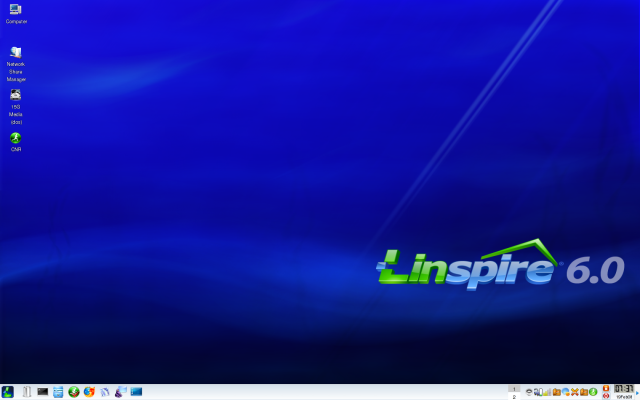 Linspire’s Click’N’Run is the precursor to Ubuntu’s Software Center, a graphical front-end to apt-get that also installs commercial software. Linspire was an active community supporter and supported ReiserFS, several KDE projects, and hosted conferences.
Linspire was based on Debian, and just like MEPIS got in trouble for not making source code available. They generated considerable controversy with their 2007 agreement with Microsoft, which included some document and multimedia interoperability goals, and patent covenants for Linspire. (Groklaw published a detailed critical analysis.)
Xandros bought Linspire in 2008, and that was the end of Linspire. Like it or dislike it, Linspire lived for six action-packed years and stirred up both the FOSS and proprietary computing worlds.
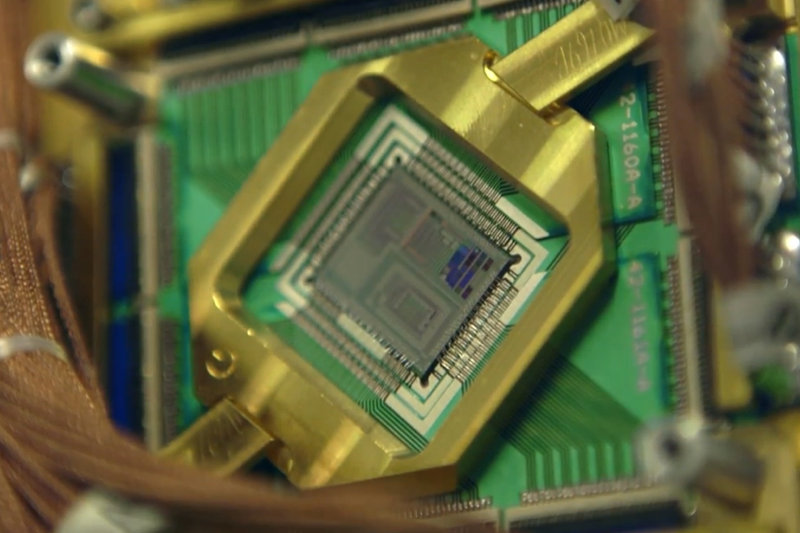
When the D-Wave 2 was first released last year, it was accompanied by a tidal wave of hype. The machine was a self-proclaimed quantum computer, commercially available to anyone with $15 million to spend, and attracting the attention of everyone from NASA to the NSA. One of the computer’s buyers was Google, which launched a new lab to test the device’s powers more rigorously than they’d ever been tested before. This October, the lab announced a major discovery, providing stronger evidence for quantum effects within the D-Wave 2 than anyone had previously found. As D-Wave had claimed, its device really was quantum-powered — and Google’s big research bet seemed to be paying off.