Home Blog Page 1456

AllSeen Community Blog Series: Sam Lanning

Sam Lanning is a computer science student at Oxford University and a sponsored member of the AllSeen Alliance. Sponsored members are reserved for organizations such as non-profits, associations or academic institutions and can be admitted by a majority AllSeen board vote.

Why did you want to become a part of the AllSeen Alliance?
I have been particularly interested in the subject of device interoperability for a while now, and long thought that to reach our tech visions of the future, we will need cooperation way beyond what we have today. We would need open source, community-driven protocols and platforms, just like what we’ve had for years in various Internet protocols, only a level higher. After discovering AllJoyn, realising that there are others out there who share my vision, and seeing that lots of progress had already been made, I obviously became very excited! After writing a blog post, and getting in contact with a number of people from the AllSeen Alliance, the subject of a sponsored membership was brought up, and of course I was more than happy to get on the bus!

What contributions do you hope to make as part of the Alliance?
My interests mainly lie within extending AllJoyn beyond its current feature set, in particular extending AllJoyn beyond proximal communication within the home and enhancing security.  

Read more at AllSeen Blog

A Process for Managing and Customizing HPC Operating Systems

High-performance computing (HPC) for the past ten years has been dominated by thousands of Linux servers connected by a uniform networking infrastructure. The defining theme for an HPC cluster lies in the uniformity of the cluster. more>>

 
Read more at Linux Journal

Intel Dives Deeper Into Internet-of-Things with Customizable Chips

Intel’s general manager for datacenters explains how the chipmaker plans to crunch boatloads of data spewing from sensors to smartwatches.

HP Launches Helion Managed Services

HP is positioning Helion Managed Services as an alternative to owning and managing storage assets, and says it’s different from previous managed services offerings.

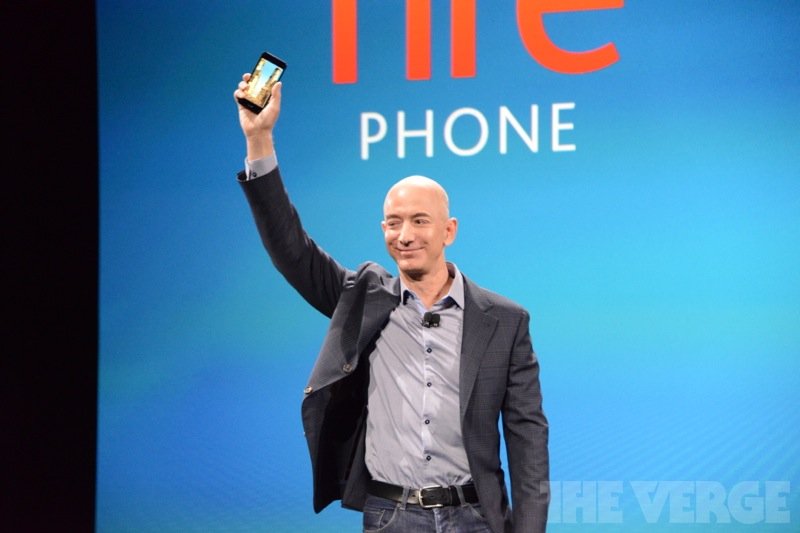
Meet the Amazon Smartphone: This is the Fire Phone

Amazon doesn’t just sell smartphones anymore — it makes one. In news that should surprise exactly no one, Jeff Bezos has officially unveiled Amazon’s first cellphone, the Fire Phone. It joins the Kindle Fire tablets, Kindle ebook readers, and Fire TV set-top box in Amazon’s ever-growing lineup of devices. Amazon’s been in the device business for ten years, Bezos reminded the crowd in Seattle, with the first Kindle coming fully seven years ago.

The Fire Phone has a 4.7-inch HD display, aluminum buttons, a Qualcomm processor, Adreno 330 graphics, and 2GB of RAM. Bezos mentioned a lot about the phone’s build, from the injection molded connectors to the chamfered edges. There’s a set of stereo speakers that Bezos promised are better than…

Continue reading…

Read more at The Verge

Welcoming #MesosCon to CloudOpen

A few years ago we put together the CloudOpen conference to unite the open source projects and products companies are using to create cloud or elastic computing infrastructures inside their companies: OpenStack and CloudStack, containers technology like Docker, data clustering platforms like Hadoop, storage platforms like Gluster and Ceph, and automation tools like Puppet, to name just a few. The defining characteristic of all of these projects (besides being open source) is that they are delivering on the promise of distributed and elastic computing to enable scalable and responsive infrastructures.

#MesosCon, the first ever conference dedicated to the Mesos ecosystem, is taking place in Chicago on Aug. 21 along with LinuxCon and CloudOpen.A few months ago I met with Twitter to discuss adding Apache Mesos into the CloudOpen and LinuxCon fold. Apache Mesos is the cornerstone of Twitter’s elastic compute infrastructure and fits perfectly into these events. Our aim is to bring the developers and users of these projects together with other developers and users of related projects to solve complex technical problems. These projects don’t live in a silo in a data center — they interact with each other and with Linux, the foundational operating system for them all — and thus we aim to provide a great collaboration space at our Linux Foundation events.

The Apache Foundation has just announced the program for #MesosCon, the first ever conference dedicated to the Mesos ecosystem taking place in Chicago on Aug. 21. The conference will begin with an introductory Mesos 101 workshop and keynote presentations from Mesos co-creator Benjamin Hindman (Twitter) and John Wilkes (Google).  The afternoon of day one will include single-track talks featuring:

  • Mesos frameworks, includingApache Aurora,Marathon,Spark, and a stream processing framework developed by Netflix.

  • An operations perspective on Mesos, including talks on the challenges of running an elastic cluster, and using Docker with Mesos.

  • Presentations from companies that use Mesos in production: including eBay, HubSpot, Airbnb and Shopify. These presenters will also participate in a panel discussion.

Registration is open and almost half-full already, so register if there is interest. I am also happy to see continued collaboration with Apache Software Foundation projects like Mesos and CloudStack here at the Linux Foundation. I think our collaboration is going very well.  

Also the program for CloudOpen this year is IMHO really stellar with a broad and deep line up of technical talks for DevOps professionals. By combining that conference with the add on events like MesosCon you can come away armed with a full tool kit to tackle elastic computing challenges.  Please register for CloudOpen or LinuxCon soon as we will likely sell out.

Google and Facebook Open Source Important Tools

Over the years, Google has been one of the largest contributors to the open source community, handing many of its projects over for community development. Just this month, both Google and Facebook have made some significant new contributions of projects. Google has released Kubernetes under an open-source license, which is essentially a version of Borg, which harnesses computing power from data centers into a powerful virtual machine. It can make a difference for many cloud computing deployments.

Last week, Facebook open sourced Haxl, a library that eases access to remote data. Haxl can automatically batch multiple requests to the same data source, request data from multiple data sources concurrently, and cache previous requests. Having all this handled behind the scenes means that data-fetching code can be much cleaner and clearer than it would otherwise be if it had to worry about optimizing data-fetching.


Read more at Ostatic

The Gear VR Headset Could be Samsung’s First Move into Virtual Reality?

  There are rumours that Samsung is working on a virtual reality headset, and we might know the name according to a filed application with the US Patent and Trademark Office, for the trademark Gear VR. We don’t need any prizes to guess that VR stands for Virtual Reality. Samsung is said to be collaborating with Oculus VR, makers of the Oculus Rift, which is a virtual reality headset for immersive gaming. Now there is no direct connection between Gear VR and Tizen at the moment, but as Samsung has demonstrated recently, Tizen is their OS of choice, it makes sense that our OS does power it. No release dates are at hand at the moment, but an announcement isn’t usually too far off a patent application, so we should be hearing something in the coming months.   Source / Via

The post The Gear VR headset could be Samsung’s first move into Virtual Reality? appeared first on Tizen Experts.

Read more at Tizen Experts

Red Hat to Acquire eNovance, Focus Together on OpenStack

In conjunction with the recent OpenStack Summit in Atlanta, Red Hat had confirmed many new OpenStack-centric initiatives, one of which was that the company is collaborating with eNovance, a leader in the open source cloud computing market, tto drive Network Functions Virtualization (NFV) and telecommunications features into OpenStack. Now, Red Hat has announced that it will acquire eNovance for about  70 million euros, or $95 million, in cash and stock.

eNovance is an important player on the OpenStack scene, and is especially known for its work with telecommunications companies.  eNovance helps service providers and large-scale private enterprises build and deploy cloud infrastructures quickly and cost effectively, and will create new lines of business for Red Hat.


Read more at Ostatic

Android Without the Mothership

The success of Android has brought Linux to many millions of new users and that, in turn, has increased the development community for Linux itself. But those who value free software and privacy can be forgiven for seeing Android as a step backward in some ways; Android systems include significant amounts of proprietary software, and they report vast amounts of information back to the Google mothership. But Android is, at its heart, an open-source system, meaning that it should be possible to cast it into a more freedom- and privacy-respecting form. Your editor has spent some time working on that goal; the good news is that it is indeed possible to create a (mostly) free system on the Android platform.

Read more at LWN