The most important duty of a Linux system administrator is to make sure the system he/she is administering is in a very good condition. There are many tools available for a Linux system admins that can help to monitor and display processes in a system such as top and htop, but none of these tools…
[[ This is a content summary only. Visit my website for full links, other content, and more! [[
Version 5.3 of Tiny Core Linux, the latest stable build of the fast and minimalist (less than 15 MB) desktop Linux distribution built from scratch, has been released and is now available for download: “Team Tiny Core is pleased to announce the release of Tiny Core Linux 5.3:….
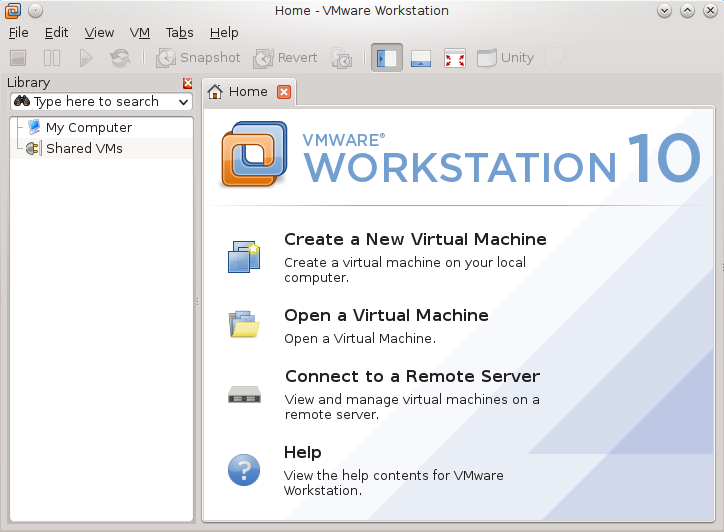
I got new ultrabook (Samsung ATIV Book 5 NP530U4E) preinstaled with Windows 8 (updated to 8.1) so I wanted to switch main OS to Fedora 20 (Heisenbug) and keep Windows in VM, just in case (e-banking sw and so).
This walktrough is for everyone who would like to install VMware® Workstation 10.0.1 build-1379776 to x86_64 version of Fedora’s latest Linux distro.
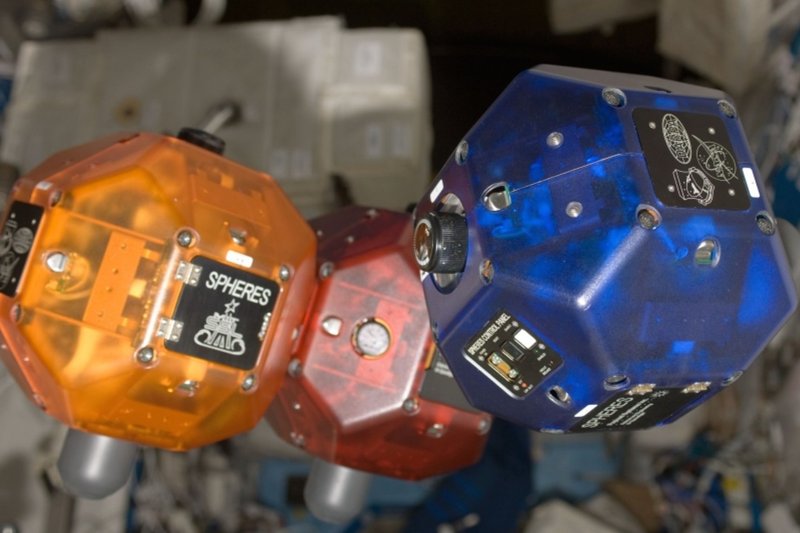
An experimental NASA robot could get a big upgrade thanks to Google. The two parties have been working together to integrate Google’s Project Tango smartphone prototype — which can detect and map the world around it using a series of sensors — onto NASA’s SPHERES — brightly colored, volleyball-sized robots designed to float around the International Space Station and assist astronauts. Right now, the SPHERES can perform basic navigation inside of a limited section of the ISS by using ultrasound and detecting infrared light, but using Tango’s more detailed detection methods, NASA hopes to let the robots explore more of the station and navigate entirely on their own.
This article identifies the finest open source vector graphics editors. Vector editors are ideal for technical illustrations, diagramming, flowcharting, artistic illustrations, promotional posters, banners, signage, logos, typography, vehicle wraps and layout. Bitmap editors are more suitable for retouching, photo processing, photorealistic illustrations, collage, and illustrations drawn by hand with a pen tablet.
Enterprises today are facing the industrialization of IT, in which infrastructure is commoditized and innovation is happening much faster at the application level, said Red Hat President and CEO Jim Whitehurst in his 2014 Red Hat Summit keynote this week.
The only way to keep up with the leading edge of technology, such as containers, software-defined networking, the cloud and big data, is to choose infrastructure built by the open source community, he said. No single vendor can do better at building or predicting the future of technology than an entire industry coalition of vendors.
“By choosing an open versus a proprietary ecosystem you inherit the benefits of innovation that’s happening not at Red Hat, but broadly in open communities around the world,” Whitehurst said.
In this video, Whitehurst explains the forces behind IT innovation today, the role of open source communities in shaping the future of technology, and Red Hat’s strategy for helping enterprises manage IT infrastructure growth and change.
Last month, ZDNet published an interview with MongoDB CEO Max Schireson which took the position that the document databases, such as MongoDB, are better-suited to today’s applications than traditional relational databases; the title of the article implies that the days of relational databases are numbered. But it is not, as Schireson would have us believe, that the relational database community is ignorant of or has not tried the design paradigms which he advocates, but that they have been tried and found, in many cases, to be anti-patterns. Certainly, there are some cases in which the schemaless design pattern that is perhaps MongoDB’s most distinctive feature is just the right tool for the job, but it is also misleading to think that such designs must use a document store. Relational databases can also handle such workloads, and their capabilities in this area are improving rapidly.
Let’s look at his example of entering an order into a database. In this example, it is postulated that the order is split between 150 different relational tables, including an order header table, an order line table, an address information table and, apparently, 147 others. Relational databases do encourage users to break up data across multiple tables in this way, a process callednormalization. But not for no reason. Storing every order in one large document may be ideal if all access will be strictly by order number, but this is rarely the case. When a user wants to run a report on all orders of one particular product, an index on the order line table can be used to efficiently find and retrieve just those order lines. If all order data is lumped together, the user will be forced to retrieve the entirety of each order that contains a relevant order line – or perhaps even to scan the entire database and examine every order to see whether it contains a relevant order line.
Rod Smith of IBM and I had a call the other day to prepare for our onstage conversation at O’Reilly’s upcoming Solid Conference, and I was surprised to find how much we were in agreement about one idea: so many of the most interesting applications of the Internet of Things involve new ways of thinking about how humans and things cooperate differently when the things get smarter. It really ought to be called the Internet of Things and Humans — #IoTH, not just #IoT!
Let’s start by understanding the Internet of Things as the combination of sensors, a network, and actuators. The “wow†factor — the magic that makes us call it an Internet of Things application — can come from creatively amping up the power of any of the three elements.