
Android chief Sundar Pichai likens the evolution of wearable devices to the smartphone revolution during a panel discussion at SXSW. [Read more]
Read more at CNET News
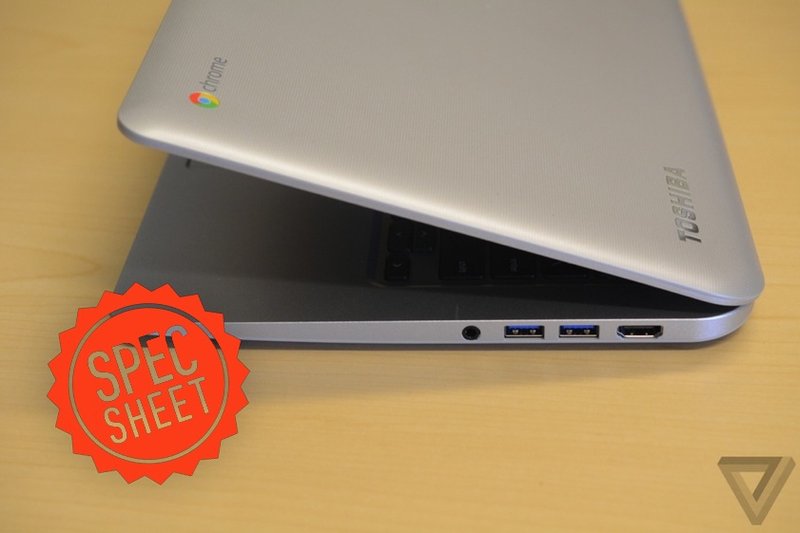
A lot of products come out each week — we don’t highlight all of them, but all of them make it into The Verge Database. In Spec Sheet, a weekly series, we survey the latest product entries to keep track of the state of the art.
Chromebooks are making a big statement in the laptop world: NPD Group Inc. reported that Chromebook sales accounted for 21 percent of all notebook sales last year. For devices that are functionally little different from tablets — designed for basic tasks like checking email and web browsing — they’re growing fast. Even as the tablet market continues to grow, capturing 22 percent of the entire personal computing market just last year, Chromebooks are giving people an alternative to rectangular touch screens.
…
The Internet of Things market will grow in the next few years to reach more than $7 trillion, according to IDC, or up to $17 trillion if you believe Cisco CEO John Chambers.
 And as the number of devices with network connectivity and Internet access skyrockets, so will the number of devices running embedded Linux. How will all of those smart appliances, wireless sensors, and more get built? With the Yocto Project, says Intel in this new animated promotional video.
Hacking together custom embedded operating systems from scratch is akin to building Frankenstein out of code. The video makes this analogy and then depicts embedded Frankenstein terrorizing developers and tearing down their projects.
“Building custom Linux is slow, expensive, and complicated,” says the video’s narrator. “A lot of projects end up at the mercy of a cobbled together, unsustainable Frankenstein OS.”
The Yocto Project’s open source toolset helps developers build a custom embedded Linux distribution on any hardware architecture by automating the low-level details of the build process. Thus, developers who use Yocto become super heroes, vanquishing Frankenstein and restoring their projects.
“Join the super developer ranks and embed fast, simple, brilliant results into your projects.”
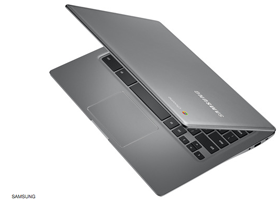 How focused has Samsung recently become on Chromebooks–portable computers that run Google’s cloud-centric Chrome OS? According to a recent report in DigiTimes, after cutting its targets for notebook computer sales, the company may have plans to “no longer launch conventional notebook models except Chromebooks in 2015, according to Taiwan-based supply chain makers.” Back in October 2012, we were reporting on how Samsung was going all in on inexpensive Chromebooks. The company has steadily offered under-$300 models, and gotten good reviews for them.
This week, though, Samsung revealed higher-end plans for Chromebooks that look, well, pretty attractive. The company launched the Chromebook 2, with a powerful ARM processor and the option of a full HD screen. The processor inside is a speedy 2.1-GHz Exynos 5 octa-core processor, and these Chromebooks come with the same faux-leather backing that some Samsung phablets have.

I’ve been invited to speak on a panel at ONS on “Openness.” It is a great honor to be on stage with Dan Pitt (ONF), Margaret Chiosi (AT&T Labs) Prodip Sen (Verizon), Victor Lin (Google). I thought I would share a few of my thoughts before the panel.
Customers of the IT industry have long said that being locked into proprietary platforms has real drawbacks – you are stuck with one vendor’s vision, one product roadmap, and the costs of switching can be high. Not a situation most customers enjoy. More, we have a huge systems integration industry in part because of the challenges of getting components from different companies to work with each other. Finally, a lot of technologies that customers love get left to fade away or are made obsolete when a vendor’s priority changes.
So what’s the option? Go with an open platform. But what is Open? Is it a binary decision? I would argue that it’s not. I like to think of openness on a ten-point scale, with zero being the most closed you can be and ten being totally and completely Open. If you do that you get a map something like this:
Linpus Technologies has announced the release of Linpus Linux 2.1 “Lite”, a desktop Linux distribution with a customised GNOME 3 desktop and out-of-the-box support for touch screens: “Linpus announces the latest version of their Linux distro, Linpus Lite 2.1. Linpus Lite is an extremely powerful yet versatile desktop,….