Home Blog Page 1653

Developers Can Now Run a Fast Redis Database on IBM’s SoftLayer Cloud

Developers who want to use Garantia Data’s service, Redis Cloud, which is a souped-up version of the open-source in-memory key-value store Redis, don’t need to worry about expanding their cloud infrastructure, Garantia Data executive Itamar Haber wrote in a post on an IBM blog . “Redis Cloud’s fully managed service on SoftLayer performs automated clustering, scaling, data persistence, performance optimization, and failure recovery from a single console, so you get ‘hands free’ Redis management,†he wrote.

The new support for Redis Cloud could help IBM lure more developers onto its cloud. IBM has simultaneously been trying to match public cloud competitor Amazon Web Services in some ways and exploring methods of standing out in a fast-moving and not always friendly market. This move in particular moves IBM up a notch in terms of the ability to run the expansive Redis Cloud, right alongside Amazon and other public clouds including Microsoft’s Windows Azure.

Read more at VentureBeat

Taking the Long View: Why I’m Moving to CentOS Linux on the Desktop

CentOS has long been considered a server operating system, but it is a very capable and stable platform for the desktop as well with long term support.

SDN: You Say You Want an Evolution

Steve Wexler raised an interesting question last week: Is SDN revolutionary or evolutionary?

His post touches on a reality that’s been bothering me for years. Almost everyone in IT I’ve spoken to in the last three years–from CTOs to admins–has mentioned that network management is one of the biggest impediments to automating the data center. Most are looking to network programmability, and by extension software-defined networking, to solve that problem, yet most have struggled to really make progress toward this transition.

Why? Because thus far SDN has been too revolutionary (read: highly disruptive). Solutions have required buying brand new equipment or deploying overlays. The heart of the challenge lies in delivering interoperability and manageability–both, highly dependent on the size of the ecosystem around a given solution. 

Read more at OpenDaylight Blog

Google Buys Nest Labs, Demonstrates Value of Linux Goes Well Beyond the Kernel

Google this week announced it would acquire Nest Labs, which makes the wildly popular Linux-based, Wi-fi enabled and programmable Nest thermostat and smoke and carbon monoxide detectors. A $3.2 billion deal, this acquisition demonstrates how hot the connected home market is becoming and how big the promise is of the Internet of Things. It also demonstrates the value of Linux and how open source impacts the biggest business decisions being made today.
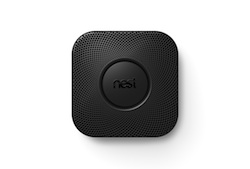
NestBy using Linux as the foundation for its products, the Nest Labs founders were able to innovate faster, build better and deliver better value for its customers. Google, among other big technology companies, know the value of Linux and open source development and are taking notice of the work entrepreneurs are doing with Linux. The maker community is thriving, the open source community is thriving and businesses are seeing real value from those efforts while entrepreneuers build reputations, new businesses, and cash in.  

When the Linux-based Raspberry Pi was originally introduced it sold out in minutes and by the end of that day the makers of Raspberry Pi were famous. They took Linux and built a $35 computer that has spawned hundreds of new projects and products (here’s just a handful of them) and from which companies are able to derive real business value.

I saw many more examples of this at the Consumer Electronics Show last week where new and veteran companies alike were showing off Linux-based drones, 3D printers, robots and more. Linux allows developers and makers to stand on the shoulders of giants and truly innovate. The results are better technologies faster and a contribution to a lot of companies’ bottom lines.

Years ago we published a paper that calculated the value of Linux. We used a proven methodology to understand the estimated R&D value of a Linux enterprise distribution. Today the value of Linux can’t be determined by assessing one Linux distribution. The value of Linux is everywhere and goes far beyond one distribution or one device. It ranks in the billions of dollars and is more and more often a key strategic component of any business. Google gets this. Nest Labs gets this. And, the community and industry benefit.

Linux-Powered Telepresence Robot Gets Personal

Suitable Technologies is accepting 1,000 pre-orders at $995 for Beam+, a smaller, less costly, consumer model of its Linux-powered “Beam” mobile telepresence robot. The remotely-piloted Beam+ bot, which can be controlled via a WiFi or a 4G LTE cellular connection, runs the open source Robot Operating System (ROS) plus low-latency Skype-like video conferencing software on […]

Read more at LinuxGizmos

KDE SC 4.12 Gets January Update

The KDE community has announced the updates for KDE SC 4.12 series.

The post KDE SC 4.12 gets January update appeared first on Muktware.

Read more at Muktware

Altair Chip to Power HP’s LTE-Only Chromebook

Developed by HP in close collaboration with Google, the device is based on the Wi-Fi-only Chromebook 11.

The post Altair chip to power HP’s LTE-only Chromebook appeared first on Muktware.

Read more at Muktware

Ubuntu Won’t Appear On Phones In Mass Until 2015

Mark Shuttleworth and other Canonical employees have in the past talked about 2014 as being when Ubuntu Touch will begin appearing on devices… Now that 2014 is here, the word now is that it will likely not be until 2015 when an Ubuntu Phone is coming out of any major device manufacturers…

Read more at Phoronix

Renowned Cryptographer Believes His Phone Can Stop the NSA

Revelations about how insecure our communications are have been a daily fixture of the news cycle recently, and it’s in this climate that a pair of companies are combining to launch a new smartphone focused on privacy. The Blackphone will run a “security-oriented” version of Android named PrivatOS, which the companies say will will allow users to securely place and receive phone calls, text messages, video chat, transfer and store files, and “anonymize your activity” through a VPN.

Continue reading…

Read more at The Verge

What Open Source Means to a Young Programmer

youth programming for open source

I’m a 15 year old programmer. I started at nine and by now have written a lot of code. To me, programming is creating, and I’ve created many projects—from a pure Java 3D projection engine to a web spider. Today, I’m sharing my story with you for Opensource.com’s Youth in Open Source Week.


read more

Read more at OpenSource.com