Editor’s Note: We are inspired by My Nerd Story, which began as one woman’s blog post in response to an interview in The Information and has grown into a movement of women developers sharing their stories about how they got started coding. In support of women who want to share their nerd story but need a platform, Linux.com is offering to publish them in our community blog section. Linux.com registered users can upload directly to the site at https://www.linux.com/submit-an-article, and anyone can contribute by contacting editor Libby Clark,
This e-mail address is being protected from spambots. You need JavaScript enabled to view it
.
This is a guest blog post by Dawn Foster, community manager at Puppet Labs, and is republished with permission from her blog Fast Wonder.
First, a huge thank you to Crystal Beasley for encouraging me, and others, to get organized and write our nerd stories in the aftermath of the recent comments from Paul Graham.
My geek story started early, probably because my dad and grandfather were into amateur radio (ham radio) in a pretty hard core way from the time I was little. I remember my dad studying for one of the morse code exams when I was maybe 4 or 5 years old, and me being the little sponge that I was, picked it up pretty easily. Nothing like a mouthy toddler shouting the answers to motivate someone to learn. 
My parents got divorced a year or two later, and a few years after that we moved onto my step-dad’s farm. I was in 4th grade at the time, which I guess would make me about 9, and it was in a rural area where people just didn’t have any extra money lying around for luxuries. It was also the late 70′s / early 80′s when computers and related technology were pretty uncommon in most houses, since this was before the PC era and way before most people had any type of online access.
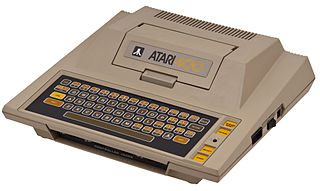 Around this time, dad bought us an Atari 400 for Christmas. At the time, we didn’t know anyone else near where we lived who had a computer at home. I eagerly started playing games (pirated copies on tapes that required a lot of patience to load), and I got my first taste of programming. As a side note, the Atari 400 had one of the worst keyboard designs ever, the membrane keyboard, which prevented accurate typing, and as a bonus, random keys would occasionally just stop working, but I stubbornly persisted. After seeing my interest in programming, Dad later upgraded us to the Atari 800.
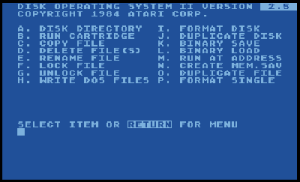 Keep in mind that this was before Windows and other modern user interfaces. There was no mouse and no point and click interface. The operating systems of the time were pretty limited, and programming was typically done in BASIC. Since we didn’t see our dad very often, and my mom and step-dad didn’t know anything about computers, I had to figure it out myself. I started by typing in programs from books or magazines (like Byte), and I began to make small changes just to see what else I could make it do. A lot of it was trial and error, but it didn’t take long for me to start writing new programs.
My dad and grandfather got more and more into computers throughout the years with my dad turning it into a career later in life. My grandfather even built some of his own computers, which he used as part of his ham radio setup. My grandfather also helped my study for my amateur radio exam, and I went on to get my ham radio license (KB8AGX) in 1986, which I continue to renew every 10 years just to keep the geek cred.
When I went to college in 1989, I started as a math major with plans to teach high school math (my favorite subject in high school). I took an Introduction to Programming class (required for the math degree), which was a Pascal class taught on a VAX/VMS system. As part of the class, we each received a temporary email address (which was deleted at the end of the semester), and I used it to email my grandfather (the only person I knew outside of the university with an email address)!
About 4 years later, I was almost done with my math degree (12 credits away from graduation – all I had to do was a semester of student teaching) when I realized that I didn’t want to teach (I’m not particularly good with kids). It was around 1993 and computers were getting a lot more attention. I remembered how much I enjoyed programming, so I changed my major to computer science. The computer science department at Kent State University was part of the math college, and it had a lot of math courses as part of the curriculum, so I was already most of the way there. Since I had taken so many of the required courses already, I was able to get through the computer science program in 3 or 4 semesters. By that time, the computer science department had moved to UNIX (mostly SunOS). I took assembly language programming, built a little operating system, wrote a compiler and took a variety of other computer classes, but my favorite was a UNIX system administration course taught by one of our university sys admins. This led to my very first job in 1995 as a UNIX system administrator for a manufacturing company in Ohio.
Since then, I’ve done a little of everything: system administration, programming, project management, market research, people management, and much more. I’ve worked for companies ranging from tiny startups to huge companies, like Intel. I finally settled into a comfortable little niche of community management with a focus on technical communities and open source communities, and since community manager is a broad role, I get to dabble in all kinds of different things. It’s also one of those fields where every day is different, which suits me perfectly!
Where I grew up, most of the people I knew worked on farms or in factories, and college degrees weren’t very common. I knew that I wanted to go to college, move to a city and be able to support myself. When I graduated and got that first tech job, I thought of it as a good job that would pay my bills. What I didn’t realize at the time, was that my computer science degree and the career that followed would completely change my life.
I’ve traveled all over the world as a part of my job: China, South Korea, Brazil, and all over Europe. I’vepresented at more conferences than I can count: SXSW in Austin; OSCON in Portland; various LinuxCon events in Prague, New Orleans, Edinburgh, Barcelona, etc.; FOSDEM in Brussels; and many more. Because I’ve been to so many conferences and have managed global open source communities, I can travel to most locations around the world and visit people that I know. I also have an amazing group of friends here in Portland, and I met most of them through the local technology community.
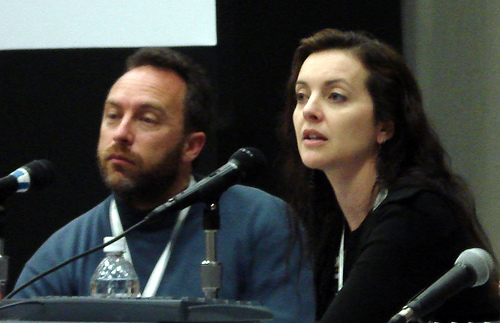
I feel tremendously fortunate to have this opportunity to work in a field that I love while doing interesting things that a younger me could not have ever imagined would be part of my daily job.
I’d like to end my nerd story with some advice for how other young people, especially women, can make their own nerd story:
- Do some programming – on your own, in a class, or as a technology major of some form. Try a few things, and find something you enjoy.
- Use internships as a way to try out a few companies / jobs, but get paid for them (do not take a free internship doing tech work)! It’s a great way to try out a job and a company with little risk, since they are usually a 3 month gig. If it goes well, and you enjoy it, your chances of getting hired by that company are good.
- Pick a topic you are interested in and speak about it at a conference. Most of my career opportunities are a result of speaking at conferences.
- Watch my recent presentation about building a successful technology career for other tips.
So what now? Share this story and others on the social media platform of your choice, encourage other women to write their stories, or blog about your nerd origins and share it with the hashtag #mynerdstory. You can also check out the My Nerd Story Facebook page.
Photo Credits:


