The ability to run multiple virtual machines (VMs) on single server hardware platforms provides cost, system management, and flexibility advantages in IT infrastructure today. Hosting multiple VMs on single hardware platforms reduces hardware expenses and helps minimize infrastructure costs such as power consumption and cooling. Consolidating operationally distinct systems as VMs on single hardware platforms simplifies managing those systems through administrative layers such as the open source virtualization library (libvirt) and tools that are based on it, such as the graphical Virtual Machine Manager (VMM). Virtualization also provides the operational flexibility required in today’s service-oriented, high-availability IT operations by making it possible to migrate running VMs from one physical host to another when mandated by hardware or physical plant problems or to maximize performance through load balancing or in response to increasing processor and memory requirements.
Open source desktop virtualization applications such as VirtualBox make it possible for users and even some small enterprise (small to medium-sized business or small to medium-sized enterprise) environments to run multiple VMs on single physical systems. However, virtualization environments such as VirtualBox run as client applications on desktop or server systems. Enterprise computing environments require higher-performance, server-oriented virtualization environments that are closer to the physical hardware (the “bare metal”), enabling VMs to execute with far less operating system overhead. Bare-metal virtualization mechanisms can better manage hardware resources and can also best take advantage of the hardware support for virtualization that is built into most 64-bit x86 and PowerPC processors.
As Poland’s outsourcing industry continues to grow, the country’s IT services companies are finding new ways to make sure their next generation of staff have the right skills for the job.
Linux and FOSS have a lot of energy going into great big projects: cloud, mainframe, supercomputing, and large-scale distributed computing. So bigtime projects like OpenShift, OpenStack, Hadoop, Xen, KVM, and enterprise offerings from Red Hat, SUSE, and Canonical are getting all the glory.
But there is a lot happening at the other end of the spectrum, in small-scale specialized projects that anyone can play with for cheap. After wading through endless Ubuntu and Backtrack re-spins I found these 7 interesting, useful, and unique projects that were launched in 2013.
Lenzhound Wireless Lens Motor Control System
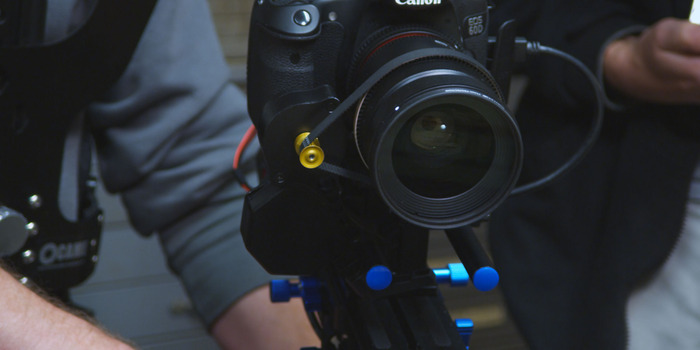
The Lenzhound Wireless Lens Motor Control System is a wireless follow-focus system for DSLRs and video cameras. That’s right, serious independent moviemakers use DSLRs, and the Lenzhound is an affordable alternative to the traditional expensive follow-focus gear. It’s built with Arduino, and the specs and documentation are freely-shared under Creative Commons licenses. The Lenzhound is user-programmable, and also designed to be customizable without having to muck with source code. It is manufactured in the US, and is scheduled to be available in mid-2014.
Nanolinux, the 14MB Desktop
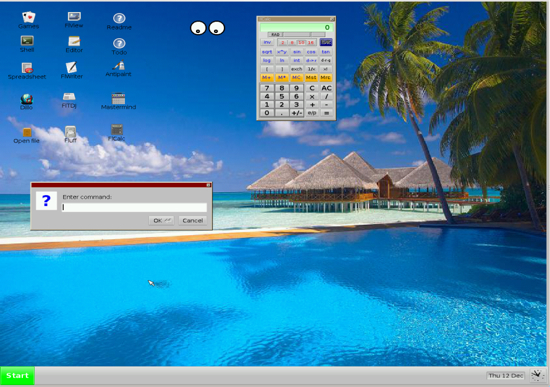
There are a lot of tiny Linuxes, but Nanolinux squishes more into a smaller space than any of them. In a mere 14MB you get a graphical desktop, games, Web browser, spreadsheet, paint program, file manager, image viewer, text editor, and more. It accomplishes this by using the Nano-X window system, the FLTK Fast Lightweight Toolkit, and the über-lightweight SLWM window manager. It boots up so quickly it’s startling. Copy it to a USB stick with Unetbootin and you have the tiniest Linux to carry with you anywhere.
Raspberry Digital Signage
Raspberry Digital Signage is a slick operating system for Raspberry Pi, for operating digital signs. It includes a Web view that supports Firefox, Chromium, and Midori, and a Media view that displays both still images and video. It has remote management via a Web administration panel and SSH, security features like disabling keyboard and mouse input, scheduled operation, an on-screen virtual keyboard, schedule Web page reloading, and lots more.
RaspyFi Audiophile Pi
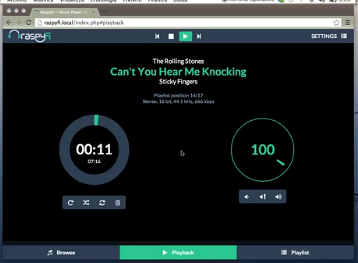
While we’re talking about multimedia Raspberry Pi, check out the RaspyFi project. RaspyFi makes it easy to play music with your Raspberry Pi with minimal hassles. You can play music from a USB stick or network-attached storage. It has nice Web-based administration, and good documentation to help you sort out what hardware you need.
RebeccaBlackOS Wayland Preview
RebeccaBlackOS may be the first distro that ships with a working Wayland implementation. Wayland is the display server protocol that will someday replace the X window system. It’s already available in most distro repos as an option for curious users, but as far as I know RebeccaBlackOS is the first to ship with a prefab Wayland all ready to play with. RebeccaBlackOS is based on Kubuntu, and it’s a big download. The “reduced” download image is 1.2GB, while the full image is 2.1GB.
Wayland should start appearing in more distros in 2014. It’s been in development for over five years, and the transition away from X is going to take many more years. There is no way to make a clean break because X is a fundamental subsystem and all graphical Linux applications depend on it. Meanwhile, you can get your hands on it in RebeccaBlackOS, see how it works, and perhaps contribute useful feedback or even code.
FarmBots For Everyone
Traditional mechanized farming uses heavy, expensive machinery, and imprecise applications of chemicals. It’s fossil-fuel intensive, and it’s hard to make it economical for smaller acreages or growing smaller quantities of multiple crops. Rather, it’s better suited to large acreages of monocrops. We’re already solving the problem of building machines that can tell the difference between a desired plant and a weed, which means more precise applications of herbicides and fertilizers, and have GPS (Global Positioning System) guiding seeders on large acreages.
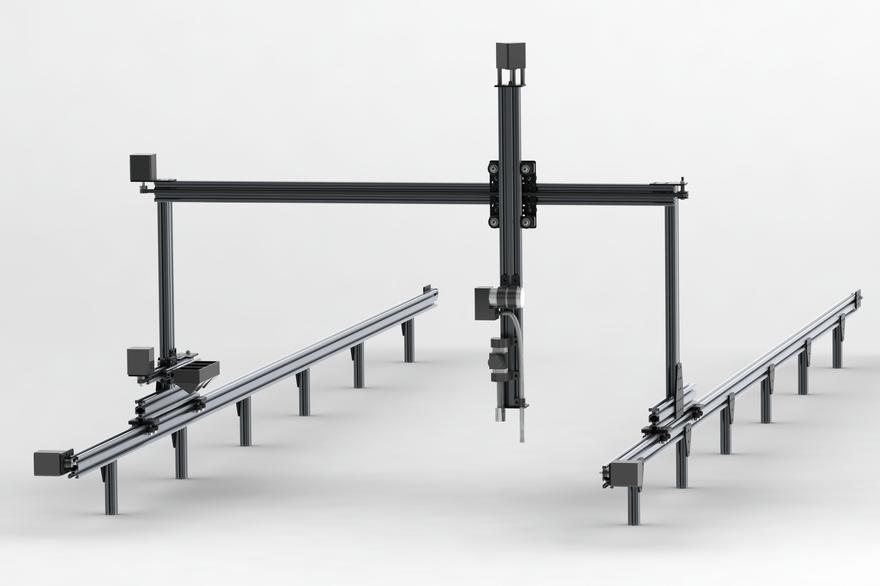
FarmBot Genesis rethinks mechanized farming from the ground up, and replaces the tractor with a lightweight, programmable, self-propelled automated framework. It’s built on Arduino and off-the-shelf parts, and is designed to be cost-effective for both manufacturers and do-it-yourselfers. It is scalable from small gardens to giant farming operations. The FarmBot framework is a gantry that rides on tracks, and you can attach anything you want to the gantry: sensors, seeders, fertilizers, tools, and so on. The tracks are narrower than tractor tires and don’t compact the soil, and allow for great precision. The tracks need to rest on concrete pads, which for smaller operations could be concrete pier blocks so you can move them.
FarmBot is still a young project, and it’s accessible to hobbyists because the materials are fairly inexpensive and the Arduino programming language is easy to learn. There is already a body of code to work with, which includes a nice Web front-end.
3D Print Your Own Robohand
Prosthetic limbs are outrageously expensive, especially hands. Robohand is changing that. Robohand is built from about $500 of parts, free downloadable plans and a 3D printer, compared to $10,000 for traditional prosthetics. A good 3D printer costs about $3,000 plus materials, but there is no shortage of people who need prosthetic hands so it’s a viable community project. The Robohand is not a myoelectric hand that requires surgery, batteries and motors, but is a mechanical hand that uses muscle and joint motion to operate. It’s lightweight and strong, and customizable to the wearer. The plans include schematics for fingers, whole hands, and hand + wrist.
Robohand’s inventor is Richard Van As, a South African carpenter who lost four of his fingers to a power saw. His goal is to make his designs available to people all over the world, and someday to sell kits in stores.
Collaborating with Intel and DreamWorks, Fuhu is prepping 8- and 12-inch Android 4.4 “DreamTab” tablets for kids, based on Intel’s 64-bit Atom Z3740 SoC. The DreamTab appears to be one of the first Android tablets to offer the Atom Z3740, Intel’s 64-bit version of the Atom Z3000 (“Bay Trail-T”) system-on-chip family. Other tablets that have […]
The Consumer Electronics Show (CES) took place this week in Las Vegas, and Mozilla officials made headlines there as they revealed plans to take the Firefox OS mobile platform to devices other than smartphones, and a new deal between Panasonic and Mozilla to drive smart, HTML 5-fluent televisions. It’s all part of Mozilla’s ongoing effort to focus on mobile technology and new platforms.
Foxconn had already shown a tablet device based on Firefox OS, and now comes news of a deal between Foxconn, Mozilla and VIA Technologies (a Taiwan-based chipmaker) to collaborate on Firefox OS tablets.
Covered yesterday on Phoronix were some of the Intel DRM driver improvements for Linux 3.14 and it just so happens this week I did some early, quick testing of some of the Intel’s graphics driver changes done for this next kernel…
As announced at the openSUSE Conference 2013, this years openSUSE conference will take place in Dubrovnik, Croatia. This beautiful city will welcome us Geekos from the 24th to the 28th of April. The team has been hard at work to prepare things and below they start by giving you a taste of the city, the venue and themselves!
The openSUSE Conference
The openSUSE Conference is the annual gathering of the openSUSE Community and other Free and Open Source contributors and enthusiasts. This year will be the 6th event where the talks, workshops and discussions provide the framework to exchange knowledge, collaborate and create lasting connections and incredible memories. Last year our event took place in Greece – read reports on day one, day two and day three. Before we’ve had a smashing time in Prague and in a old factory hall in Nüremberg.
Lenovo is reportedly planning to release a set of new Chromebooks this year. Jay Parker, president for Lenovo’s North American operations, told CNET at CES that “multiple Chromebook models” would see release by summer 2014, at various price points and configurations.
The Chinese company — who boast the largest PC market share in the world, according to IDC data — released its first Chromebook last January. It was targeted at the education sector, but Parker thinks the Chromebook’s appeal can be rapidly broadened, believing that the market “will accelerate greatly in the next 12 months.” The tacit backing of the biggest computer vendor in the world will undoubtedly speed that process along.