
NVIDIA has kicked off CES week by announcing their latest Tegra ARM SoC, the Tegra K1. The NVIDIA Tegra K1 is a killer SoC with custom 64-bit design and a Kepler-derived graphics processor with 192 GPU cores…
Read more at Phoronix
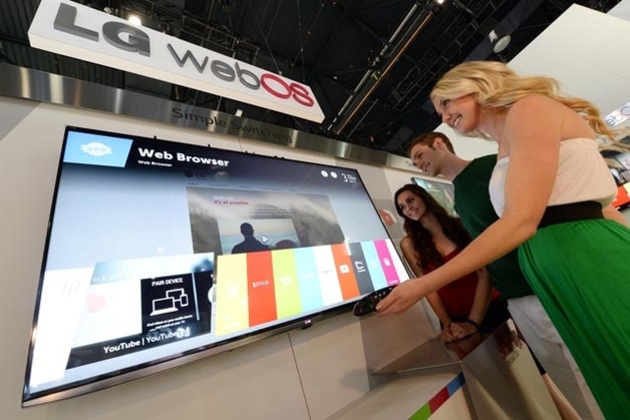
LG hasn’t yet taken the stage for its CES keynote, but the company’s Korea division has already revealed the webOS TV. Palm’s mobile operating system has been resurrected as a TV interface that focuses on ease of use. And LG is putting its weight behind the effort: webOS will be used on over 70 percent of the company’s 2014 Smart TV lineup. webOS on the TV is very different from what you remember on mobile phones. It’s now based around three new features: simple connection, simple switching, and simple discovery.
Simple connection aims to help users properly set up the TV. When you first turn on the TV, an animated character called Bean Bird appears to help guide you through various options. Simple switching is reminiscent of the cards…
Editor’s Note: This is a guest blog post by Adam Jollans, Program Director of Linux and Open Virtualization Strategy at IBM.
Open computing has been steadily growing in enterprise acceptance and, in 2013, that trend accelerated sharply. Many factors contributed to the upward trajectory of open computing in the last year. However, there were three notable developments that, in retrospect, were the critical game-changers.
Here’s a look at the three key developments in open source in 2013:
At LinuxCon/CloudOpen Europe in October, it was announced that the Open Virtualization Alliance (OVA) would become a Collaborative Project under The Linux Foundation. The OVA was originally founded in May 2011 to help advance adoption of the Kernel-based Virtual Machine (KVM) hypervisor by providing education, best practices and nurturing a vibrant ecosystem around open virtualization. Today, hundreds of companies from all over the globe are members of the OVA – it is these members that will continue to contribute to and guide the OVA as a Collaborative Project at The Linux Foundation. KVM will also benefit from access to a wider ecosystem and synergy with Linux Foundation events and marketing activities.
 Open virtualization with KVM offers a high degree of scalability. In fact, KVM holds the top results in both SPECvirt_sc2010 and SPECvirt_sc2013 benchmarks. In addition, KVM provides strong enterprise level security as a result of SELinux, which enables it to provide Mandatory Access Control and enforced isolation of virtual machines. A core component of the Linux kernel, KVM has gained wide acceptance. According to a recent IDC white paper, cloud providers are embracing KVM. Many prominent public clouds have been built on KVM, including the Google Compute Engine, HP Cloud, and IBM SmartCloud Enterprise.
As Jim Wasko, Director, IBM Linux Technology Center, pointed out in his keynote at SUSECon 2013, new applications – including big data, cloud, social and mobile – are placing greater demands on organizations’ IT infrastructures. Linux and other open technologies are critical to solving these challenges because they can provide agility, interoperability, and choice. Now that the OVA is a Collaborative Project under The Linux Foundation, KVM can be expected to extend its reach in the enterprise and get its open message out to many more users and partners.
In September, IBM revealed its plans to invest $1 billion in new Linux and open source technologies for IBM’s Power Systems servers. This investment, which will be made over the next 5 years, is aimed at helping clients capitalize on big data and cloud computing with modern systems that can handle the new wave of applications emerging in the post-PC era.

 The new pledge echoed IBM’s announcement more than 13 years ago that it would invest $1 billion in the Linux movement. Today, Linux is accepted and trusted within the majority of enterprise server environments, according to a study commissioned by enterprise Linux provider SUSE. Eighty-three percent of respondents said they are now running Linux in their server environments, and more than 40% are using Linux as either their primary server operating system or as one of their top server platforms.
 New workloads like analytics and big data require powerful processors with multiple threads and high memory bandwidth. Building IBM’s Jeopardy!-winning cognitive computing solution Watson on Linux on POWER Systems, for example, has enabled IBM customers to run workload-optimized systems for everything from complex analytics to high performance computing in fields like Healthcare, Customer Service, and Finance.
We at IBM think there is a big opportunity for customers to benefit from open solutions on Linux on Power. The new $1 billion investment will make that possible – just as the similar investment in the early days helped propel Linux into the enterprise.
To ensure that innovation in cloud computing is not hampered by locking businesses into proprietary islands of insecure and difficult-to-manage offerings, in early 2013, IBM said that all of its cloud services and software will be based on an open cloud architecture supporting industry-wide open standards for cloud computing.
As its first step, IBM unveiled new private cloud offerings based on the open source OpenStack software. IBM SmartCloud Entry and IBM SmartCloud Provisioning speed and simplify managing an enterprise-grade cloud so that, for the first time, businesses have a core set of open  source-based technologies to build enterprise-class cloud services that can be ported across hybrid cloud environments. The OpenStack Project, an open source cloud platform, effectively provides the operating system for cloud, enabling the basis for interoperability and choice in terms of moving workloads from, to and between clouds, including public and private clouds.
The majority of enterprise IT decision makers that responded to a recent Red Hat survey indicated that OpenStack is part of their organization’s future cloud infrastructure plans. The “2013 Path to an OpenStack-Powered Cloud” survey of 200 U.S. enterprise decision makers, commissioned by Red Hat through IDG Connect, found that internal development of private cloud platforms has left organizations with a host of challenges to address, including resource management, IT management; application management; and application migration. According to the survey results, as organizations seek to address these issues, they are moving or planning a move to OpenStack for private cloud initiatives. And, not quite surprising, a recent OpenStack User Survey indicated that 62% of OpenStack deployments use KVM as the hypervisor of choice.
Taken together, the OVA becoming part of The Linux Foundation, IBM’s $1 billion commitment to Linux on Power, and growing industry support for the Open Stack-supported open cloud,  were the key developments that moved open technologies deeper into the enterprise. These developments will also form the foundation for further open source expansion in 2014.
Adam Jollans is currently leading the worldwide cross-IBM Linux and open virtualization strategy for IBM. In this role he is responsible for developing and communicating the strategy for IBM’s Linux and KVM activities across IBM, including systems, software and services.
He is based in Hursley, England, following a two-year assignment to Somers, NY where he led the worldwide Linux marketing strategy for IBM Software Group. He has been involved with Linux since 1998, and prior to his U.S. assignment he led the European marketing activities for IBM Software on Linux.

Samsung Electronics chairman Lee Kun-hee is calling for his company to forget its old business models and focus on a new wave of software innovation. As the Wall Street Journal reports, Lee used his annual new year speech to urge the company to “get rid of business models and strategies from five, ten years ago and hardware-focused ways.” To achieve that, he wants the company’s massive research and development centers to “work around the clock, non-stop.”
Lee’s speech comes just a day after Samsung’s market cap dropped by over $6 billion amid analyst forecasts that company profit growth will fall to under 10 percent this financial quarter. Samsung’s profits have grown spectacularly in recent years, and although the company is still…
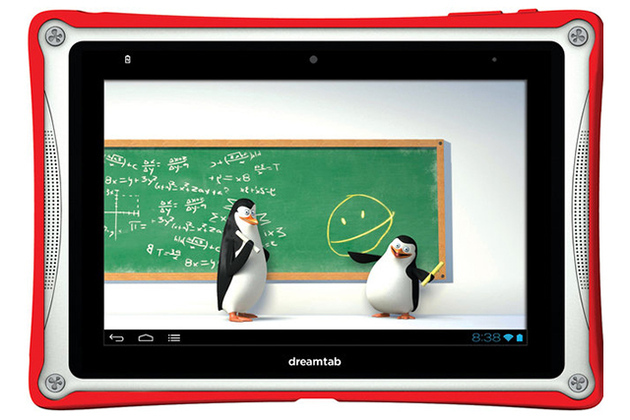
DreamWorks has partnered with Fuhu, the company that makes Toys R Us’ Nabi line of tablets, to produce an Android tablet for kids. The 8-inch Dreamtab will cost “under $300,” according to the New York Times, and will feature regularly updated original content based on DreamWorks characters. The content will be tailored for tablets, and will automatically arrive on Dreamtabs ready for consumption. Unlike many mobile games based on movie and TV, the content isn’t being created by a third-party, but instead is being produced in-house.