
Kristian Høgsberg has updated the XWayland code against the latest upstream X.Org Server…
Read more at Phoronix
Laptops based on Google’s Chrome OS will reportedly multiply in 2014. They’re cheap and schools have a growing affinity for them. [Read more]
Artyom Zorin has announced the availability of the release candidate for Zorin OS 8, a beginner-friendly desktop Linux distribution based on Ubuntu: “To start the new year off, we have unleashed the Zorin OS 8 Core release candidate. This is a pre-release version of the next-generation Zorin OS…..
With the Consumer Electronics Show set to roll in Las Vegas next week, now is the time to speculate on how embedded Linux will play in the CE realm in 2014. The following projections point to expected milestones for Linux or Android in mobile devices, laptops, set-tops and TVs, smartwatches and wearables, home automation, automobiles, and robots.
Linux and the Linux-based Android are already dominant in several of these areas, such as mobile devices, media players and TVs, and wearables. In others, Linux appears to be increasing market share, and has moved far beyond where it was a decade ago. (One window onto this embedded Linux past was recently reopened with the new posting of the LinuxDevices.com archives, offline since earlier last year. The searchable archives of over 14,000 news stories are now hosted by LinuxGizmos.com, here.)
We already know 2014 will be a big year for Linux in smartphones, thanks to the Linux-based Android operating system, which has about 80 percent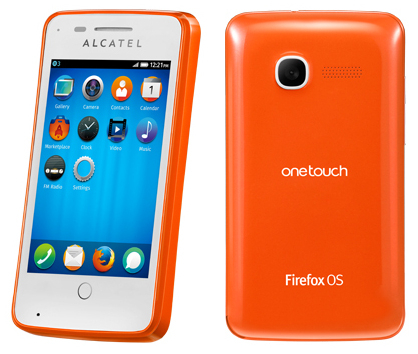 of the global smartphone market and about 60 percent of the tablet market. BlackBerry has tanked, and Apple continues to slip on both fronts, and although Microsoft’s mobile Windows flavors may finally start reversing Android’s advance in 2014 or 2015, the impact will be modest. With Google whittling Android 4.4’s RAM requirement down to 512MB, expect several Android device vendors to follow the lead of Google and Motorola to focus on affordability.
Among the new mobile Linux contenders, Tizen and Ubuntu phones will likely ship in a few phones by the end of the year, but their true test will be in 2015. Tizen may have the major corporate backing, but Samsung seems to be unsure of its strategy, and concerned about cannibalizing its own lucrative Android offerings. Canonical appears to have fewer partners, but it can likely count on a few hundred thousand Ubuntu fans who will give the phone a try. It also offers a unique vision for a single universal Ubuntu OS that crosses multiple form factors.
Jolla’s Sailfish OS and Jolla phone are intriguing — especially with new sales figures that show the Jolla to be the fifth best-selling smartphone sold in Finland in December. Without a major corporate partnership, however, it will continue to fly under the radar elsewhere. That leaves Mozilla’s Firefox OS, which has had early success in many of the 13-plus “emerging nation” markets where ZTE, Alcatel, and LG phones are on sale. Firefox OS could give low-cost Android phones a run for their money, especially in Latin America, but pricing pressures from Android are only going to grow.
We may yet see a Firefox OS tablet using Foxconn’s design in 2014, but for the most part mobile Linux tablets won’t happen until late 2015. By then, at least one of these projects will likely lack the momentum to move on to tablets.
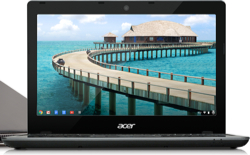 Laptops are not embedded devices, but the lines are blurring, and should continue to do so. Perhaps this is why Google’s Chrome OS, which has a simpler, more CE feel than typical desktop distributions, is behind the first major desktop Linux surge in years. By this time next year, we may not be talking about 1-2 percent Linux market share, but more like 5 percent, or more. It’s almost all due to the Linux-based Chrome OS, which has recently emerged as a major player in the notebook category.
NPD Group recently released a study claiming that Chromebooks represented 21 percent of U.S. notebook sales to commercial buyers from January through November, plus 8 percent of all computer and tablet sales in November. That was before a holiday season in which Chromebook sales continued strong, according to a Dec. 26 Amazon.com announcement. The Samsung Chromebook and Acer Chromebook were said to be the first and third best-selling laptops sold by Amazon during the holidays.
The last time Linux made a run at the desktop — or rather the netbook — back in 2008 and 2009, Microsoft responded by deeply discounting Windows XP licensing on netbooks, while leaning on manufacturers and retailers. Yet, XP will finally be discontinued in April, and Microsoft may not be as prepared to discount Windows 7 and 8. Meanwhile, Redmond’s pull within the PC industry has slid considerably over the last five years. The result: Chrome OS may be slowed, but it won’t be stopped, and that could provide an opportunity for other Linux distros as well.
Google TV may be fading, but a revamped, scaled back Android TV version may still find its niche. Meanwhile, Google’s similarly Android-powered $35 Chromecast was one of the hottest consumer electronics products of the holiday season.
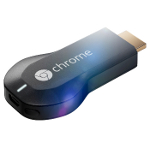 Together with the popular Roku devices and other media players, Linux and Android dominate the genre. Linux, meanwhile, continues to make advances in a wide range of hybrid over-the-top set-top boxes sold by cable and satellite companies. Interesting tuxified newcomers in the Chromecast mold include the Plair 2, the BiggiFi, and the AirTame, all of which do variations on mirroring or touch input integration between mobile or desktop computers and HDTVs.
Apple is expected to release its first iOS-powered smart TV in 2014, but the other major smart TV players from Samsung to Sony are working on second- and third-generation products — almost all of them running embedded Linux. Interesting sideshow: will the WebOS-based smart TV that LG will unveil at CES blow past the competition, or will most of the benefits of the former mobile Linux OS be wasted in the TV environment?
There’s a fine line between a media player and a gaming console, especially with the open source XBMC media player at the ready. A number of Android-based consoles like the Ouya are jousting with the new wave of proprietary consoles, and in 2014, we’ll see a variety of Valve Steam Machine devices running its open source Linux SteamOS. Some, like Valve’s own Steam Machine development platform, will be more PC than embedded device, but other systems will be smaller, simpler, and cheaper consumer devices.
Moustaches are back, so why not wristwatches? Well, for one thing, moustaches are free, and don’t have batteries that continually require your attention. Also, you don’t have to decide whether to wear your moustache as an innie or an outie.
The current batch of smartwatches, including the Samsung Galaxy Gear may have started off slow, but most analysts seem bullish on the segment. Canalys, for example, expects sales to jump from a half million this year to 5 million in 2014.
The iWatch, or whatever Apple chooses to name its smartwatch, may not ship until the holidays, but it could still end up being the year’s leading brand. It would be shocking if Apple can’t beat the current crop on style points, and the typical Apple loyalist tends to have more cash to blow on such superfluous accessories. A host of Android models will cumulatively outscore it, but most will lack refined styling. Just as importantly, most will 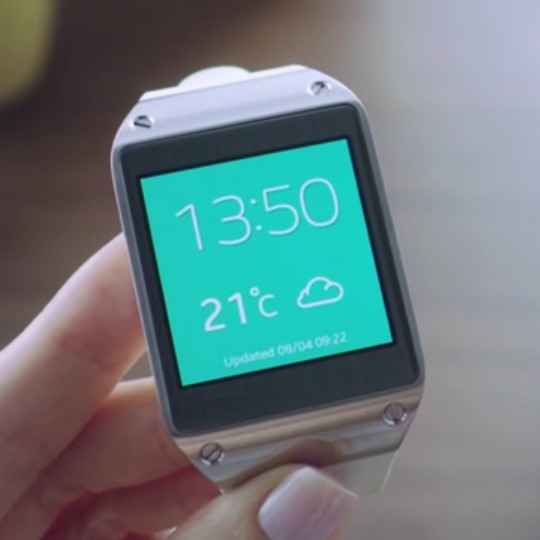 require their own SDK and app store — Fragmentation 2.0 – so app developers will likely target Apple first, just as they did in the early days of the smartphone.
A third class of Pebble-like, Bluetooth-oriented devices with no OS, or at most a minimal Android derivative, will cumulatively outsell the Android models. Qualcomm’s $350 Toq phone, which features a large energy-efficient Mirasol display offers an intriguing model on the high end, but most of the business will be in the under-$150 range.
Beyond Android, Linux watches are not likely to shine, but there’s certainly room for some, especially in the health and fitness segment. Already, the Leikr points at the possibilities. Watches are already doubling as sensor bracelets that read physiological data for fitness and health applications. This year, look for the first wrist-ware devices and apps that dig deeper into the autonomic nervous system and claim to reveal bio-readings that reveal emotion and intention — all sharable on social networking sites.
The analysts could be wrong, of course, and smartwatches will flop. After all, watches are alien to the young, and many older folks happily tossed their watches into a drawer along with their neckties years ago. In that case, the attention will shift to Google Glass and other eyewear. In 2014, these will still be too clunky and expensive to make much of an impact among consumers, but assuming the social stigma and privacy concerns are overcome, 2015 could be a different story.
Due to the end of stimulus spending and lower energy costs in the U.S., the smart grid industry has not taken off as quickly as expected. Still, there’s growing interest in low-cost home automation devices paired with smartphone apps and cloud services that provide greater control over electricity 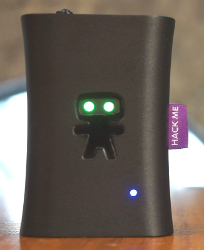 use, automating lighting and other household services. In many cases, the systems double as surveillance equipment.
Many of these affordable automation systems run on embedded Linux, such as the popular Nest devices, as well as the BeagleBone-based Ninja Blocks. Other tuxified entries such as the Piper and the WigWag, are set to break out in 2014.
Until energy prices rise and Internet of Things technology spreads into more and more everyday home appliances, the home automation segment will be slow growing. But Linux has shown some intriguing possibilities on the low end.
Several Linux design wins in in-vehicle infotainment (IVI) will hit in 2014, shipping in automobiles like the Cadillac CTS. However, we’re more likely to see more building blocks such as middleware and IVI reference subsystems that will then appear in cars in 2015. The Linux-oriented GENIVI Alliance plans to show more than 20 such products at the CES show in Las Vegas next week.
The Linux Foundation’s somewhat competitive Automotive Grade Linux working group should play a part in upcoming IVI products from Jaguar Land Rover, Nissan, and Toyota. Meanwhile, Linux has an even stronger presence in the emerging self-driving car prototypes.
In the robot world, Linux still lags real-time operating systems, but it’s on the move, whether walking, crawling, swimming, or flying. Linux is especially strong in the hobbyist market and low-end industrial market where Linux creations such as the Baxter have been a hit. Linux makes for a nice partner with the popular, open source Robot Operating System (ROS). Notably, the two major spinoffs from now-defunct ROS-creator Willow Garage are fielding new Linux/ROS robots.
Meanwhile, Google’s robot moonshot project, which is run by Android creator Andy Rubin, may well offer a similar mix of Android or Linux with ROS. Its most prominent and most recent robot acquisition, Boston Dynamics, is not known for using Linux, but we see that a recent job posting asks for Linux experience.
The early success of the Linux-based AR.Drone quadrocopter suggests that Linux could play a major role in the skies. Even if the FCC drags its feet on opening up commercial drones in the U.S. — and there are many good reasons why it should — demand is high in many less finicky international markets.