
Exploring two more general-purpose Linux versions on the Raspberry Pi.
Read more at Enterprise Open Source Toolkit
The long and intensive development cycle of FreeBSD 10.0 continues today with the fourth (and probably last) release candidate: “The fourth RC build of the 10.0-RELEASE release cycle is now available on the FTP servers for the amd64, i386, ia64, powerpc, powerpc64 and sparc64 architectures. This is expected….
Read more at DistroWatch
 TechRepublic is out with an interesting collection of open source disappointments for 2013, and one of the items listed is continuing lack of proper documentation for open source projects. “The developers of open source software have to understand that end users need help, and the first place they need to turn is the project documentation,” the story reports. “This is especially true when you’ve crafted a rather complicated piece of software.”
Indeed, this remains a sore point for all kinds of open source projects, but there are some important steps being taken to improve documentation for FOSS projects, and some of them are going on outside of project communities.
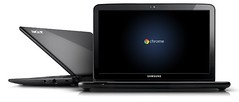 As reported here during the last days of 2013, holiday sales numbers for Chromebooks–portable computers based on Google’s cloud-centric Chrome OS platform–were very strong. Despite recent columns such as “Why there’s no good reason to buy a Chromebook,” the low cost computers are doing well within their niche. As reported by Bloomberg a few months ago, based on market research from NPD, Chromebooks had grabbed 20 percent to 25 percent of the U.S. market for laptops that cost less than $300 earlier this year, making them a fast growing subset of the PC industry.
Now, there are also some strong signs that Chromebook sales are being driven heavily by purchases within school systems, a trend we called out last year.
Linux won, the penguin has achieved world domination, and the usual commentarians completely missed it even after years of predicting it. Because it’s not something that happened in a single flashy event, but rather has been the product of years of hard work and steady improvement. 2014 is the year that Linux starts to win the desktop, which is the final Linux frontier. And it is the year of exponential growth in every arena.
The strength of Linux and free/open source software is iteration. FOSS iterates many times faster than commercial proprietary software because there are no artificial barriers like those that infest the business world: no “brilliant” marketing ideas, no business processes (proposal, review, proposal, review, proposal, review, ad infinitum), no protecting existing product lines, no artificially crippling applications to create multiple price points…you know the dance. In the FOSS world when something needs to be done there are few obstacles to someone stepping up and doing it.
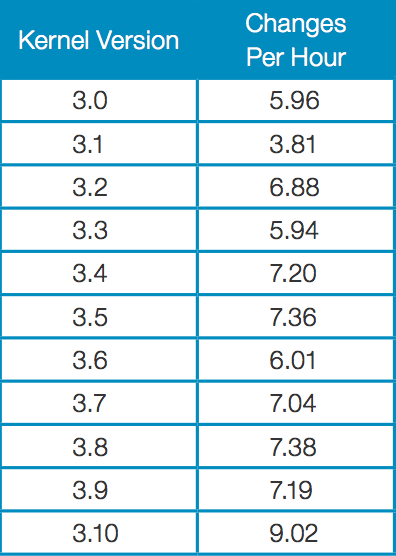 Linux kernel development should be a case study taught in software engineering and business schools everywhere. The pace of iteration is astonishing. For the 3.2-3.9 kernel cycle:
The pace is even faster for the 3.10 kernel:
The process is extremely disciplined, with strict procedures and no excuses. But contributors are not under central control and anyone can contribute. This is why the Linux kernel is the universal kernel, with contributions from companies like Samsung, Google, Fujitsu, Broadcom, Nvidia, and even Microsoft. They don’t have to wait for someone else to add fixes or features that they need to support their own products, but can do it themselves. Virtually the same kernel runs on tiny embedded devices and supercomputers and everything in between. It runs on all major hardware architectures: x86, IA-64, Power, PowerPC, ARM, AMD64, MIPS, Sparc, S/390, Atmel, System z, Alpha, and several more.
Another benefit is a priceless wealth of knowledge for anyone to use: you can download old kernels all the way back to the very beginning, version 0.01. The Linux kernel mailing list archives don’t go back quite that far, but the Indiana University archive goes back to 1995.
My bold prediction for the Linux kernel is it’s going to dominate for many years to come, and many more businesses and individual contributors are going to come on board. When you look at the list of corporate contributors you see a number of names that used to be indifferent and even hostile to Linux and FOSS; this trend will continue as they see the value of becoming contributors.
The development team is structured so that the loss of key personnel will not cripple it. Someday Linus will retire and that will not be a catastrophic event because he has built a hierarchy of over 100 subsystem maintainers. Linus signed off on a mere 0.7% of patches in 2012-2013. Greg Kroah-Hartman, David Miller, Mauro Chehab, John Linville, and Andrew Morton are the top five patch approvers. Linus didn’t even make the top 20. Though any project needs a strong leader to set direction and provide a public face, and there are no shortage of strong personalities capable of stepping up after Linus.
The punditocracy love to make annual predictions about The Year of Linux. This is the year it’s really going to catch fire! No really, this time for sure! But for the most part they missed their own predictions coming true because they’re focused on the retail desktop, which sadly is still dominated by the porous lardy Microsoft Windows. It’s a shame because Linux is a great desktop operating system. It’s secure, efficient, reliable, and a heck of a lot  easier than Windows to administer. Oh yes it is– I’ve been administering both since the mid-1990s, and there is nothing easier about Windows except for one thing: buying a PC or laptop with it already installed. Though we must give credit where it is due and recognize that Windows is a superior malware vector that supports a thriving multi-billion dollar security industry, and a healthy multi-billion dollar malware industry.
In any case a whole lot of people using desktop computers don’t need a computer that complex, as grumpy old nerds like me have been grousing for years, and wishing for a Fisher Price PC for beginners and users with simple needs. These users are dumping or bypassing the PC entirely in favor of smartphones and tablets. We’ve “progressed” from keyboard to keyboard + mouse to poking with a finger at large cartoony icons. Hey, whatever works for people is good. And who do we find with over 70% global market share on smartphones? Android, which runs on the Linux kernel. Android also powers tablets, set top devices, cameras, televisions, and game consoles, and is going to find a home on many more devices.
Android is also appearing on little laptops and netbooks. So my bold prediction is Android is the Linux variant that is finally going to unseat Windows from the “average user” desktop. Oh yes it is, you watch. Because the Android logo is cute and friendly, its open architecture means actual competition and many thousands of apps to choose from, and smartphone and tablet users already know how to use it. Contrast that with lock in and stagnation, and it’s no contest.
Software vendors have been trying for decades to get customers on a subscription model, and have stooped to tactics like forced upgrades and crazed unfriendly licensing and purchase agreements to force them to buy upgrades when they didn’t want them, and the ultimate gouge: per-seat server licenses. That’s like charging per-user for tap water. There is a lot of tension over who owns the software– naturally, when we pay money for something we think we own it. But software vendors retain rights, and it’s all messy.
But have no fear, for once again Tux rides to the rescue, this time on the cloud. The cloud is powered by Linux and FOSS, hence its rapid growth and amazing powers. I call this the quiet tech revolution because it is a revolution, and it’s going mostly unnoticed by the tech press. I know, you hate the word “cloud” and are sick of hearing it. But bear with me and look at it with a fresh mind. Cloud technologies are truly a giant leap forward– again, thanks to years of hard work and development– and are revolutionizing the datacenter. Everything is virtualized: storage, networking, computing power, memory, and software, so resources can literally be allocated and re-allocated with a few mouse clicks. Now a subscription model makes sense because hosting providers can offer up a wealth of truly useful service levels: application server, platform server, to an entire virtualized datacenter. So there is something for everyone, from businesses with strong tech staff to customers with no tech staff. Finding good tech people has always been a huge problem which will largely be resolved by the cloud’s centralization of services and support. At last John Gage’s (Sun Microsystems) prediction will come true: the network is the computer. And, at long last, software licensing costs will be directly tied to the level of resources and services used, instead of fake metrics like numbers of connections to servers.
And of course Linux is going to continue its increasingly-rapid advance into everything: automotive, communications, gaming, smart grids, industrial automation, smart homes, education, distributed science and research, medicine, agriculture…enough to fill a few books. 2014 is just the beginning of the Linux and FOSS tidal wave. So my final bold prediction is Linux nerds who want good careers will have abundant choices– IF you keep your skills up. It’s not enough to spin up a LAMP stack in ten minutes anymore, because literally anyone can do that. You’re going to have to up your game because software is going to keep getting more complex. Programmers are always in short supply. Cloud administrators, Web developers, artists and designers, engineers, documentation writers, community leaders, and so on– the real boom is just beginning, and there is going to be demand for all roles.
Who Writes Linux 2013
A Guide To The Kernel Development Process
linux/kernel/Historic/
Indiana University archive
