Home Blog Page 1707

Linux the Easy Way – Watching 100 Videos

The Linux Foundation launched the 100 Linux Video Tutorials campaign last January and today an update was posted. According to Jennifer Cloer nearly 100 videos have been submitted but she said, ” We need your help to reach 100 Linux video tutorials in January.” The collection boasts 83 submissions so far.

The stated goal of the campaign was to “remove barriers to learning Linux and transfer expertise around the globe.” Everyone was invited to share their knowledge and expertise in the form of a tutorial video. The 83 submissions include topics such as:


Read more at Ostatic

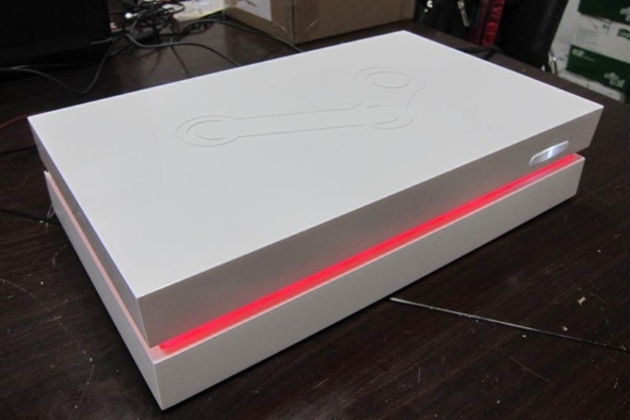
iBuyPower’s Steam Machine Offers PC Specs for the Price of a New Xbox

Valve’s official Steam Machine prototypeisn’t cheap, but it won’t be the only Steam-powered video game console available come 2014. This morning, iBuyPower revealed a prototype of its own upcoming Steam Machine, which will go on sale for just $499 next year. For the price of an Xbox One, the computer will offer a multicore AMD CPU and a discrete AMD Radeon R9 270 graphics card — that’s a $180 GPU all by itself — and come with Valve’s Steam Controller as part of the package deal.

Continue reading…

Read more at The Verge

The People Who Support Linux: A Desktop Lover and Photo Editor

Over the years, Lance Spaulding has worked with a medical company, a non-profit foundation, a credit card company, a start-up, a small e-commerce business, and now a large defense contractor. But at least one thing hasn’t changed in that time: he’s a devoted Linux desktop user and tinkerer.

Lance Spaulding“Linux is a rock that can handle pretty much anything you throw at it,” said Spaulding, who joined the Linux Foundation as an individual member earlier this year.

Spaulding used Linux on and off in the 1990s but really got into it in 1998 when he installed it on a discarded PowerPC laptop. (Special thanks to the folks at former TerraSoft (Yellow Dog Linux) and Ximian, he says.)

“The biggest reason for my involvement is the passion of the community to make it work better for all users despite the obstacles thrown into their path. The passion was contagious!” Spaulding said. “While these companies are gone or assimilated, traces of their work are still around.”

At the time, when Linux was more unpolished in terms of the GUI, says Spaulding, his brother mocked him for believing that people would someday use Linux instead of other operating systems. Today Linux is the predominant platform in supercomputing, forms the foundation of the Internet, and powers everything from TVs and smartphones to cars and stock exchanges.

“The other day I looked at my brother and said “You are using Linux everyday now.” I pointed out that he has an Android phone and utilizes web services that run on Linux,” Spaulding said.

Spaulding is astounded by how far Linux has come since the 90s, especially by the speed of kernel development and the never ending commitment to prove the GUI for the desktop. To that end, he’s watching Google’s ChromeOS for the next great innovation in the Linux desktop. The Linux Foundation, too, has evolved and improved, he says.

“I joined because Linux needs a strong focused organization which could advocate for the platform in realms beyond coding,” he says. “Linux Foundation greatly increased their profile or credibility as an organization, in my humble opinion, by bringing in Linus Torvalds and running an excellent website.”

He’s looking forward to using his Linux Foundation member discounts with many different vendors and would like to go to a LinuxCon someday. In the meantime, Linux has become Spaulding’s favorite platform for photo editing using GIMP or Darktable.

At first, reliability was the main advantage of Linux; when 64-bit chips came out it was just easier, faster, and cheaper to use Linux instead, he says. Now as software is headed toward a subscription model, it makes even more sense to use the Linux ecosystem.

“There are many options out there so you are never stuck into using what isn’t working for you intuitively,” advises Spaulding. “Plus the knowledge acquired from using something else may lead back to the original application with the new insight.”

The Linux Foundation will donate $25 to the World Wildlife Fund for the emperor penguin for each individual member who joins The Linux Foundation through December 10, 2013. Join today! 

Lightworks 11.1.1 for Windows and 11.5 beta for Linux, First Take: Open-source Video Editing

EditShare bills Lightworks as a ‘Hollywood-strength editor designed by editors for editors’, but earlier beta releases of the Linux version have been disappointing. The latest beta sees this cross-platform video editor finally starting to live up to its promises.

We’re Almost to Goal: 100 Linux Tutorials Campaign

100 Linux TutorialsWe invited you in January to share your knowledge with users and developers new to Linux. Thanks to your generous support and contributions, the community has uploaded 83 Linux video tutorials. We are almost to goal and need your help to reach 100 Linux video tutorials in January.

Together we know we can spread and transfer knowledge about Linux and help meet the demand for new Linux SysAdmins and developers. Free resources like these video tutorials and courses designed by our Linux training program staff can make a real difference in growing the community and increasing access to information for all. This is such an important way to contribute to the advancement of Linux, and we thank you. Now, let’s drive this home!

When we meet our 100 Linux video tutorials goal, we’ll announce some fun things to help recognize the people who helped make this invaluable video content possible. So start and/or continue uploading, and we’ll look forward to celebrating together soon!

Intel’s GL Windows Driver Pushes Further Ahead Of Linux

Intel’s Windows OpenGL driver continues to make progress in a more steadfast manner than the open-source Intel Linux graphics driver. The latest achievement for the Intel Windows driver is OpenGL 4.2 compliance for Haswell…

Read more at Phoronix

Another Game Studio Backs AMD’s Mantle API

There’s another game studio now backing AMD’s Mantle graphics rendering API that aims to be faster and easier to implement for games than OpenGL. However, we’re still waiting for AMD Mantle on Linux…

Read more at Phoronix

Top 10 Linux-Based Gifts for 2013 Under $400

There are better things to do this week than shop on Black Friday. Go for a walk in the woods. Spend time with loved ones. Savor your Thanksgiving leftovers. Or look skyward to see if super comet ISON survives its flyby of the sun or gets ripped to shimmering shreds.

peakplus Linux phoneBut when you’re done with all that, it may be time to start thinking about the holidays. And if you’re going to buy gifts, they might as well be cool Linux-based tech, right?

This year’s list of the top 10 cool Linux-based gifts has dropped the price limit from $500 to $400, with seven candidates falling below $300. If your budget runs a bit higher, there are plenty of other embedded Linux goodies out there, and if the sky’s the limit, you might try the 2014 Motor Trend Car of the Year: the Cadillac CTS. Like the 2013 winner, the Tesla Model S, the CTS features a Linux-based in-vehicle infotainment system. (See Jim Zemlin’s recent blog “Automotive Linux Leaves Microsoft and Blackberry QNX in the Dust.”)

Reflecting the diversity and churn in Linux-based consumer electronics, there are only two holdovers from last year’s Linux gift list and they’ve both been substantially updated: the Amazon Kindle Paperwhite 2013 ereader and the Roku 2 media player. Purists may want to scratch these and several other products from this list, on account of being insufficiently open source. Fair enough, but they’re still cool products, great bargains, and shining examples of what can be done with Linux.

Speaking of open source, I’ve omitted any board-level products here, although community backed boards can indeed be suitable gifts if the recipient is sufficiently geekified. On the other end of the spectrum, there are no desktops and notebooks here, although one can indeed find several Linux-equipped systems under $400, including the full range of Chrome OS-based Chromebooks. I did include one Linux-ready mini-PC, however, with the irresistible and highly compact CompuLab Utilite.

To keep the list from being overrun with tablets and smartphones, Android devices have once again been left off the list, although the Utilite supports Android as well as Ubuntu. In addition, with the exception of the consumer oriented Lego Mindstorms EV3 kit, robots have been postponed to a separate buyer’s guide coming soon.

Several promising products did not make the cut since they’re not expected to ship by the holidays. For example, the WigWag and Piper home automation kits are currently only available to earlier crowdsourcing funders.

For the first time, a Linux-based smartphone has made the list. I’ve optimistically selected Geeksphone’s top-of-the-line Peak+, despite the fact that for the moment only the Peak is in stock. Still, the Peak has the same 1.2GHz dual-core processor and 4.3-inch qHD display as the more RAM-rich Peak+, making either one the most advanced Firefox OS phones available. They’re much more advanced than the other unlocked Firefox OS phone: the $80 eBay version of the ZTE Open.

As for other mobile Linux contenders, the Sailfish OS-based Jolla phone should be available by the holidays, but not for new customers, and it costs over $500. As for those Ubuntu and Tizen phones? See ya’ next year.

Click on the link below for a slideshow of the top 10 Linux deals for the holidays. Products are listed alphabetically.


Gallery


View Gallery
(10)


Red Hat Official Responds to Criticism of OpenStack

Last week, I covered a debate that continues to swirl over whether OpenStack has emerged as a successful cloud computing platform in terms of actual deployments, or whether it is overhyped and immature. The post was prompted when Gartner Research Director Allessandro Perilli came out with an essay that paints a very gloomy picture of actual OpenStack deployments.  Now, officials from Red Hat and other organizations are publicly discussusing Perilli’s comments.

Bryan Che from Red Hat has a blog post that challenges Perilli, where he makes the point that open source projects are not the same as products.  To put Che’s points in context, Perilli originally suggested four reasons why OpenStack isn’t more of a success in the enterprise:


Read more at Ostatic

Samsung Unveils Galaxy Grand 2 Big-Screen Smartphone

The new device offers a 5.25-inch display and provides a dual-SIM to let you hop from one carrier to another. [Read more]

 
Read more at CNET News