
Penetration testers seeking flaws in computer systems can now take advantage of Kvasir, a web-based application built to assist in “at-a-glance” tests.
Read more at Enterprise Open Source Toolkit
 Here on OStatic, we’ve made the point many times that users no longer have to be pinned down using only one operating system or computing platform. That’s true for cloud computing deployments too, where hybrid clouds and cloud deployments based on multiple platforms are on the rise. For OpenStack, one of the most talked about open cloud platforms, this trend bodes well. The platform is showing up in hybrid deployments and API strategies designed to integrate it with other tools.
For example, Oracle is reportedly working on OpenStack API integration, which would allow its cloud services to work in tandem Nimbula Director, Oracle Exalogic appliances, and more. As ZDNet reports:
 While we’ve reported on some informal user polls that have shown Ubuntu holding onto fairly steady popularity, there are some reasons to wonder if it is on the verge of a decline in popularity. Bruce Byfield, in a Datamation column, says “I am increasingly convinced that this last year will be noted as the start of the decline of Ubuntu.”
Of course, Ubuntu remains a very high-profile platform. It was just chosen to deliver the Steam gaming platform to Linux, has been forked in countless ways, and has many enthusiastic users. But Byfield writes:
“Ubuntu and Canonical have isolated themselves from the free software community that Shuttleworth once hoped to lead. In the last year, the community has signaled repeatedly that at least parts of it feel disempowered.”

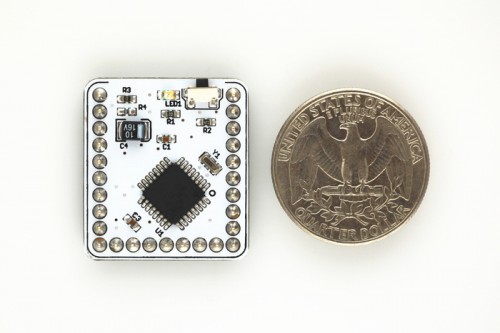
See this new board that debuted on kickstarter: amazingly small, this product comes to join the ever growing Arduino family.
The Microduino series is a 100% Arduino compatible open source hardware, compatible with Arduino IDE development environment and existing Arduino sketches.
Its size is about a quarter (25.40mm X 27.94mm / 1.0inch X 1.1inch), much smaller than the original Arduino board.
All Microduino boards adopt a uniform U-shape 27-pin standard pin-out (UPin-27). Thus Microduino series can be easily stacked together through the UPin-27, and all modules are delivered ready to stack.
Microduino: Arduino in your pocket, small, stackable, smart by Microduino Studio — Kickstarter.
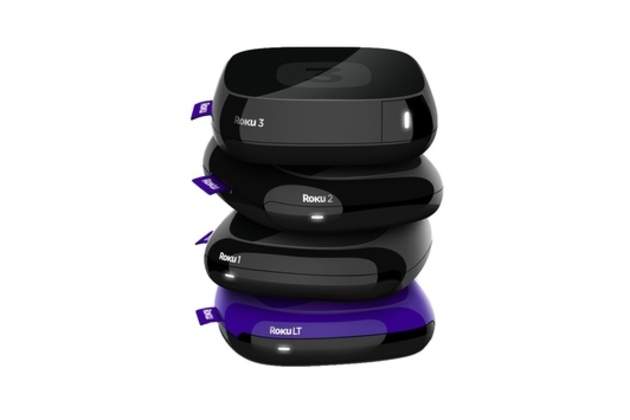
Roku is today refreshing its family of set-top streaming boxes with a modest set of improvements and new features. The Roku 3 remains unchanged as the company’s flagship box, but every model beneath it has been refreshed, and in some cases, refined with added functionality. The Roku LT remains the bottom-dollar entry to Roku’s vast streaming platform. Priced at $49.99, it’s still limited to 720p playback; today’s update is little more than a physical redesign, but it’s still a safe pick for the grandparents. The Roku 1 is where the significant changes start. The new model finally makes the leap to 1080p video, marking the first time Roku’s $59.99 player has supported Full HD content.
Roku 1 goes 1080p while Roku 2 gets a remote with a…