
Home Blog Page 1915

The People Who Support Linux: Giving a Public System a Web Interface Lift

As an IT manager for the Mt. Lebanon Municipality near Pittsburgh, PA, Nick Schalles recently faced a familiar but difficult problem for those maintaining public infrastructure.  How could they update an old system to meet the new demands of the digital age and stay within a public agency budget?

“Basically everything we have at work is custom built. All of our software was coded on an IBM mainframe years ago,” Schalles said via email.   

Nick SchallesThe system wasn’t very user friendly. The IT team sought to provide more functionality to users, without sacrificing stability and security.

Instead of updating the old code, they built web interfaces to access the code on Linux servers. This was a familiar transition for them since they use Linux in a variety of their servers including web servers, proxy servers, email relay servers, media encoders, routers and firewalls, Schalles said.

The new web services allow them to read and write data from the old system as needed. And the web interface gives a fresh, clean look to the data input screens as well as the reports, he said.

“By using Linux servers as the back end we were able to use open source tools by passing the commands through the web interface to create downloadable spreadsheets and PDF files,” he said.

Every Bit Counts

Schalles began using Linux 13 years ago as a cheap firewall for his home network because “it was very stable, had a small footprint and ran on the ancient PC hardware I had available to me at the time,” he said.

As an experienced user he now tries to help Linux newbies as much as he can in Linux forums. He also tells his friends to use Linux by demonstrating the stability, ease of use and cost saving advantages.

This desire to give back is what motivated him to join the Linux Foundation as an individual member.

“I guess I believe every little bit counts,” he said. “I just want to do my part to ensure the further development of Linux.”

Welcome, Nick!

Editor’s Note: From June 3-30, 2013, new individual members of The Linux Foundation will receive a 50 percent discount off of their choice of LinuxCon/CloudOpen North America or LinuxCon/CloudOpen Europe.
Linux System Mining with Python

In this article, we will explore the Python programming language as a tool to retrieve various information about a system running Linux. Let’s get started.

Which Python?

When I refer to Python, I am referring to CPython 2 (2.7 to be exact). I will mention it explicitly when the same code won’t work with CPython 3 (3.3) and provide the alternative code, explaining the differences. Just to make sure that you have CPython installed, typepython or python3 from the terminal and you should see the Python prompt displayed in your terminal.

Read more at DZone.

IT Jobs: A Specialist Economy or Reign of the Polymath?

Staffing firm Robert Half argues that the tech economy is entering an era of hyperspecialization. The catch? These specialties can be automated and without a broad range of skills it’ll be hard to retool a career.

Distribution Release: TurnKey Linux 12.1

Liraz Siri has announced the release of TurnKey Linux 12.1, a maintenance update of the project’s Debian-based set of virtual appliances that attempt to integrate the best open-source software into highly specialised and ready-to-be-deployed solutions: “TurnKey Linux 12.1 is out and it’s the first 64-bit maintenance release to….

Read more at DistroWatch

AMD Unveils Plans to Support Android and Chrome OS

AMD announces plans to offer support for Google’s Android and Chrome OS. Could this pave the way for low-cost, low-power Android-powered PCs hitting the shelves, putting further pressure on the struggling Windows 8 operating system?

How to Install Linux

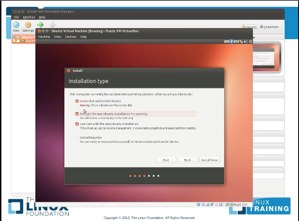
 Install Linux tutorialAre you ready to try out a Linux distribution for the first time? In this introductory Linux training video tutorial, Darren Siaw walks you through step by step in installing Ubuntu Linux in a virtual machine using VirtualBox.

Using virtual machines is a great way to try out new and different Linux distributions. This presentation will show you how to set up a new instance of a virtual machine, configure it and then install a Linux distribution. For a more detailed understanding of how Linux works, check out the 4-day Introduction to Linux (LF202) course.

Watch the Video at Linux Training. Registration is required. 

Lenovo CEO: The Future Lies in Servers, Storage

Lenovo’s CEO says the PC maker will be making strides in servers, storage and the smartphone market in the next year.

Tutorial on Scaling to Petaflops with Intel Xeon Phi

Over at Dr. Dobbs, Rob Farber has posted a tutorial on using MPI to tie together thousands of Intel Xeon Phi coprocessors. Farber uses his MPI code example on the Stampede supercomputer at TACC, achieving a remarkable 2.2 Petaflops of performance when running on 3000 nodes.


Observed scaling to 3000 nodes of the TACC Stampede supercomputer.


This article demonstrates how to utilize Intel Xeon Phi coprocessors to evaluate a single objective function across a computational cluster using MPI. The example code can be used with existing numerical optimizations libraries to solve real problems of interest to data scientists. Performance results show that the TACC Stampede supercomputer is indeed capable of sustaining many petaflops of average effective performance. In other words, “Effective Performance” or “Honest flops” that take into account all communications overhead. Small compute clusters containing 256 nodes, which are affordable for schools and small research organizations, have the ability to exceed the peak theoretical performance of multimillion-dollar machines that are still operational at the smaller U.S. national laboratories, and deliver performance that approaches that of even large leadership-class supercomputers that are only a few years old.

Read the Full Story.

Related posts:


The post Tutorial on Scaling to Petaflops with Intel Xeon Phi appeared first on insideHPC.

 
Read more at insideHPC

Intel Haswell HD Graphics 4600 Performance On Ubuntu Linux

After delivering the Intel Core i7 4770K Haswell benchmarks on Ubuntu Linux this week already, which focused mostly on the processor performance, in this article are the first benchmarks of the Haswell OpenGL Linux performance. Testing was of the Intel HD Graphics 4600 graphics core found on the i7-4770K, which under Linux is supported by Intel’s open-source driver.

Read more at Phoronix

How to Set Up the Linux Mint 15 (Olivia) Desktop

The Perfect Desktop – Linux Mint 15 (Olivia)

This tutorial shows how you can set up a Linux Mint 15 (Olivia) desktop that is a full-fledged replacement for a Windows desktop, i.e. that has all the software that people need to do the things they do on their Windows desktops. The advantages are clear: you get a secure system without DRM restrictions that works even on old hardware, and the best thing is: all software comes free of charge.

Read more at HowtoForge