Home Blog Page 1917

Jeff Layton on Getting Started with HPC Clusters


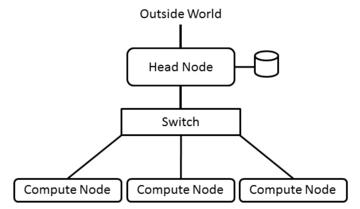
Generic Cluster Layout


Over at Admin Magazine, Dell’s Jeff Layton has written a wide-ranging primer on Getting Started with HPC Clusters. And while he covers the bases with traditional beowulf topics, Layton says that using virtualization is a great path to understanding.

One of the quickest and easiest ways to really get started is to use virtualization, which is sort of the antithesis of HPC: Virtualization takes a single system and makes it appear to be several separate systems; HPC tries to take several systems and make them appear to be a single system. You can use your laptop or desktop to run a number of VMs and then use them to learn about HPC applications or administering clusters. In doing so, you not only learn about HPC, you learn about virtualization for Linux, which is not a bad skill to have.

Read the Full Story.

Related posts:


The post Jeff Layton on Getting Started with HPC Clusters appeared first on insideHPC.

 
Read more at insideHPC

Computex 2013: Intel Makes Case for Atom in Tablets and Smartphones

After many false starts, Intel may finally be gaining momentum in mobile with several wins in tablets and hybrids announced this week at Computex, and new Silvermont processors and a global 4G LTE modem on the way.

Raspberry Pi Gets New Installation System

To make the first-time experience with Raspberry Pi better, the foundation has helped create NOOBS to make it simple to get up and running with a selection of Linux distributions and to easily restore a system.

Read more at The H

13 Eye-Opening Figures About Wearable Tech

What do people really think about Google Glass and its ilk? The answers may surprise you.

openSUSE Conference Approaches

The openSUSE Conference will be held July 18-22, 2013, at the Olympic Museum in Thessaloniki, Greece.

Read more at Linux Pro Magazine

Fedora 19 for the Nexus 4

For those of you wanting to play with Fedora 19 in a different setting, there is now an installer for the Nexus 4 handset available. “So if you have an n4 and a bit of free space, you can play around with accelerated open-source gpu goodness.” Good backups are recommended.

Read more at LWN

Microsoft Goes Public With Windows 8.1 Upgrade Policies

Microsoft is sharing more on how existing Windows 8 and Windows RT users will be able to upgrade to Windows 8.1 ‘Blue’ preview and final.

Introduction to MapReduce with Hadoop on Linux

When your data and work grow, and you still want to produce results in a timely manner, you start to think big. Your one beefy server reaches its limits. You need a way to spread your work across many computers. You truly need to scale out. more>>

 
Read more at Linux Journal

Power-Aware Scheduling Meets a Line in the Sand

As mobile and embedded processors get more complex — and more numerous — the interest in improving the power efficiency of the scheduler has increased. While a number of power-related scheduler patchesexist, none seem all that close to merging into the mainline. Getting something upstream always looked like a daunting task; scheduler changes are hard to make in general, these changes come from a constituency that the scheduler maintainers are not used to serving, and the existence of competing patches muddies the water somewhat. But now it seems that the complexity of the situation has increased again, to the point that the merging of any power-efficiency patches may gotten even harder.

Read more at LWN

AMD Will Develop Chips for Android and Chrome OS, but Only if Someone Asks First

Dsc_4571_large

AMD chips could make their way into tablets and laptops running Android and Chrome OS. According to PCWorld, AMD is willing to alter the design of its chips — which are currently tailored to run Windows 8 machines — and optimize them for other operating systems. However, it won’t be immediately going ahead with the plan. Instead, AMD appears to be interested in working with its partners on specific projects, rather than developing chips for broader availability.

Though AMD’s processors are making their way into both Microsoft and Sony’s next-generation video game consoles, the company’s chips have largely been stuck inside of Windows machines. It’s been an intentional strategy of AMD’s to focus heavily on Windows, but it looks like…

Continue reading…

Read more at The Verge