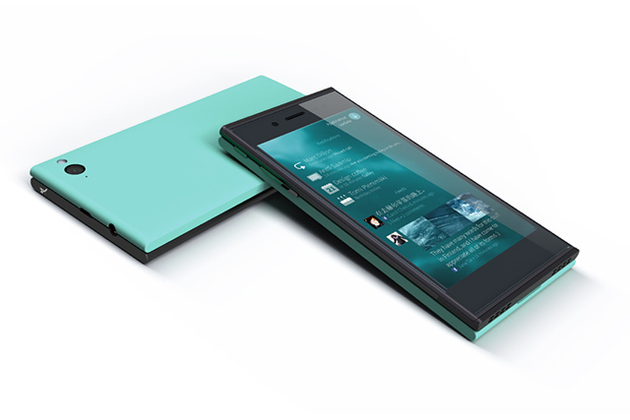
Jolla has just unveiled its first smartphone, which will go on sale this year for €399 (roughly $510). Running the company’s MeeGo-derived Sailfish OS, It features a 4.5-inch display, a dual-core processor, an 8-megapixel camera, removable back covers, 16GB of onboard storage, and a microSD slot. According to Jolla, the handset will be “compliant” with Android apps, although it’s not sure how many apps will be supported, nor is it clear where users will download the apps from.
It’s been a while since last running any Ubuntu Linux disk encryption benchmarks, but thanks to recent encryption improvements within the upstream Linux ecosystem, it’s time to deliver some new Linux disk encryption benchmarks. In this article are results comparing Ubuntu 13.04 without any form of disk encryption to using the home directory encryption feature (eCryptfs-based) and full-disk encryption (using LUKS with an encrypted LVM).
Wifislax 4.4, a new version of the Slackware-based live CD with a good collection of useful security and forensic tools, has been released. This release represents five months of development work, not only on the live CD, but also on additional modules for various specialist purposes that can….
Greg Kroah-Hartman has announced the release of the 3.9.3, 3.4.46, and 3.0.79stable kernels. As always, they contain important fixes throughout the tree, so users should upgrade.
Editor’s Note: This is the first article in a new series by SUSE community marketing manager Brian Proffitt for Linux.com called “Reality Check” that will take a look at Linux in the real world.
One of my favorite things to do when I am teaching is explaining the whole Linux thing to my undergrad students. It takes a while to understand that no, their instructor isn’t crazy (about this), there really is a free operating system out there that’s pretty much running the Internet, supercomputers, and the DVR back in their dorm room.
So what is it about Linux that’s made this operating so popular for everyone from individual users to enterprises to governments? Is it the cute penguin? Linus Torvalds’ charming personality?
Here are five attributes of Linux that I have listed over the semesters that epitomize Linux as a successful operating system.
Open
Much has been written about the free and open source licenses that exist in the Linux ecosystem that make the code for the software accessible to all.
The gimme example goes like this: you have a problem. You can see the code. You fix the code. Boom! Problem solved.
Being open is more than just being able to make changes, though; it’s also about getting the changes that other people make. That’s a benefit we don’t talk about very much, but it’s there. Source code doesn’t just have community around it, it is the community in many ways, the thing that changes and grows as time goes on.
Adaptable
Adaptability is often tied to being open. But while it’s true that Linux is more easily adaptable to different platforms because it is open, it is also true that if Linux weren’t built the way it was, adaptability would be moot.
You can have the most open code in the world (and yes, we pretty much do), but if it weren’t designed in the right way, it would be impossible to re-configure into different workload situations.
The modularity of Linux is one of its greatest strengths – being open just lets you get under the hood more easily.
Scalable
Since Linux is essentially free to use for all and runs on commodity hardware, it is very scaleable. Which means that besides being adaptable for different platforms, it can be installed on hundreds of platforms with minimal overhead… all you need is the hardware.
Enterprise distributions have their costs, naturally, but when you need world-class support in the server room, data center, or cloud, then getting that support without the incumbent licensing fees is a pretty good deal.
And when it comes to cloud computing, even those costs can be minimized. Linux can be configured as the perfect guest on many hypervisor platforms, which makes it ideal for use in private, hybrid, or public clouds.
Universal
Linux, like Elvis, is everywhere. And it’s very ubiquity has become a selling point these days.
If you build an application that runs on Linux, you can be assured that with just a little elbow grease from your developers, that app can be coded to run on any other Linux machine.
Now that ARM vendors are working to build a set of standards for application development on ARM devices, that ubiquity will be even more prevalent, as app portability becomes even easier.
Stable
This may be my favorite aspect of Linux… that it just works. This is a solid piece of software engineering, by anyone’s standards, and this, more than any other reason, is why Linux is so popular.
Stability in Linux is two-fold: it is from within, and therefore much more difficult to crash – especially for apps that are mission-critical and must be highly available. And it is from without, using permissions and architecture that makes it far harder to compromise.
These are five of the big reasons why Linux is successful in the enterprise. Can it be successful for you? If it already has (or hasn’t), join us at the new SUSE Conversations, a new forum for sharing ideas, strategies and challenges for all things Linux.
Lenovo’s Android-based K900, the first phone to use Intel’s dual-core 2GHz “Clover Trail+” Atom Z2580 system-on-chip, began shipping in China, and ZTE announced a Z2580-based, 4.5-inch “Grand X2 In” aimed at Europe. Yet, Atom-based Android phones won’t truly shine until Intel’s “Merrifield” SOC arrives in early 2014 using Intel’s 28nm, Tri-Gate “Silvermont” architecture. The first […]
There were approximately 6,000 attendees at this year’s developer conference, and you can’t walk a few steps without bumping into someone sporting the Android-powered specs.
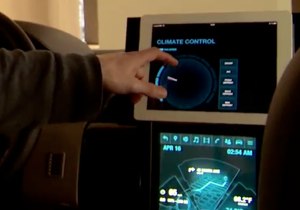
The In-Vehicle-Infotainment (IVI) System is the most complex electronic system in the car. It collects data from all of the car’s sensors and integrates functions as diverse as navigation, climate control, media playback, cellphone connectivity and more.
Yet automakers have focused on IVI as their first target for open source software collaboration. Both the Automotive Grade Linux working group and GENIVI alliance are pioneering collaborative efforts to develop a Linux-based open source platform for IVI software development.
Wouldn’t it be easier to overhaul the software behind a single task such as engine control or the door locks, before tackling the IVI behemoth? Well, yes, say representatives from both initiatives. But the potential cost savings and efficiency gains with an IVI overhaul are big incentives for automakers.
The number of lines of software code in the IVI system has exploded in recent years. As a result, “the cost (of manufacturing) has been shifting to the software, away from hardware,” said Roger Lanctot, associate director of the global automotive practice at the Strategy Analytics consulting firm.
A simultaneous increase in consumer demand to accommodate mobile devices has put “tremendous pressure” on automakers to keep up with the mobile market’s faster product cycle, he said.
And so some of the world’s largest automakers, including General Motors, Jaguar Land-Rover, BMW Nissan and Toyota, are turning to open source software, and more specifically to the Linux operating system, in order to meet these challenges.
“There is much effort going towards Linux development at the moment and it’s advancing rapidly,” said Matt Jones, a Senior Technical Specialist in Infotainment at Jaguar Land Rover and Vice President of GENIVI. “Over the next 5 years (automakers) will be increasing the functionality of the Linux IVI offerings, and some are even rolling it out across all of their car lines.”
Here are five reasons open source software development makes sense for the IVI system.
1. Rapid evolution
At present, each component of the IVI system is based on a different operating system with its own proprietary software on top. This means anytime the system is updated, developers must start from scratch.
An IVI system based on Linux allows software developers to leverage the work that has already been done with the operating system in other areas, such as incorporating multimedia functionality from Linux video and media players, said Rudolf Streif, Director of Embedded Solutions with the Linux Foundation and AGL.
“Anytime anyone builds something with Linux right now they’re building on years of experience in the server, desktop and mobile markets; building on what came before. That’s the difference,” Jones said. “They’re adding functionality all the time, not using effort to recreate existing services.”
2. Cost savings and new revenue opportunities
In addition to the potential cost savings from eliminating redundant code development, automakers have new revenue opportunities from a faster development cycle.
“After a year or two a car’s infotainment system is outdated. Customers would love to update it to keep up with technology, but currently that’s not really feasible,” Streif said.
At a faster development pace, instead of waiting out the typical 4- to 5-year product cycle, customers could expect technology updates closer to the mobile product cycle of roughly 6 months, Lanctot said. And, crucially, they would pay more for the convenience.
3. IVI is new technology
Engines have been around for more than 100 years and the control functions have been finely tuned to the point that they work very well already, Streif said. Mobile phones and Internet connectivity, however, are relatively new and the industry has much less certainty about how they should operate – making them a good target for innovation. Open source components will throw the gates wide open for application developers to contribute their own solutions, speeding innovation and time to market.
4. Consumers demand change
Consumers want their cars to function like their mobile devices: always connected, easy to use by touch or voice command, and constantly changing as technology advances. And they don’t have the same expectations of rapid advancement in other components of the car.
As Linux Foundation Executive Director Jim Zemlin summarized in a Wired op/ed last October, “As automakers get into the computing business, the biggest hurdle they have to overcome isn’t each other – it’s consumer expectations driven by the rise of ubiquitous mobile computing,”
The problem is that carmakers aren’t in a position to decide which mobile devices will be supported in 5 years, Lanctot said. Using an open source-based IVI system will allow rapid development as well as incorporation of new technologies developed elsewhere and for sometimes very different purposes.
5. IVI isn’t “safety critical”
Tinkering with the IVI software is less likely to cause a crash than, say, the engine control software. There are many hypothetical scenarios that risk analysts would love to scare us with. Hacking the IVI software could provide a gateway to more critical systems, for example. “But you could do this today with a Bluetooth port,” Jones said.
“If somebody wants to hack an IVI system they will,” Jones said. “It doesn’t matter if it’s open source or closed. It’s really hard to do, but it can be done.”
He argues that if anything, open source peer review can reduce this slim possibility even further. The auto industry takes customer safety and privacy very seriously. Importantly, this must be balanced against the risk that avoiding open source entirely will stifle innovation.
Open source software development and Linux integration will expand in the automotive industry beyond the IVI system in coming years, with the next likely focus resting on the dashboard.
For more, see our Q&A with Prashant Desphande, an Associate Vice President and head of the Automotive Instrument Cluster at KPIT Cummins in India, on his efforts to build Linux-powered instrument panels. Deshpande will speak on Monday, May 27 at the Automotive Linux Summit in Tokyo.
A few years ago, I gave a history of the 2.6.32 stable kernel, and mentioned the previous stable kernels as well. I’d like to apologize for not acknowledging the work of Adrian Bunk in maintaining the 2.6.16 stable kernel for 2 years after I gave up on it, allowing it to be used by many people for a very long time.
I’ve updated the previous post with this information in it at the bottom, for the archives. Again, many apologies, I never meant to ignore the work of this developer.

 So what is it about Linux that’s made this operating so popular for everyone from individual users to enterprises to governments? Is it the cute penguin? Linus Torvalds’ charming personality?
 Wouldn’t it be easier to overhaul the software behind a single task such as engine control or the door locks, before tackling the IVI behemoth? Well, yes, say representatives from both initiatives. But the potential cost savings and efficiency gains with an IVI overhaul are big incentives for automakers.