
The chip change on the Galaxy 10.1 would be a first for Samsung, which historically has used ARM processors for its Android tablets. [Read more]
Read more at CNET News
The chip change on the Galaxy 10.1 would be a first for Samsung, which historically has used ARM processors for its Android tablets. [Read more]
A senate panel releases a lengthy report detailing how the tech company has used offshore corporate structures to avoid paying billions of dollars in U.S. taxes. [Read more]
The In-Vehicle Infotainment (IVI) System has received much of the focus from open source software initiatives in the automotive industry so far with the Automotive Grade Linux working group and the GENIVI alliance. But the instrument panel, which shares many technologies with IVI, is also ripe for development with Linux.
The instrument cluster will probably be the next focus of open source software development in the automotive industry, said Rudolf Streif, Director of Embedded Solutions at the Linux Foundation. Traditionally the instrument panel was a set of mechanical guages that monitored speed, engine temperature, fuel levels and more. Most dashboards are electronic now and will eventually be replaced by another screen and integrated with the IVI system, he said.
 Here Prashant Deshpande, an Associate Vice President and head of the Automotive Instrument Cluster at KPIT Cummins in India, discusses what these two systems have in common; considerations for using Linux in the instrument cluster; the future of the instrument cluster in cars; and his current work on making this vision a reality. Prashant will speak on “Linux Powered Clusters: The Road Less Travelled” at the Automotive Linux Summit next Monday, May 27, in Tokyo.
Why are open source initiatives tackling IVI instead of the instrument panel cluster first?
Actually in my opinion, IVI use cases are more complex than IPC (instrument panel cluster) today. IVI needs to implement tremendous features, HMI (human machine interface) connectivity is the key. Performance and feature standardization is governed by GENIVI.
Whereas IPC has reliability and robustness as the most important needs with CAN as the basic connectivity need. Based on the success of GENIVI initiatives in IVI as well as market expected convergence of many of the features, I believe there should be an open source initiative for IPC in the near future.
How is IVI similar to and different from the instrument cluster in terms of its ability to run on Linux?
IVI and new generation digital instrument clusters have many features and technologies in common. Both are getting empowered by display/HMI technologies and powerful processing devices. Both devices aim to provide more power to the driver/consumer. However IPC requires much fewer user interactions.
Linux-based IPC features generally can initially be a subset of IVI features to ensure more reliability and predictability. In addition to this, many organizations have started considering the AUTOSAR based MCAL and Basic software in IPC, which further improves the standardization and reliability of Linux-powered IPC.
Does Linux currently have the real time capabilities to support an instrument cluster? If so, what are those capabilities, if not, what is it missing?
As we know, many real time patches are now part of Linux mainline kernel 3.x so they are readily available to system integrators and of course being improved continuously by the community. Improved precision of real time threads makes basic real time infrastructure available within Linux. In combination with limited interactive application, precision will make Linux a suitable alternative for IPC.
However, the ecosystem of Linux enabled toolsets for IPC need to evolve and mature to support hard real time performance as their primary goals. Because of this lack of support, Linux has not been an acceptable alternative for IPC so far. The challenges and impact due to lack of ecosystem support therefore continues.
IPC today actually is not entirely a hard real time system, instead incorporating more soft real time functionalities. This encourages us further to evaluate the use of Linux in IPC.
What are the benefits to developing a Linux based instrument cluster?
In addition to cost and continuous improvement by the community, a Linux-based IPC can be an an extended/tuned branch of Linux-based IVI systems. It helps not only reuse the software assets developed for a standardized IVI system but also can provide an integrated and enriched cockpit experience to the drivers. Security patches especially to Linux have been implemented and accommodated much faster. No dependency on a specific vendor or group of developers adds to the list of benefits.
What will be the challenges of developing a Linux-based instrument cluster?
There have been some legacy concerns / challenges, which we believe will need to be pragmatically evaluated, addressed, and demonstrated to the decision-makers on continuous basis. More awareness combined with R&D is important. Some of the concerns / challenges include Boot time, security features, proven open CAN stack, compliance of code for normally practiced by safety standards in automotive industry, licensing/liability issues, adopting dynamic & rapid changes by the community, standardizing test frameworks, and professional support to name a few. Some of these have already been addressed by the Linux community owing to its adoption in mission-critical systems and other industries, including animatronics
How will you describe a futuristic instrument cluster based on Linux?
Over the last 10 years, the rate of change in IPC has been very slow. However going forward, I believe, it will be much faster due to the adoption and evolution of technology in display, processing power, connected car experience and consumer expectations, etc. As the digital cluster is clearly the future, there are many new possibilities, such as IPC augmenting more human senses, that are slowly being adopted.
What work are you currently doing to accomplish a Linux-based instrument cluster?
With over 10+ years of experience in open source technologies (GCC & Linux both ), we had been developing, optimizing and maintaining Linux BSPs for our customers. Currently we are evaluating to bring the open source technologies in Automotive Instrument Cluster. We have defined Linux derived software architecture for IPC that we believe will be scalable, reusable and future proof.

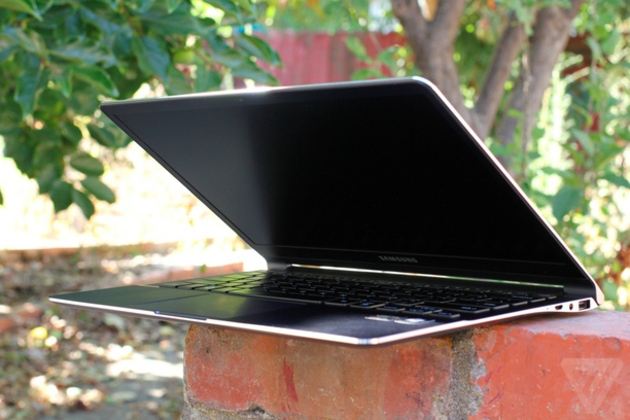
Samsung is to unveil a new super-high resolution panel which could set the standard for notebook displays. This week, the company will launch a 13.3-inch QHD 3200 x 1800 panel with 276 pixels-per-inch (PPI), and offers greater pixel densities than Apple’s Retina MacBook Pro 13 (239 PPI) and Google’s Chromebook Pixel (227 PPI). Samsung has yet to confirm if its LCD panel will come to new ultrabooks, but if it does, Toshiba’s 13.3-inch Kirabook — with its impressive 2560 x 1440 display — could have some high-resolution competition in the near future.