
Why spend all those years in the garage developing your wonderful software if some cheat is to come along and rip-off your creation?
Read more at Enterprise Open Source Toolkit
The open source cloud discussion has noticeably shifted over the past year, judging by the Live Linux Q&A video chat held Tuesday on the Linux Foundation’s Google+ page.
One big debate at the CloudOpen conference last year, for example, centered on whether the industry needed an open source alternative to the Amazon Web Services API or should simply accept it as the de facto standard for cloud applications.
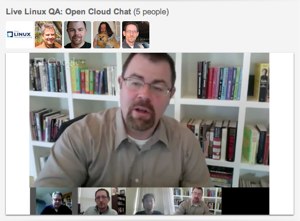 “People were arguing, ‘Let’s just declare the AWS API the HTTP of the cloud and go from there,” said Joe Brockmeier, CloudStack Evangelist at Citrix and moderator of the live chat. “And there were folks that were really offended by that and didn’t like Amazon having the control over that.”
But in Tuesday’s chat, experts from CloudStack, Eucalyptus and OpenStack in one way or another agreed that the real differentiator isn’t the API itself, but the services the platform or provider supplies along with it.
Eucalyptus is leveraging the huge AWS customer base and its API to provide private cloud services with compatibility to the Amazon public cloud, allowing customers to switch between service providers. Instead of innovating on the API, they focus on the services customers are demanding such as auto-scaling groups, cloud watch, improved tagging and elastic load balancing – all features that will be available in their upcoming 3.3 release.
“There is a strong independent movement to use services in a way that are API agnostic,” said Greg DeKoenigsberg, VP of community at Eucalyptus during the chat. “A lot of the services AWS provides you can do in other ways. For users who want to be truly cloud agnostic they’ll invest the time and energy to figure out how to do things like auto-scaling in a way that’s independent of an API.”
AWS and EC2 are the de facto standards in the public cloud so open cloud platforms must be compatible with AWS to make it easier for system administrators working in different environments, agreed Alan Clark, open source director at SUSE and chairman of the OpenStack Foundation Board. But compatibility won’t be a problem over the long term (ie 5 years from now).
“We’re already seeing brokerage solutions coming out with an aim to be able to move workloads between different interfaces,” Clark said. “The solutions are happening around us.”
Instead, he said the open cloud projects need to focus on making sure interfaces work with new services such as software defined networking that are coming online.
Similarly, Chip Childers, VP and Committer of Apache CloudStack, argued that the real differentiation doesn’t come at the API itself but in offering services that Amazon doesn’t provide.
“(AWS compatibility) is a no-brainer right now. It’s also the right long-term bet at least in the foreseeable future, but we should all make sure that we’re able to decouple our services from a specific API implementation and orchestrate based on a second, third or fourth API,” Childers said. “Let’s give our users and operators options and we’ll see where we go.”
Chat participants touched on a number of other topics in addition to the API debate, including the role of the hypervisor in the open cloud, the need for standardization and interoperability, and the future of software defined networking and the cloud. For the full discussion, view the video below.
The hour-long chat was a preview of the upcoming open cloud panel discussion on infrastructure and portability at the Enterprise End User Summit May 14-15 at the New York Stock Exchange in New York. Request an invitation.
Editor’s Note: Richard Morrell, Cloud Evangelist at Red Hat attempted to join Tuesday’s chat but couldn’t due to technical difficulties. Sorry we missed you Richard!
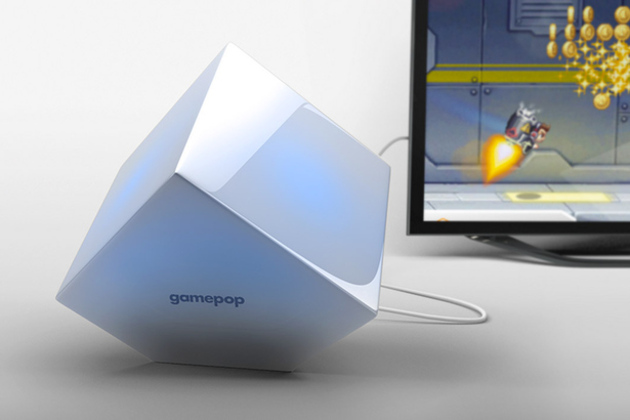
Known for bringing Android apps to Windows and the Mac, Bluestacks is following Ouya with the launch of its own independent Android console called Gamepop. Positioning itself as a “Netflix for games” but with hardware, Bluestacks will provide Gamepop owners with unlimited access to Android titles for a $6.99 monthly fee, and will even throw in a free console and gaming controller to kick off its May pre-orders.