Embarcadero RAD Studio XE4 allows developers to gain more control over the development lifecycle and deliver apps with tighter security, a better user experience, lightning quick performance, and a small footprint.
Rush to Enable Enterprise Mobile Development Pits Native Against Container Approaches
Rugged Micro-Box Computer Gets 1.86GHz Dual-Core Atom
Acnodes introduced a compact, rugged, fanless “micro-box” computer that can run embedded Linux on its dual-core 1.86GHz Intel Atom D2550 processor. The FES2215 supports up to 4GB DDR3 of RAM, accommodates an internal 2.5-inch SATA drive, drives simultaneous VGA and HDMI displays, and operates over a -20 to 60° C temperature range. Designed primarily for […]
ARM Mini-ITX SBC Gets Serious About Serial
Cadia Networks announced a Mini-ITX motherboard that runs embedded Linux or Android on a 1.2GHz ARM Cortex-A8 Freescale i.MX53 SOC (system-on-chip) and features 12 onboard serial ports. The MIT-5500 is equipped with 1GB of DDR3 RAM and up to 4GB NAND flash, and offers dual display HD video on VGA, HDMI, or LVDS displays. The […]
Amazon: “Infrastructure Is Not A Differentiator (Except For Us)”
The infrastructure rich keep getting richer, and that’s just fine, according to Amazon CTO Werner Vogel. As he declared at AWS Summit NYC last week, “infrastructure… is not a differentiator” for the enterprises and startups that keep buying servers to fill their own data centers. Given that Amazon has better scale and operational efficiency, Vogel’s argument goes, there’s no reason to continue trying to reinvent a wheel better built and operated by Amazon.
Self-serving? Sure. But true? Very likely, yes.
Windows 8.1 Set to Bring Back the Start Button

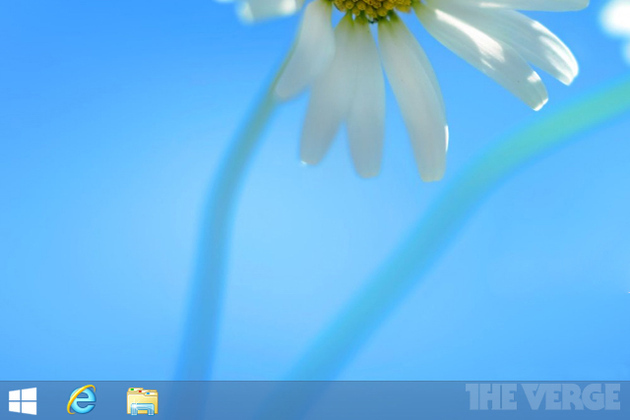
Microsoft is preparing to revive the traditional Start button it killed with Windows 8. Sources familiar with Microsoft’s plans have revealed to The Verge that Windows 8.1 will include the return of the Start button. We understand that the button will act as a method to simply access the Start Screen, and will not include the traditional Start Menu. The button is said to look near-identical to the existing Windows flag used in the Charm bar.
Microsoft changes its mind
Microsoft’s change of heart follows another recent planned change for Windows 8.1: a boot to desktop option. We understand Microsoft will add an option to allow users to boot directly to the traditional desktop environment in future builds of the upcoming Windows 8…
Farewell, Fuduntu: The Untimely Demise of a Winning Linux Distro
They say death and taxes are the only two things that can be counted on in this life, and for those of us in the United States, last Monday delivered them both in most miserable fashion. April 15 was not only the day U.S. taxes were due, but also the day two bombs exploded at the Boston Marathon. The magnitude of that tragedy is far beyond the scope of this column, of course, but Monday also brought a casualty — albeit on a much smaller scale — to those of us here in the Linux world. It wasn’t a human death, fortunately.
13.04 Based Ubuntu Touch Arrives With Few Changes
Although billed by some as “beta”, the latest images released for Ubuntu Touch are just marking its underlying switch of foundations to the newest release on Ubuntu, 13.04. Beyond that, little has changed in the fledgling mobile operating system.
The Biggest Cloud App of All: Netflix
The largest pure cloud play service of all is based on Netflix’s open-source stack running on Amazon Web Services.
Kernel Prepatch 3.9-rc8
The 3.9-rc8 prepatch is out. “Yes, I was really hoping (and originally planning) to release 3.9 final this weekend, but we had enough issues that I just didn’t feel comfy about it. It was borderline, and none of the issues were huge, and maybe I could have called this just 3.9 and opened the merge window, but hey, another week won’t hurt.“
The Flavors of Ubuntu from A to Z—Or at Least from Kubuntu to Xubuntu
The release of Ubuntu 13.04 is less than a week away, bringing with it some refinements to the Unity interface that users either love or hate. But Ubuntu with Unity is far from the only choice for Linux lovers or those looking to avoid Windows and OS X.
In addition to the many Linux distributions such as Fedora, Debian, or OpenSuse, there is a thriving open source community maintaining desktop operating systems based on Ubuntu code but with different user interfaces. These often have whimsical names like “Kubuntu” and “Xubuntu.” While you can download the standard version of Ubuntu and apply a different user interface to it, most of these alternative distros are built with a non-Unity interface in mind from the start.
Just for fun, we’re going to take a look at the different “untus” users can choose from. In particular, we’ll focus on the “recognized flavors” that are part of the Ubuntu project—you can find links to more information on each of these and downloads on the Ubuntu wiki.
Read 1 remaining paragraphs | Comments