Home Blog Page 1976

5 Favorite Sessions from Collaboration Summit Attendees

Now more than halfway through the Linux Foundation’s Collaboration Summit in San Francisco, attendees have started to weigh in on the best sessions and experiences so far. Some cited Monday’s keynote presentations from heavy hitters such as Samsung and Jaguar Land Rover. Others focused on the technical discussions in Tuesday’s sessions, which covered a range of topics from Automotive Grade Linux to kernel scheduler load balancing. And for some, simply meeting the developers on the other side of an email list provided the best experience at the conference. Here, five Linux community members tell us their conference highlights so far. (See their abbreviated answers in video on Tout.)
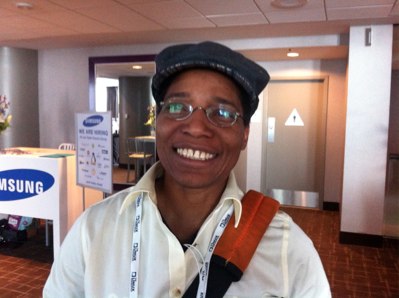
Carol Sanders


“It’s been great learning about the open source projects, in particular Jaguar and Samsung and the collaboration they’re looking for and that we can offer.

“Whether you work for a different company or not, it seems like you can really participate. I’m looking forward to some of the other technical presentations where I can learn about Linux and how it’s changing.” – Carol Sanders, Vyatta. 
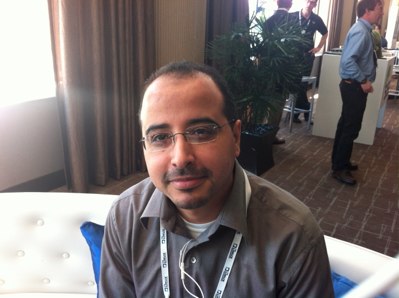


Abdel Sadek, NetApp 

“The subjects are great, but what’s even greater is getting to meet people and have discussions with people on the other side of engineering from different companies. I got to meet people I’ve been working with for several years but I’ve never met with them.

“Even some of the presentations we had that weren’t direclty related to what our company does triggered a lot of good ideas that I can bring back to the company and gave me some ideas for changes.

For cloud computing we talked about what’s missing and what can be done and especially from a storage perspective. We know we’re doing a lot on our end that’s really good but there are parts of the Linux kernel that need to be added as well.” – Abdel Sadek, NetApp.
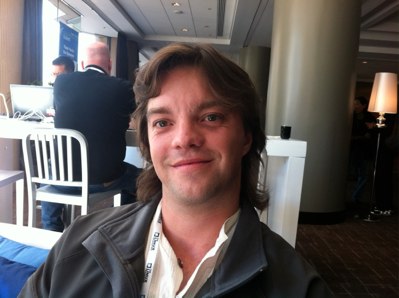


Davidlohr Bueso

 “I was particularly interested in the Linux weather forecast by Jon Corbet yesterday. It presented some challenges that we’re going to face this coming year. Some of which I wasn’t aware, particularly in the new architectures with big.LITTLE and how that will imply changes in course scheduling code. Me working in performance issues, I find that attractive and challenging.

“I’ve been impressed with the keynotes and event organization as well. I hope tomorrow will be just as good.” – Davidlohr Bueso, Hewlett-Packard. 
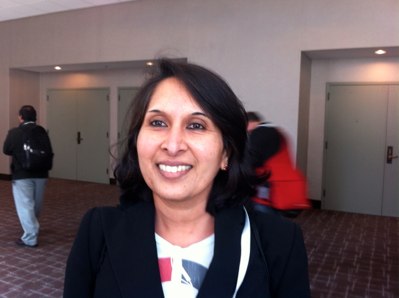


Shuah Khan, Samsung 

“Today I attended ACPI 5.0 improvements, which is really interesting. I’ve been kind of watching the Linux mailing lists on Linux LKML. It gave me insight into balance bewtween ARM and ACPI and how we can use the same infrastructure to transparently implement.

“Also, being able to add GPIO interrupts and such, and see where I can contribute, possibly. The second one I heard about was power scheduling which was very insightful. There are a lot of questions to be answered in terms of getting it to primetime.

“And the big thing I’m getting out of this conference is being able to put faces to email addresses.” – Shuah Khan, Samsung. 
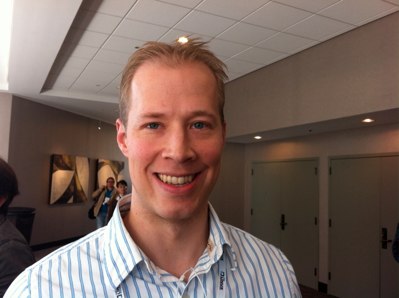


Iisko Lappalainen, MontaVista Software


“Yesterday the best speaker was Jon Corbet. I really liked his presentation because it went over the challenges we had with Linux and the latest developments. It’s interesting to see what’s really going on in the community.

I’m talking today about cloud and the hypervisor solutions. (So) that was really interesting to hear about what’s happening with the scheduler and with the core, in general.” – Iisko Lappalainen, MontaVista Software. 
Parallella: The $99 Linux Supercomputer

Move over Raspberry Pi, here comes Adapteva’s Parallella, a low-cost parallel chip board for Linux supercomputing.

Dell Standing by Windows RT, Working on Future ARM Devices

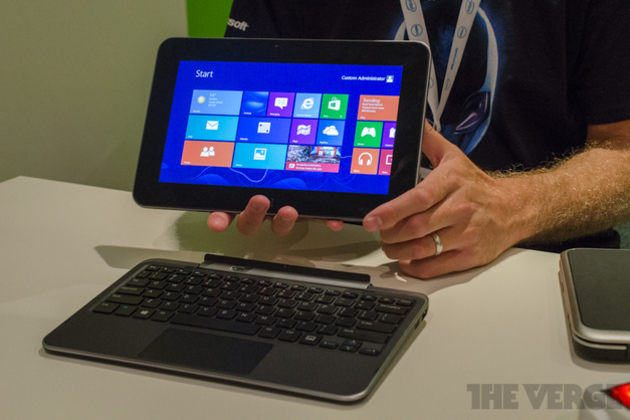
Dell-xps-12-10-hands-on12_1020_verge_super_wide_large

Samsung might be distancing itself from Microsoft’s Windows RT for ARM devices, citing customer confusion stemming from the inability to run x86 apps and weak overall demand, but Dell is taking the opposite tack. The company is reiterating its commitment to the platform, announcing that future generations of its XPS 10 tablet are under development. The company’s vice president, Neil Hand, said that “it’s turned slower than we were hoping at this point in time,” referring to less-than-desirable sales performance, but added that “Over the long haul it shouldn’t matter if it is Windows on ARM, Windows on Intel, Windows on anything else.” IDG News reports that the revamped tablets will apparently be lighter and faster, but no specs…

Continue reading…

Read more at The Verge

Netflix Plans to Dump Silverlight for HTML5 Streaming

Movie-rental service plans to switch its streaming over to the emerging video format as soon as three WC3 initiatives are complete. [Read more]


Read more at CNET News

Google Releases Mirror API Documentation for Writing Glass Apps

Google-glass-hands-on-stock5_2040_large

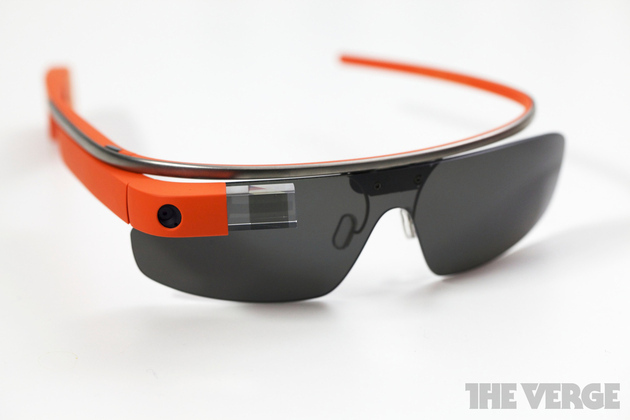
Google has released documentation for the Mirror API, the interface that programmers will use to write apps for Glass. The contents include everything from a quick start guide to in-depth developer guides and best practices, and starter projects and libraries are available for download. The news comes just as the first Glass units are beginning to roll off the production line.

Developing…

Continue reading…

Read more at The Verge

Distribution Release: Rebellin Linux 1.5

Utkarsh Sevekar has announced the release of Rebellin Linux 1.5, a set of commercial, desktop-oriented distribution based on Debian “Stable” (the “Synergy” edition) and Debian “Unstable” (the “Adrenalin” variant): “It gives us immense pleasure to announce the latest Rebellin Linux release – version 1.5. Although this is a….

Read more at DistroWatch

Interesting Embedded Device Opportunity: Mobile ALPRs

In this LinuxGizmos guest column, VDC senior analyst David Laing describes an interesting emerging market for embedded hardware and software: mobile automatic license plate readers (ALPRs). Laing speculates on what’s required to scan up to 1,800 license plates per minute and cover 4 lanes of traffic simultaneously, while the ALPR, on the roof of a […]

Read more at LinuxGizmos

Intel Makes First Release Of Linux OpenCL Project

While Intel has previously shipped its OpenCL SDK for Linux and Windows, this SDK is closed-source and on Linux was limited to compute support only on the processor rather than any graphics support with Ivy Bridge and newer hardware. Fortunately, Intel has finally managed to put out a first release of Beignet, an open-source Linux project that supports OpenCL…

Read more at Phoronix

Xen Becomes a Linux Foundation Project

Xen, Citrix’s popular open-source hypervisor, is becoming a Linux Foundation Collaborative Project with the backing of such major technology powers such as Amazon Web Services, Google, and Intel.

5 Great Quotes of the Day from the Linux Foundation Collaboration Summit

 Keynote presenters had some interesting things to say at The Linux Foundation’s Collaboration Summit in San Francisco on Monday. Here are some top quotes. What did you take away from the sessions? Please share your favorite quotes and moments in the comments, below.

Collaboration summit keynote“Linux is more efficient at doing nothing than anything else out there at this point.” – LWN’s Jon Corbet on the Linux kernel’s power-aware scheduling problem. 

“We have seen the last proprietary piece of software that achieves ubiquity. From now on everything starts from open source.” – John Mark Walker, Gluster Community manager at Red Hat. 

“It turns out my soldering skills stink, but I didn’t break it,”  – Andreas Olofsson, inventor of the $99 Linux supercomputer, Parallella, on getting the first boards back from the manufacturer last Thursday.

“One of the most important things was the advice we got from The Linux Foundation.  At the end we open sourced more than we thought we would and NYSE could still protect the assets they wanted to protect.” – Michael Schonberg, Director of Market Data Engineering at Quincy Data and an openMAMA founder, on joining the Linux Foundation as a collaborative project.

“It’s our mission to spread the collaborative DNA of Linux to other industries and projects.” – Jim Zemlin, Linux Foundation executive director.