Home Blog Page 1992

U.S. downs first $25 Raspberry Pi Batch in One Gulp

The Raspberry Pi’s $25 “Model A” made a brief appearance this week on the website of Allied Electronics, its U.S. distributor. Compared to its $35 sibling, the lower end Linux-fired SBC (single board computer) sports half the RAM, one USB port instead of two, and lacks an Ethernet spigot. It’s unclear when (or whether) additional […]

Read more at LinuxGizmos

Why Velocity, Not Speed, is the Key to Cloud Maturity

Cloud services still need a better understanding of what the service level agreements should be and ultimately a more concerted approach towards the applications.

Law Librarian Creates LibreOffice, gscan2PDF How-to Videos for 100 Linux Tutorials Campaign

Library technician John Kerr was one of the first Linux community members to add his how-to videos to the 100 Linux Tutorials Video Campaign this year.  The brief screencasts showcase software that he uses everyday in his job at the county court house library for the Wellington Law Association in Guelph, Ontario, Canada.

The tutorials include “How to Use LibreOffice to Create Labels (and) Book Cards with Ubuntu Linux” and “How to Use gscan2PDF for Libraries.” By creating and sharing his videos, thousands of Linux users across the globe have watched and learned from his experience with these programs. 
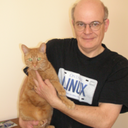
John KerrThe Linux Foundation late last year kicked off the video campaign to collect 100 Linux tutorials in order to help create a knowledge base for Linux users. We’re now 25 percent of the way to our goal and counting.

“It is fun. But more than that, making the tutorials is my way of giving back to the FLOSS community,” Kerr said via email.

Kerr started using Linux five years ago when he got the urge to tinker with computers and software. But he didn’t want to be in danger of breaking copyright or EULA so he turned to open source software.

“Linux allowed me to tinker to my heart’s content,” he said.

Since then he’s discovered many useful free programs that help him with his work, including LibreOffice, gscan2PDF and a free bibliographic add-on to Firefox called Zotero. The program is intended to help scholars research and write papers, though he uses it at the law library to catalogue books, case law, websites and more, and to organize research.

Other favorite programs include Gedit, Sigil to create e-books, and BlueGriffon, his choice for HTML. And recently he’s taken Linux beyond his work to help record services at the church he attends using Audacity.

To those just getting started with Linux, Kerr recommends reading magazines such as Linux Pro and Ubuntu User, which have live DVDs along with helpful articles. Joining an online Linux user is also a great place to get your technical questions answered and to meet interesting people. And, of course, watching video tutorials!

“I have met some great people through my involvement with Linux,” Kerr said, “and I thank the members of the Kitchener Waterloo Linux Users Group and Marcel Gagne’s WFTL-LUG for their help and friendship.”

Do you have experience with Linux? Share your knowledge with the community by uploading or embedding a video tutorial to videos.Linux.com and help us meet our goal of gathering 100 videos. See the full details at the 100 Linux Tutorials Video Campaign web page

Security Updates Break ownCloud Installations

The ownCloud developers have released the third update to ownCloud 5.0 in 24 hours after two security updates caused installations of the software to become unusable. ownCloud 5.0.3 seems to fix these problems.

Read more at The H

Samsung and Mozilla Collaborating on ‘Next Generation’ Android Browser Engine

Samsung-galaxy-s-iii-jelly-bean_1020_large

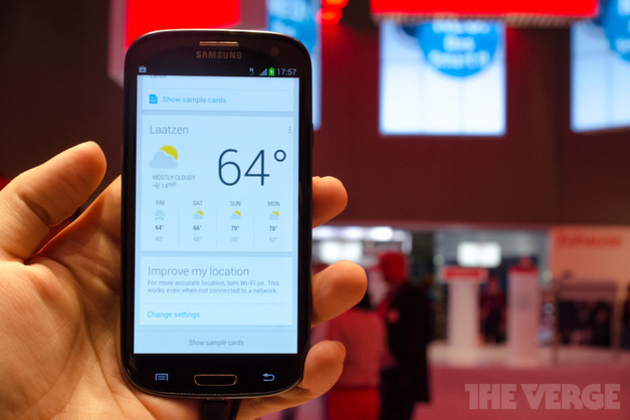
Mozilla and Samsung have announced a partnership to build a new web browser engine for ARM devices and Android, Servo. Mozilla says the new engine will take advantage of “tomorrow’s faster, multi-core” computing architectures, casting aside “old assumptions” about how a browser engine should work. Servo is being built using Mozilla’s Rust programming language, which Samsung has helped with in recent months. Mozilla is making the Rust programming language available — in experimental form — to Android developers today, but there’s no word on when the Servo engine will make an appearance.

Rather than designing a mobile web browser to challenge Google’s Chrome — although that could be the end game here — Servo appears to be more of…

Continue reading…

Read more at The Verge

Speeding Up Computing Grids in the Financial Industry

Over at the Xcelerit Blog, Jörg Lotze writes that a recent case study shows how financial services firms can improve the efficiency of their existing compute grids with multithreading.

It becomes clear that a multi-threaded parallel application is far superior to the grid approach traditionally used in banks. The multi-threaded application is 2.2x times faster than the same application running in individual processes. These performance enhancements are achieved with existing hardware but require a major redesign of the software if not employing the right tools. Even greater speedups can be achieved with hardware accelerators such as GPUs.

Read the Full Story or check out their whitepaper: Accelerating CVA Computations the Easy Way.

Related posts:


The post Speeding Up Computing Grids in the Financial Industry appeared first on insideHPC.

 
Read more at insideHPC

Samsung Goes Absolute for Mobile Security

The Samsung Knox security platform, due this year, will feature Absolute Software’s technology for tracking, wiping, recovery and IT servicing. [Read more]

Read more at CNET News

Google’s Quickoffice Comes to Android, iPhone

Sharpening one prong of its dual-pronged strategy for competing against Microsoft Office, Google brings its Office file editing software to the top mobile devices. [Read more]

Read more at CNET News

Chakra: A Simple, Strong Energy Center for Your Desktop

Chakra is an unusual Linux distro that rethinks what the Linux desktop should be. It gives users the tools to do it their way. This interesting approach to learning what makes Linux tick, however, is not a good starting point for first-time Linux users. I was intrigued with Chakra’s ground-up reconstruction and the notion that developers need to keep it simple, stupid (also known as the KISS Principle.) Chakra, though, is clearly a work in progress and needs more maturing before it can attract non-technical users.

Read more at LinuxInsider

Android Jelly Bean on the Rise, Thanks to Google’s New Math

Jelly Bean, or Android 4.1 to 4.2, jumped up to 25 percent from 16 percent a month ago, but it’s largely due to a new method of how Google collects its data. [Read more]

Read more at CNET News