
Freescale’s latest microcontroller measures 1.9 by 2 millimetres, and could be used in ‘ingestible’ computing.
Read more at Enterprise Open Source Toolkit
Red Hat is by no means any stranger to either Big Data or the open hybrid cloud, having been closely involved with both efforts for several years already. But with the company’s announcement last week of a fresh strategic direction in those areas, it’s clearly embarking on a new path.
Not only did Red Hat discuss a new focus on providing solutions for enterprises with Big Data analytics workloads, but it also announced that it will contribute its Red Hat Storage Hadoop plug-in to the Apache Hadoop open community, thus transforming Red Hat Storage into a fully-supported, Hadoop-compatible file system for Big Data 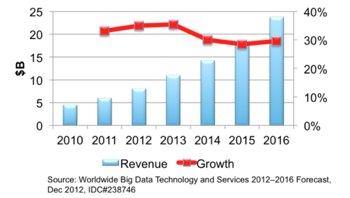 environments.
In addition, Red Hat is building a network of ecosystem and enterprise integration partners, it said.
“The fact that Red Hat is now in the game is a slam-dunk for them in many ways, because they have been providing the plumbing to all the Big Data elements for the longest time,” Ashish Nadkarni, a research director at IDC, told Linux.com.
“Red Hat Enterprise Linux is a venerable operating system, and it has the framework in place to support a full-fledged storage stack,” Nadkarni explained. Red Hat Storage Server, meanwhile, “is based on Gluster, which has been at the front of Big Data.”
Then, too, “you have their contributions and tremendous influence on the open source community, which is where most of the Big Data action happens,” he added. “Finally, there is their JBoss middleware and application-level stuff, which can be used for most layered Big Data applications.”
In short, “now that they’ve come out in front and announced such a strategy, they are going to get more traction,” Nadkarni predicted. “Now they can start executing.”
From a strategic point of view, “Red Hat’s announcement is important both to its business and to its standing in the open source community,” Charles King, principal analyst with Pund-IT, told Linux.com. “Hadoop is going to be an increasingly important tool set and solution set for businesses of every size, but particularly for enterprises dealing with petabytes of data that they are trying to wrest some value out of.”
Red Hat’s cloud storage offering was the one piece King wasn’t so sure about.
“The real question to me there is, how likely it is that a Red Hat customer is really going to want to use Red Hat for storage management as opposed to a more deeply knowledgeable and experienced storage partner like EMC,” King explained.
“It’s a competitive positioning thing,” he added. “The sense I got out of Red Hat’s announcement is that it is trying to be all things to all people. I don’t know how well that’s going to play, especially in an area as complex as cloud storage.”
Still, nearly 72 percent of enterprise respondents to the Linux Foundation’s “Linux Adoption Trends 2012: A Survey of Enterprise End Users” report indicated that they choose Linux to support Big Data.
In addition to being a leader in such deployments, Red Hat Enterprise Linux has a particular strength in distributed architectures and features that address critical Big Data needs, the company said.
In fact, 2013 will be the year of “Big Data in the Cloud,” IDC predicts, with growth of the Big Data infrastructure market to nearly $24 billion by 2016.
“When people build private or hybrid clouds, they tend to go with a commercial distribution because of the support model,” Nadkarni concluded. “Red Hat is known for that, so from that side, they’re already riding the wave.
“Now that they have announced this strategy,” he added, “they can go to customers and say, ‘if you want to deploy Hadoop or OpenStack or custom analytics integration, we can be your platform.”
END
The Linux Foundation’s Facebook page surpassed 100,000 fans this month and to celebrate we awarded one of our most loyal fans with a $100 gift certificate to the Linux.com store and a free pass to LinuxCon North America in New Orleans or LinuxCon Europe in Edinburgh, Scotland.
 Congratulations to Richard Clinker, a UK-based IT Operator in the financial industry!
Richard has contributed the most comments to the Linux Foundation Facebook discussions so far this year. He responds frequently to posts in a thoughtful and enthusiastic way and his comments are often “liked” by the community.
Richard started using Linux 13 years ago when he was looking for a cheap way to put together a PC using scrounged parts. He installed a boxed set SUSE 7.1, instead of “that other option,” he said via email.
He used that computer until the hard drive died and abandoned the Linux OS for a while. Then he heard about the MEPIS distribution and became curious about Linux again.
“I installed Mepis 3.3.1 as a dual boot setup & soon found I was using Mepis almost 100% of the time. Dual boot turned into single boot,” he said. “Mepis remained my primary OS until reasonably recently. “
These days Richard runs openSUSE 12.2 on both of his home PCs and his netbook. At work he’s known as the IT department’s *nix guy, he said.
Thanks for your contributions, Richard, we’ll see you on Facebook and in-person at LinuxCon Europe.

