
South Korean electronics giant aims to bolster content for its mobile devices by shopping for software companies, particularly those offering mobile music services.
Read more at ZDNet News

If you’re wondering how you can breathe life into that old TV set, the FAVI SmartStick might be what you’re looking for. For $50, you get a dongle that provides your TV with Android and access to streaming movies and music. More »
The OpenStack Folsom release is out this week, along with a new cloud strategy announced by IBM. Also, OpenNebula’s CEO pens an argument for innovation in the cloud through open source; Seeking Alpha reminds us what open source cloud platforms are up against; Red Hat’s cloud evangelist tours Europe; and OSU Open Source Lab advocates using Ganeti for small to medium-size private cloud deployments.
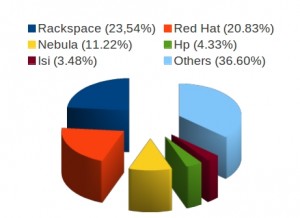 New OpenStack Release Reveals Lighter Rackspace Presence
IT World
OpenStack released its new Folsom version today, expanding from a compute-centric platform to include the Quantum networking project. Rackspace, Red Hat, Nebula and HP were the largest corporate contributors to the new release.
IBM Targets Amazon in the Cloud
The Wall Street Journal
IBM, a founding member of the OpenStack Foundation, announced its new cloud strategy this week aimed at midsize businesses.
What Role Does Open Source Play in Cloud Computing Innovation?
GigaOM
OpenNebula CEO Ignatio Llorente gives four good reasons why open source cloud platforms spur innovation in cloud computing.
In The Cloud, It’s Amazon Vs. The Rest
Seeking Alpha
A short analysis of what open source cloud is up against. PaaS efforts are still emerging and Amazon has vastly superior technology.
Building a Private Cloud with Open Source Ganeti: Pros and Cons
Linux.com
OSU Open Source Lab is running its private production and development cloud on Ganeti, an open source virtualization management platform developed at Google.
Podcast: Red Hat Cloud Tour Through Europe
The Cloud Evangelist Blog
Red Hat’s Richard Morrell gives a behind-the-scenes overview of Red Hat’s efforts to build a new business around cloud computing. He recorded this on a sales tour through Europe and discusses what Red Hat enterprise customers are asking for and what the company plans to offer in the next year.
The Linux Foundation in March announced that Fluendo was becoming a member. The company has been at the forefront of building legal multimedia solutions for open environments and works very closely with the Gstreamer community. In this exclusive Q&A with Fluendo’s VP of Business Development Michael Pizzoli we get to learn more about the company’s work and perspective on the Linux desktop, embedded Linux and infotainment for cars.
 Q: Tell us about Fluendo. What does the company do?
Pizzoli: Fluendo was created in 2004 by known Linux experts and patent specialists with a main objective of providing professional and legal multimedia solutions for open environments. We’re dedicated to providing OEMs and companies using Linux with solutions to support multimedia playback on their desktops and other platforms such as embedded, IVI and thin clients, among others. We provide both the software and the rights from patent holders, enabling the use of such patents respecting IP protection laws.
Q: How would desktop users benefit from buying Fluendo codecs when there are free ones available?
Pizzoli: Fluendo codecs allow you to support the main multimedia content out there. The quality of our codecs has been recognized by dozens of the major OEMs and PC makers who ship them in their own products. Many production companies and IT companies are also using them internally. The Fluendo codecs are upgraded regularly during the year to always provide the highest quality thanks to regular testing. We watch the market and regularly develop new codecs to be sure to provide support for any new content available. Our customers appreciate that our codecs also come with support that includes an SLA commitment, and they can be sure that we’re improving them on a regular basis. It is also important to be compliant with the laws protecting IP in the United States and to pay attention to the licenses under which the software you use has been released. The free codecs from the community are released under a license that is not compatible with the patent holder’s licenses.
Q: A lot of your work is based on the GStreamer multimedia framework. Can you tell us more about your contributions and work with this community?
Pizzoli: The first step to creating Fluendo was finding a suitable framework for our products. At the time, GStreamer had already been created but was not ready. Julien Moutte, CTO and co-founder of Fluendo, decided to invest in GStreamer. He worked with other GStreamer experts to develop it to the level of a stable and professional framework. The team is still working on GStreamer today and new developers have joined the community. Fluendo is still a very active participant in the GStreamer project. Recently Fluendo, together with Collabora, decided to invest in an adapted SDK for professionals. It’s available at new website launched in June 2012: www.gstreamer.com.
Q: Can you give us your perspective on the state of the Linux desktop and advances in multimedia? Is this an area where Linux’s status on the desktop can rise?
Pizzoli: Initiatives to sell Linux PCs, laptops and notebooks have encountered challenges with penetrating the market, because people find it hard to get used to Linux. So far these initiatives haven’t been successful. Linux OS for desktops was designed for end users downloading and installing a Linux distribution by themselves. The Linux OS is not yet convincing for all desktops users, and it will take time.
Nevertheless, for embedded devices where the OS is mostly transparent for the user, the Linux OS has been met with great success. Multimedia is a must-have today and all devices include multimedia among their basic features. Formats are not evolving very quickly, though, mostly because their success depends on their adoption by the users and on the content available in any given format. Fluendo follows their evolution and always provides the latest support to help our B2B customers get the best solutions for end users. We also reach end users directly with our latest developments through direct sales on our webshop.
Q: What development work is being done today to improve the Linux desktop user experience?
Pizzoli: We have packaged a decoder suite to allow playback on various Linux distributions. We also provide new formats like Dolby Digital Plus to be used together with Totem. We have released a player that includes all of our codecs and our DVD player. We are constantly optimizing our products to make sure end users are provided with the highest quality multimedia for their desktops. Two years ago we started working on supporting hardware acceleration included in the newest hardware platforms. Today Fluendo products are unique as they support all existing x86 platforms, like Intel, AMD and NVIDIA. The user experience is much better as HD videos use less CPU, saving the battery life of devices which is crucial for mobile devices like laptops, netbooks, ultrabooks, and tablets.
Q: Can you tell us more about your work to support infotainment systems and smart TVs?
Pizzoli: Fluendo is involved in both markets today and our solutions have been optimized for both of them. These emerging markets are interesting and lucrative areas for Linux and open source software. IVI is definitely a growing market for Linux. We are involved with the GENIVI organization and recently participated in their event in Paris by the invitation of our partner Collabora. We are working with some Linux distributions like Wind River to propose solutions. We are also working to enable the support of new formats like DMB. We are enabling more playback support on some platforms usually used there. For Smart TVs, we have been working with companies like Sony, Toshiba, MStar, Logitech, and Technicolor to provide them with elements to enable multimedia playback on their platforms.