
Oracle is offering a script for migrating CentOS installations to Oracle Linux. Controversy has been sparked around a diagram which suggests that the CentOS developers have been slow to update packages
Read more at The H
This week’s LinuxCon/CloudOpen keynote Q&A is with Qualcomm Innovation Center President Rob Chandhok. He will be talking about “Mobility, Proximal Data and Compute Meshes” at the event just next month in San Diego. Here he gives us a peek at what that means as well as shares some interesting perspectives on Qualcomm and the mobile opportunities for Linux.
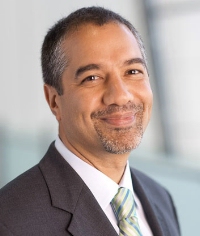 You will be speaking at the upcoming LinuxCon event. Can you give us a sneak peek at what you’ll be talking about?
Chandhok: Typically I range across a host of subjects relevant to developers. This year I will talk about the unique opportunities provided by sensing and discovering the information around us in our mobile lives and how mesh computing could play a part in how we utilize the data and computing power around us as we move about.
Two years ago at LinuxCon you announced Qualcomm Innovation Center’s Linux Foundation Platinum membership. How has this collaboration served the company over the last couple of years?
Chandhok: Our engagement with The Linux Foundation has been pivotal to our learning how and then successfully engaging with the open source community.
Samsung’s Galaxy S III U.S. version is using Qualcomm’s Snapdragon™ processor. Can you tell us more about Qualcomm’s collaboration with Samsung and the role of Linux in that work?
Chandhok: I’m afraid the developmental work we do with our customers is confidential. Samsung is a highly valued Qualcomm customer and partner, one that boasts deep technical expertise and remarkable innovative flair. For these reasons, their decision to use our Snapdragon mobile processor in the new Galaxy S III is particularly gratifying.
Samsung certainly isn’t Qualcomm’s only customer. We read recently that Qualcomm is working with more than 70 manufacturers, launching 370 devices with more than 400 in development. How does Linux and open source enable this aggressive approach?
Chandhok: The broad adoption of Android has made expertise in Linux-based OSS essential to our success. The fact that Qualcomm is the world’s leading supplier of mobile processors for Android-based devices indicates that we have and continue to successfully understand Linux and open source based ecosystems, in particular through our subsidiary QuIC. A successful understanding of Linux open source is fundamental to our success in Android.
How do you see Linux and open source evolving in the years ahead to address the opportunities in the mobile and wireless ecosystems?
Chandhok: Open Source mobile OS adoption continues to consolidate around Android. New projects are utilizing the broad hardware support for Android, and Android has started to become an important OS in CE markets as well. Linux is an important OS in M2M markets and wireless infrastructure and will continue to extend its presence in many ecosystems. The future holds opportunity for tapping into the information and computing potential of the plethora of Linux (and non-Linux) devices around us for new and exciting user experiences.
Chandhok also has some interesting things to share about augmented reality in the cloud. Check out this recent WSJ.com post for more. See you next month at LinuxCon and CloudOpen!
This week’s open source cloud headlines include several OpenStack-related announcements, denials from VMware that it might spin off its own open source Cloud Foundry and a new global-scale CloudStack deployment.
HP Cloud Object Storage and CDN Move to General Availability
HP Scaling the Cloud Blog
Two of HP’s four OpenStack-based enterprise public cloud services will move out of public beta on Aug. 1. (For more on HP’s cloud strategy, see our profile on Linux.com from July 3.)
 The ARM-Powered Cloud Comes To OpenStack
TechCrunch
Alex Williams writes that contributors to OpenStack have developed the first ARM powered OpenStack cloud as a zone in TryStack.org.
Rackspace’s Great OpenStack Experiment Nears Lift-Off
ZDNet
Rackspace will transition its cloud to OpenStack on Aug. 1.
VMware Cloud Foundry: Spinning Off or Staying Home?
Talkin’ Cloud Blog
Rumors are swirling that following the departure of its CEO, VMware will spin off its open source Cloud Foundry project. The company has denied the speculation.
Datapipe launches largest CloudStack deployment
Network World
The company claims to have the first global deployment of CloudStack IaaS platform, in datacenters across North America, Europe and Asia.
 With both private and public clouds, increasingly complex virtualized environments and data getting bigger every day, DevOps folks are looking for ways to automate their infrastructure and expose data that informs important decisions about how to manage their enterprise. That’s why we’re partnering with Opscode, the creator of Chef, to host the Chef 101 Workshop at CloudOpen. Using Ruby as its scripting language, Chef has quickly become one of the most popular tools for developers and systems administrators to define, build and manage infrastructure.
Taking place Tuesday, August 28, 2012, the Workshop gives anyone attending LinuxCon and CloudOpen an opportunity to arrive just a day early to get a huge return on that invested time (though you don’t have to be an event attendee to join the Chef 101 Workshop).
The hands-on event will cover Anatomy of a Chef Run, Chef’s Authentication Cycle, how to build roles, manipulate configuration through data in attributes, use Chef’s search API for dynamic configuration, and more.
For more information and to register please visit the Chef 101 Workshop website.
You can also catch Chris Brown of Opscode on the CloudOpen keynote panel: “IaaS vs PaaS: Composable Primitives for Building in the Cloud.” He will be joined by co-panelists Canonical’s VP of Cloud Kyle MacDonald and Google’s Engineering Director for App Engine Peter Magnusson.