
Home Blog Page 2260

30 Linux Kernel Developers in 30 Weeks: Dave Jones

Dave Jones is maintainer of the Fedora kernel and this week shares what he’s working on and what makes him tick in our latest entry in the 30 Linux Kernel Developers in 30 Weeks series. You can see all the profiles to date on our Special Features page.

Name

Dave Jones

What role do you play in the community and/or what subsystem(s) do you work on?

I’m the Fedora kernel team lead. Part of that responsibility is dealing with users kernel bugs, which ends up taking me all over the kernel. I recently gave up maintaining the cpufreq subsystem. Dealing with bugs Fedora users find (and ones I find myself) consumes all my available time.

Where do you get your paycheck?

Red Hat.

What part of the world do you live in? Why there?

Boston, MA, USA. Mainly because Red Hat engineering is based here.

What are your favorite productivity tools for software development?

Nothing special. Probably the same tools most other kernel developers use. A bunch of shell scripts to automate a lot of the more tedious parts of my job, like bugzilla interaction etc. I’ve been working on a tool to find kernel bugs a lot faster (which seems to be having quite some success [http://codemonkey.org.uk/projects/trinity/]

What do you run on your desktop?

Xfce.

How did you get involved in Linux kernel development?

I needed to build my own kernel, because none of the distros shipped one that supported something I needed. And the feature I needed was only available in the development tree at the time (which was 2.1.x at the time). I don’t recall what it was, but I think it may have been something silly like VFAT.  Things weren’t always stable, so I got into a habit of updating regularly (by carrying the latest tarball on a zip disk from the university to home). I started sending patches for things wherever I saw something I thought I could improve. I’m struggling to remember my first real accomplishment. It may have been fixing AFFS during the 2.1.x series. There were a whole bunch of really minor things before then.

What keeps you interested in it?

A seemingly infinite supply of new bugs.

What’s your advice for developers who want to get involved?

Focus on a particular aspect of the kernel that interests you, and just jump in. Start small, but punch above your weight. You won’t learn a lot by fixing spelling mistakes or doing mechanical transformations guided by what checkpatch tells you. Find a problem, understand it, and try to fix it. Even if your proposed solution is wrong, the feedback you receive will be a valuable learning experience. Rinse, repeat.

I’m a strong believer in the constant need for better tools. There seem to be no shortage of new contributors to the kernel, but I feel that a lot of the tooling around the kernel (especially tools like sparse) could really use more help. Compiler/Toolchain people takes a certain rare mindset though it seems.

Another area that can always use additional help is testing. Adding new tests to test suites like xfstests, ltp, etc., would be a useful contribution that many would benefit from.

What do you listen to when you code?

Varies depending on mood. http://www.last.fm/user/kernelslacker

What mailing list or IRC channel will people find you hanging out at? What conference(s)?

I try to limit my travel these days. Linux Plumbers Conference and North American Fedora events are pretty much all I do now.
Stackato 2.0 adds .NET support

The latest release of the cloud platform based on the open source Cloud Foundry PaaS adds support of .NET to the already long list of available programming languages

Read more at The H

Raspberry Pi Sales Restrictions Are Lifted

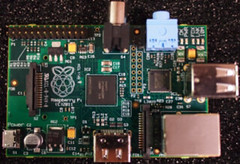
Raspberry PiAs we’ve noted recently, when it comes to the top open source stories of 2012, it’s clear that one of the biggest is the proliferation of tiny, inexpensive Linux-based computers at some of the smallest form factors ever seen. And, the diminutive, credit card-sized Raspberry Pi (shown at left), priced at $25 and $35, is one of the most widely followed of these miniature systems. Now, the folks behind Raspberry Pi have announced that strict sales restrictions on the devices have been lifted.

In a blog post, the Raspberry Pi team announced that restrictions that required purchasing only one device per customer have been lifted. The restrictions were in place because of very high demand for the low-cost systems. “Both of our manufacturing partners have been working at building capacity so you we can lift that limit,” says the post, adding that 4,000 Raspberry Pis are being manufactured every day. 

You can order Raspberry Pi units here and here.  According to the announcement post:

“This is of special importance to those of you who are using the Raspberry Pi in your businesses, and to people looking to buy classroom sets for schools and universities. And if you’ve been waiting for the Raspberry Pi to be in general delivery before you order, now’s the time to get your order in; it helps us to plan the supply chain efficiently if we have a bit of visibility of what’s just down the road.”

The educational market and the opportunity to put computers in the hands of children who couldn’t previously afford them are points of focus at the Raspberry Pi project. With the sales restrictions limited, the opportunity is even greater to introduce these inexpensive Linux computers in schools.

 
Read more at Ostatic

Geronimo 3.0 Supports Java 7

With Geronimo 3.0, the developers of the Java application server have fixed more than 450 bugs and added over 100 improvements, as well as just under 50 new features

Read more at The H

Galaxy S3 Bumps Samsung’s Lead Over Apple, Say Analysts

The gap between Samsung and Apple in the smartphone arena widened in the second quarter, according to a Reuters poll of analysts. [Read more]

Read more at CNET News

Ubuntu 12.10: Linux KVM vs. Xen Virtualization Preview

With Ubuntu 12.10 coming up in just a few months, here are our first virtualization benchmarks from the forthcoming “Quantal Quetzal” operating system. Compared in this article is the raw/bare-metal performance to Linux KVM and Xen virtualization from the latest Linux 3.5 kernel.


Read more at Phoronix

What’s the Best Way for Developers to Communicate With Customers?

What happens when vendors have some information that’s vital to deliver to the customer base? Facebook? E-mail? Rogue Amoeba, the maker of a number of popular Macintosh audio utilities talks up its new in-application programming interface for sending important news directly to users.

Coming Soon : Open Source Graphic Drivers For Raspberry Pi

Raspberry Pi is a single board, ARM based mini-computer which costs as low as $35. The device lacks open-source drivers and people have to rely on proprietary drivers for advanced graphics.Things may change, as developers are busy making an open-source source driver for it.
Read more at Muktware

GParted Live 0.13.0-1 Released

The GParted Team have released a new version of Gnome Partition Editor. This is a stable release and fixes a major bug an also adds several new features
Read more at Muktware

LibreOffice 3.6 RC1 Released

The Document Foundation has released first release candidate for LibreOffice 3.6. This is the next major version of the open-source office suite scheduled to be out later this year.
Read more at Muktware