
It looks like, thanks in part to an existing shoddy EXA 2D acceleration implementation, that the GLAMOR-based Radeon acceleration support for xf86-video-ati may work out quite well…
Read more at Phoronix

If you’re a Kindle Fire owner painfully jealous of the new Nexus 7, here’s something to make you feel a little better: you can now install Android 4.1 Jelly Bean on your tablet. More »

Regarding Fabien’s concerns about Ubuntu and Thunderbird, I can assure you that Canonical’s stance has not changed: we will continue to ship the brightest and best Free Software by default in Ubuntu. In terms of email clients, today choice is considered to be Thunderbird…at another time it may be another app.
Importantly, Thunderbird will be supported with security updates for the next five years as promised with the current 12.04LTS.
For those of you who prefer other email clients, there are many wonderful options in the Ubuntu Software Center.
Part of assessing our default application selection is assessing vitality and upstream activity. This will undoubtedly be considered in the case of Thunderbird in future Ubuntu releases, but let’s not forget something: just because a commercial entity decides to scale back their investment in an application, it doesn’t mean the project is going to die or bit-rot. What it will do is put some additional pressure on that community to attract new developers and participants and to continue growing and evolving the application. There is a great opportunity ahead for the Thunderbird community to grow, expand, and attract fresh new blood.
If you are critical of the news about Mozilla stepping back from investing in Thunderbird, why not join the Thunderbird community and help? From what I can tell, there are many ways of helping the Thunderbird community; see here for how to join the project.
In terms of the relevance of email on the desktop, speaking personally, I don’t consider Thunderbird to have solved all email challenges. There are many opportunities for improving, extending and refining Thunderbird, and I think the app could see some great work in terms of design, desktop integration, and email within the context of a social Internet. I really hope the Thunderbird community focuses on the wealth of opportunity that still lies at Thunderbird’s feet, and continues to grow and extend their community. While I am busy with my own things here, I am more than happy to provide any input or guidance on Thunderbird community growth and ideas if needed.
Windows may still be the default operating system on the vast majority of mainstream PCs thanks to Microsoft’s many longstanding OEM partnerships, but that’s not to say it hasn’t been possible for some time to buy desktop machines with Linux preloaded.
No, indeed! Thanks to vendors such as System76, ZaReason, EmperorLinux and others, Linux fans have long been able to get desktops, laptops, netbooks and more preloaded with a variety of Linux distributions — and that’s not even counting several on-again, off-again efforts by Dell, Wal-Mart and others to sell Linux boxes on their retail shelves.
Over the past few months, however — coinciding, perhaps, with Windows 8’s appearance on the horizon — there have emerged some very encouraging signs that consumers’ Linux-based options are going to be increasing soon.
It looks like Linux is quietly creeping back into the mainstream retail world once again, in fact. Here are a few key intriguing examples.
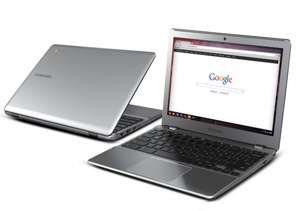 1. Chromebooks at Best Buy
A lot of big news came out of Google’s recent I/O developer conference, but certainly one of the most exciting announcements for Linux fans was the fact that Google’s Chromebook laptop is now available in Best Buy stores in the United States and at Dixons in the United Kingdom. What’s more, an expanded batch of Chromebook models are expected to be available through these retailers in time for the 2012 holiday shopping season. Bottom line: Google’s Linux-based ChromeOS will increasingly appear in front of a whole lot of eyeballs that might not have otherwise have seen or considered it. Definitely a “plus one” for Linux, to use Google+ terminology.
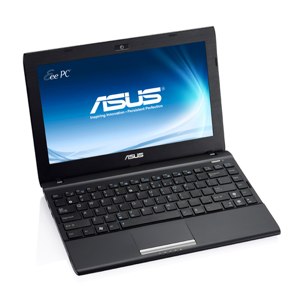
Also in recent weeks we’ve seen the emergence of the Asus EeePC 1225C, a new member of the Linux-friendly company’s netbook line that will come with Ubuntu Linux preloaded. Global availability and pricing aren’t yet clear, but it has already popped up in Italy and promises yet another potential alternative for the Windows 8-wary masses.
Back in May, meanwhile, we got word of Dell’s “Project Sputnik,” through which the company has been working on an Ubuntu-loaded open source laptop aimed at developers. Based on Dell’s XPS13 ultrabook and Ubuntu 12.04 LTS “Precise Pangolin,” the project just entered beta at the start of this month. No plans have been explicitly revealed for a consumer version, but the project is apparently “rapidly gaining traction” within Dell. It’s also hard not to speculate given reports that Canonical expects Ubuntu to be loaded on 5 percent of the PCs that ship around the globe next year.
Finally, it’s also worth noting signs uncovered earlier this year that Google is eyeing the desktop for Linux-based Android. That, of course, would be in addition to all the tiny and inexpensive Linux-powered PCs currently flooding the market, including VIA’s $49 APC, the Raspberry Pi, the Cotton Candy, the Mele A1000, the MK802, the Oval Elephant, and more.
The moral of the story, of course, is that there’s never been a better time for the Linux desktop to make its mainstream reappearance. Windows 8 has countless business and individual users running scared, and Microsoft just delivered a hearty blow to hardware partners with its Surface plans. Then, too, there’s Windows XP’s impending end of life in 2014. Now more than ever, PC users need new choices, and that’s something Linux always delivers.