Home Blog Page 2263

Open Cloud Roundup: Top Headlines Week of July 9

This week the open cloud news headlines feature the OpenNebula 3.6 release, a new cloud controller plug-in for OpenStack and an interview with Rackspace’s Lew Moorman on APIs and the open cloud, among other things.

Smithsonian nebula OpenNebula quietly keeps building its open-source cloud

GigaOM 

The open source project, a VMware alternative, released its latest update Tuesday.

Stealthy Big Switch Plugs Into OpenStack Clouds

The Register

Big Switch Networks’ open source Floodlight controller now has an OpenStack plugin to the Quantum network-as-a-service layer.

The Big Data and Cloud Computing Trends Depend on Open Source

Ostatic

Many successful web companies have been built around open source tools. Expect cloud computing to continue that trend.

Lew Moorman: Open Cloud Key to Modern Networking

Linux.com

In this Q&A, the president of Rackspace expands on his argument that simply cloning proprietary APIs doesn’t solve the compatibility problem for developers that want to maintain ownership of their cloud applications.

Too Many Cooks in the Open Cloud Kitchen?

IT Business Edge

Too many open source cloud projects could undermine the goal of creating an open source cloud that provides interoperability with a number of different platforms.

CumuLogic Aims to Redefine Java PaaS

 Talkin’ Cloud 

The enterprise cloud application platform works with a variety of infrastructures and platforms on the market, including open source projects OpenStack, CloudStack and Eucalyptus.


LinuxCon Keynote Q&A: The OSS Behind a Tweet

The roster of keynote speakers for this year’s LinuxCon North America and CloudOpen events is mind blowing. I’ve got my favorites marked on my schedule and am excited to share a recent conversation I had with one of them. Twitter’s Open Source Manager Chris Aniszczyk gives us a teaser for his keynote, details the open source projects Twitter is using, including Linux, and shares his favorite tweets of all time.

You are keynoting at the upcoming LinuxCon/CloudOpen about “The Open Source Technology Behind a Tweet.” Can you give us a teaser of what we’re going to hear from you on that topic?

Aniszczyk: On the surface, Twitter is a simple real time service where the unit currency is 140 character messages called Tweets. However, if you look underneath the surface, there are over 400,000,000 tweets being sent out a day at an average steady state of 4,500 Tweets a second. At this scale, you have to deal with some interesting real time engineering problems. In the keynote, I will address why Twitter tends to favor open source software and how we tackle some of these problems. The context of the talk will revolve around what happens behind the scenes when you send a Tweet and will trace the life of a Tweet from our backend to the eventual frontend. In the end, I expect the audience to leave with a better appreciation of open source technology and what happens behind the scenes when a humble Tweet appears in their timeline.

What role does open source software play at Twitter? Is it a tool, a philosophy, a no-brainer or all of the above? Why?

Aniszczyk: In my opinion, it’s a no-brainer as open source software allows us to customize and tweak code to meet our fast-paced engineering needs as our service and community grows. When we plan new engineering projects at Twitter, we always make sure to measure our requirements against the capabilities of open source offerings, and prefer to consume open source software whenever it makes sense. Through this method, much of Twitter is now built on open source software and as a result, the open source way is now a pervasive part of our culture. On top of that, there is a positive cycle of teaching and learning within open source communities that we benefit from.

Here are a few concrete examples of open source software we consume:

  • MySQL is heavily used for primary storage of Tweets; we develop our MySQL fork in the open to collaborate with the upstream community.
  • Cassandra, Hadoop, Lucene, Pig and a variety of Apache projects are used within our infrastructure to power services such as analytics and search. We also contribute back to these projects and have sponsored the Apache Software Foundation.
  • Memcached is used heavily in our caching infrastructure to scale our ever-growing traffic; we recently open sourced Twemcache which was heavily inspired by the Memcached code base.

On top of that, we produce a variety of open source software too:

  • Iago is a load generator that we created to help us test services before they encounter production traffic. Iago provides us with capabilities that are uniquely suited for Twitter’s environment and the precise degree to which we need to test our services.
  • Zipkin is a distributed tracing system that we created to help us gather timing data for all the disparate services involved in managing a request to the Twitter API.
  • Scalding is a Scala library that makes it easy to write MapReduce jobs in Hadoop by taking advantage of built-in integration with Scala and the JVM.

How does Twitter look at Linux as it builds out its technology and its business? What advantages does Linux provide a company like Twitter?

Aniszczyk: Linux powers the majority of Twitter and serves as our technology backbone. We have tens of thousands machines running all types of services that run a customized version of Linux. The reason we prefer Linux is that we are able to innovate faster given the flexibility to customize it based on our needs. We also love the large and mature development community moving the state of the kernel forward. For example, if you look at the latest Linux Development Report, there are more than 7,800 developers from 800 different companies contributing to make Linux better for everyone.

In terms of specifics, we use a few different versions to see what works best in production, but as of today, we are mainly on the 2.6.39 release. We customize the kernel by adding some patches such as enhanced core dump functionality, UnionFS support and the ability to allow TCP congestion window to be set on a socket basis.

In the future, we are looking to further customize the kernel to optimize it for our production environment and contributing some of the work upstream. If this type of work interests you, might I remind you that we are looking for Linux developers to join the flock and would love to hear from you at
This e-mail address is being protected from spambots. You need JavaScript enabled to view it
.

What’s your favorite all-time tweet?

Aniszczyk: This question isn’t fair without more context, I have so many favorite Tweets! I’ll give you two though. The first one is technical and from @DEVOPS_BORAT parody account. Anyone who learned Git recently should be able to relate to the tweet.

The second Tweet comes from Kevin Durant (@KDTrey5) who I loved to watch when he was playing for the University of Texas in Austin. I just loved the serendipity of it all, Durant ended up playing an impromptu pick-up game of flag football with one of his followers.

Thanks to Chris for taking time to answer a few questions as we prepare for next month’s big event. Don’t forget to register by July 28 at the $500 rate.


openSUSE 12.2 RC1 Available for Testing

openSUSE login screenopenSUSE 12.2 Release Candidate 1 is now available to download.

Get it

Download it from software.opensuse.org/developer. As usual, a list of the most annoying bugs is being maintained and you can see the list of bugsand/or file a new one in Bugzilla.

Updates

Since Beta 2 the following changes have been made, from the bottom of the stack to the top:

grub2 was updated to 2.0 final, notably fixing serial console support by respecting the console width. Its branding was also updated. There were fixes to udev, and to udisks and udisks2 to hide LVM RAID partitions, and many fixes came to autofs from an updated upstream patch.

A lot of systemd fixes came in, including a crash and memleak fix when rotating journals. Many packages now include systemd unit files natively, so these were removed from the systemd package itself, for example for Plymouth, which has been updated to 0.8.5.1. rpm now calls systemctl daemon-reload when installing new init scripts.

Read more at openSUSE News

The Big Data and Cloud Computing Trends Depend on Open Source

Mirror ballReuven Cohen has an interesting post up on Forbes’ site, which asks, “Free Versus Open: Does Open Source Software Matter in the Cloud Era?” He writes: “I like open source as much as the next guy but, from a value proposition standpoint, just being ‘open source’ doesn’t sound all that compelling to me.  This has become especially true in the emerging cloud computing landscape where APIs and Big Data have become some of the most valuable currencies.” In fact, though, as the transition to the cloud and Big Data continue, open source software is playing an absolutely critical role.
Cohen notes that Big Data has become one of the “most valuable currencies,” but isn’t the open source Hadoop platform–used to sift insights from extremely large data sets–one of the flagship pieces of software driving the Big Data trend? Hadoop has given rise to promising startup companies such as Hortonworks, focused on training and services surrounding it. 

Meanwhile, on the cloud computing front, open source platforms such as OpenStack, CloudStack and Eucalyptus are presenting important alternatives for companies that want more flexibility than proprietary clioud platforms provide. There is a whole ecosystem of open source tools taking shape around these.

And, as cloud computing proliferates, let’s not forget that Google, Yahoo! and many of the most successful Internet companies have built themselves around open tools, and made important contributions to FOSS. Let’s take Yahoo, for example. 

Read more at Ostatic

More Teeny-Tiny Linux PCs are Arriving

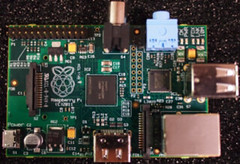
When it comes to top open source stories of 2012, it’s clear that one of the biggest is the proliferation of tiny, inexpensive Linux-based computers at some of the smallest form factors ever seen. The  $25 Linux computer dubbed Raspberry Pi (shown here) has grabbed many headlines on this front, and Google Chairman Eric Schmidt recently pledged to give some of the units to U.K. schools along with training for teachers who can pass on Linux knowledge to kids. But the Raspberry Pi is only one of many tiny LInux computers being heralded as part of a new “Linux punk ethic.” Now others are showing up? Have you heard of the Oval Elephant?

The Oval Elephant is a $72 system described by its developers as:

“…a fast mini pc similar to the MK802.  It comes with Android [4.0] but can support special versions of Linux as well.  Linaro Linux will be ported to this and one of the first devices this size to support it.  We have plans to run XBMC shortly.  (More information to come regarding Linaro and XBMC).  These can be installed using the microSD card slot that supports up to 64GB.  Also has full HDMI port (not mini) for direct connection to TV or monitor.  It also has built-in MIC and external port for MIC for audio.  Power is by miniUSB port.  No A/C plug required.”

Like the Raspberry Pi, The Oval Elephant sounds like it packs a fair amount of power into a tiny form factor.

Read more at Ostatic

Developer Break: Node.js, Apaches and Celery

Catch up on the smaller but important changes and updates to tools and specifications, utilities and libraries: this week, Node.js 0.8.2, Apache (Commons IO, Tomcat, HTTPComponents and Sling) Celery 3.0 and Wakanda 2.0

Read more at The H

Following Microsoft’s Recipes for Android Self-Programming

Microsoft is involved in a project geared toward self-programming and extending the functionality of the Android smartphone environment. That’s surprising, because Microsoft has got its own phone OS that competes. However, on{X} in beta is bringing some unique JavaScript APIs to the table that let you program your phone remotely. Javascript rules you create on the on{X} website are pushed to the phone. When they are triggered using phone functions like GPS, they run actions. Actions can include SMS text messaging, opening an app, and so on.


Read more at LinuxInsider

Open Recall: Fresh Apps for the Linux Desktop

Open Recall is a space on The H for those things that are too small to package as news but are worth the linkage. Open Recall collates the interesting stories that didn’t quite make the cut. This edition is all about new apps for the Linux desktop

Read more at The H

Slidecast: Productizing Hadoop – Creating Enterprise Value, Not Dependency

In this slidecast, Brian Christian from Zettaset describes how the company has productized Hadoop for ease of use, HPC speed, and enterprise security.

Our mission is to analyze more data, more quickly, and in a smaller footprint,” says Jim Vogt, CEO of Zettaset, Inc. “Working with Hyve Solutions and IBM, we’ve simplified big data for deployment on enterprise class commodity hardware.”

Download the MP3 * Subscribe on iTunes * If Dropbox is blocked, download from this Google page.

https://www.youtube.com/watch?v=97mpfuADvWI” frameborder=”0


Related posts:


Read more at insideHPC

Cloudability Raises $8.7 Million From Foundry Group For Service To Track Cloud Spending

logo_final_trans-1

Portland-based Cloudability has raised $8.7 million from the Foundry Group in a Series A round for its service that tracks cloud costs and gives better visbility into spending for online services that often go unmonitored. Other participants in the round include 500 Startups, Trinity Ventures and Wieden + Kennedy, one of the world’s leading independent advertising agencies.

Cloudability offers a free service, pro accounts and an enterprise level program for managing multiple cloud accounts. It’s the enterprise grade service that is growing fastest. Cloud spending has spread across the business landscape. As it has spread, so too has it left corporate finance with little ability to monitor spending of the services. The lack of visibility comes as lines of business can use their own budgets to expense services. They don’t have to wait for IT to give them permission. They just open an account and start charging away.

Cloudability provides an interface that lets the chief financial officer see all of the company’s cloud accounts (Iaas, Paas, SaaS) from the different parts of the organization. The accounts may be viewed individually or as a combined spend. Drill-down reports allow the CFO to analyze the costs by service, by account or by users. This gives a view into what’s costing the most.

Cloudability supports multiple cloud providers such as Amazon Web Services (AWS), MailChimp and Salesforce.com. The company will use the investment for engineering talent, to expand to more cloud service providers and build in more features such as deeper analytics.

There’s a fine line to play for the CFO when looking at how to monitor cloud spending. The business groups have grown attached to this new generation of services. They are easy to use, lightweight and often provide a better way to do business. But there are nightmare stories about costs over runs. Developers, for instance, who forget about the run they did on AWS and then get a huge bill.

Cloudability notifies the customer about the status of its different accounts. It tells you if you are under budget, approaching spending limits or over spending on the account.

 
Read more at TechCrunch