Home Blog Page 684

OpenStack & Private Cloud, at Scale, Are Cheaper Than Public Cloud

Beyond a certain scale, commercial private clouds and OpenStack distributions are cheaper than public clouds, according to the latest Cloud Price Index from 451 Research. However, private cloud still might be more difficult to plan for.

Commercial private cloud offerings from vendors such as VMware and Microsoft offer a lower total cost of ownership (TCO) when labor efficiency is lower than 400 virtual machines managed per engineer, according to the report, which was published today.

Read more at SDx Central.

InfraKit Hello World

Docker just shipped InfraKit a few days ago at LinuxCon and, while at the Docker Distributed Systems Summit, I wanted to see if I could get a hello world example up and running. The documentation is lacking at the moment, epecially around how to tie the different components like instances and flavors together.

The following example isn’t going to do anything particularly useful, but it’s hopefully simple enough to help anyone else trying to get started. I’m assuming you’ve checked out and built the binaries as described in theREADME.

Read more at More Than Seven

Software-Defined Networking Puts Network Managers in the Driver’s Seat

SDNs can help organizations keep up with evolving network demands in an app-centric IT environment and give network managers much more flexibility.

The strategy behind the network architecture inside many of today’s data centers was developed during the x86 era of server-desktop computing. Much has changed since then, and organizations must now give serious thought to a fresh approach to networking — software defined networking (SDN) — that more accurately reflects today’s computing reality.

Read more at BizTech

How to Secure Network Services Using TCP Wrappers in Linux

In this article we will explain what TCP wrappers are and how to configure them to restrict access to network services running on a Linux server. Before we start, however, we must clarify that the use of TCP wrappers does not eliminate the need for a properly configured firewall.

In this regard, you can think of this tool as a host-based access control list, and not as the ultimate security measure for your system. By using a firewall and TCP wrappers, instead of favoring one over the other, you will make sure that your server is not left with a single point of failure.

[[ This is a content summary only. Visit my website for full links, other content, and more! ]]


Read more at Tecmint

How Building Strong Open Source Teams Is Like Raising Chickens

Dr. Margaret Heffernan, in her LinuxCon North America keynote, tells an open source story that isn’t about software. It’s a story about chickens.

If your organization is struggling to build teams that work well together, and it feels more like The Hunger Games than a smoothly functioning team, let the tale of the two chicken flocks show you the open source way. Dr. Heffernan tells how a reseacher used two flocks of laying hens to study how to breed more productive egg-layers. One was an average, nothing special flock, just ordinary hens. The other flock was composed of super-chickens, hens who were highly productive egg layers. The researcher bred only the most productive of the super-chickens, and did no selective breeding in the first flock.

After six generations, Dr. Hefferman tells us what happened: “At the end of his experiment, what did he find? Well, he went back to the average flock, and what he discovered is they were more productive than they’d ever been. They were all really healthy, plump, fully feathered, and cranking out more eggs than ever. The super flock was a completely different story. Because the super flock, all but three were dead. They’d killed each other trying to be the super-est of the super flock.”

“When Muir revealed his research to many of his researchers, their eyes lit up and some of them said, “We know those super chickens. We work along side quite a lot of them.” As I’ve gone around the work talking about this, I always see this little flicker of recognition in people’s eyes, and they’ll say to me, “That’s my company. That’s my department. That’s the team I used to work in.”” Their working life resembled The Hunger Games more than a creative enterprise, with the expectation that “If you get everybody to compete fiercely somehow the best will stagger to the top, bloody with feathers hanging out”.

Dr. Heffernan then describes a research project designed to answer the question “Why is it that some teams are so much better than others?” The answer is not IQ, nor individual brilliance, but several distinct characteristics including empathy, helpfulness, trust, and diversity. Another key trait is curiosity, which leads to people discovering solutions to problems in fields that are outside of their areas of expertise. Which, of course, requires other people to listen to them and take them seriously.

Listen to Dr. Heffernan’s keynote (below) to learn more about what fuels effective teamwork.

Sign up to access more than 40 recorded sessions from LinuxCon + ContainerCon, including keynotes from Joe Beda, Jim Whitehurst, Cory Doctorow, and more.

Keynote: Beyond Measure: The True Power and Skill of Collaboration by Dr. Margaret Heffernan

If your organization is struggling to build teams that work well together, and it feels more like The Hunger Games than a smoothly functioning team, let the tale of the two chicken flocks from Dr. Margaret Heffernan show you the open source way. 

OpenStack Summit, Barcelona: Your Guide to the Event

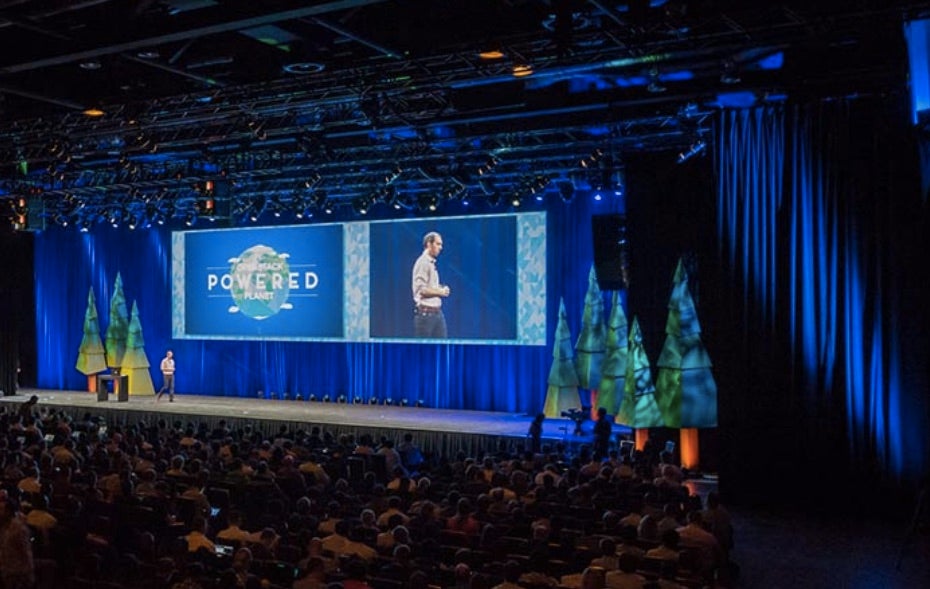
The OpenStack Summit event in Barcelona is only days away, and you can still register. According to the OpenStack Foundation, approximately 6,000 attendees from 50+ countries are expected to attend the conference, taking place Oct. 25 – 28 in Barcelona.

This event is a bi-annual gathering of OpenStack community members, technology leaders, developers and ecosystem supporters. Each year one summit event is held in North America and then one additional event rotates between Asia and Europe. Barcelona already has a packed schedule, and here is what you can expect from the event.

The Schedule and Ideas for Attendees. All of the goings on in Barcelona are rounded up in a detailed schedule, available here. There is also a detailed guide to Barcelona published on the summit’s site, available here. It even delves into where to find the best brunch.

Speakers. The roster of speakers for OpenStack Summit is impressive. The speakers include the OpenStack Foundation’s COO Mark Collier and its Executive Director Jonathan Bryce. Also speaking are OpenStack leaders from CERN, China Mobile, Comcast, Deutsche Telekom, Google, Mesosphere, Telefonica, the United States Army, Verizon, Walmart, and many more organizations. You can find all the keynotes and other addresses here.

There are also “Women of OpenStack” addresses and breakfasts slated for each day at the event.

Announcements and News. There are always many new products and initiative announcements at OpenStack Summit. For example, at last April’s event in Texas, Red Hat announced a slew of new OpenStack projects and deployments it was supporting. Representatives from Red Hat, Canonical, IBM, HP, and many other companies focused on OpenStack are attending the summit.

In Barcelona, you can definitely expect to see many new products and initiatives focused on Newton, the 14th official release of OpenStack. Newton improves the user experience for container cluster management and networking, and addresses scalability and resiliency. OpenStack Foundation members and company representatives have announced that they will be demonstrating these capabilities in Barcelona.

As the announcement of Newton noted: “These new capabilities address more use cases for organizations with heterogeneous environments, who are looking for speed and better developer experience with new technologies like containers, alongside workloads that require virtual machines or higher availability architectures.”

Contributor Recognition Tracks. Contributors are a big part of what has driven OpenStack’s success, and as the OpenStack Summit approaches, there are several plans for recognizing project contributors, ranging from coders to those who don’t code.

“Traditionally, OpenStack has been focused on the people who contribute code,” Maish Saidel-Keesing recently told Opensource.com. “But OpenStack has grown, it has evolved and changed, and it became quite apparent that there are many people who are contributing to community—but they are not writing code. This is an Active User Contributor.” You can review the criteria for being recognized as an Active User Contributor here.

Saidel-Keesing and working group members are presenting a session at in Barcelona on Tuesday at 12:15 focused on recognizing OpenStack contributors who don’t necessarily code. Meanwhile, a special round of community awards will be handed out by the OpenStack Foundation at the summit. Awards will be presented during the feedback session on Friday at the summit. Previous winners have received awards with very campy titles, including the “Don’t Stop Believin’ Cup” and the “Duct Tape Medal.” You can find out more about these awards and contribute submissions here.  

Sessions. There are some notable sessions taking place in Barcelona, including industry-specific ones. For example, speakers from the telecom industry are running a session on orchestration options for NFV and OpenStack, with details here. What percentage of players in the telecom industry now consider the OpenStack platform to be essential or important to their success?  According to a survey commissioned by the OpenStack Foundation, a whopping 85.8 percent of them do. There are numerous telecom-focused events going on in Barcelona.

Among other notable sessions, the following stand out as opportunities to learn from leaders in the OpenStack space:

Mirantis One-Day Training: Introduction to Kubernetes and Docker – 11:25 a.m. on Wednesday – hosted by Mirantis

IBM: The Open Cloud, A Platform of Opportunities – 12:15 on Wednesday – hosted by IBM

OpenStack Performance Team: The Newton Cycle – 9:50 on Thursday – hosted by the OpenStack Performance Team

Decentralized DevOps with Masterless Puppet and OpenStack Datacenter Automation – 11:00 on Thursday – Multiple Hosts

OpenStack Charms – 9:50 on Friday – Multiple Hosts

Additionally, the folks at vBrownBag are hosting a series of tech talk sessions at OpenStack Summit. The group has a YouTube channel here, and has promised to upload videos of the tech talks as they take place. A good way to keep up with these is to follow this Tech Talk Live page as the summit progresses. There are sessions scheduled on building data centers around OpenStack, and scaling an OpenStack deployment, among others.

There are also brown bag tech sessions coming from Veritas, on the topic of software-defined storage. Storage management and support for enterprise production workloads is becoming critical for many enterprises running OpenStack. The Veritas brown bag sessions are summarized here, and include a session on highly available storage for OpenStack deployments that serve multi-site data centers, and a session on moving data between OpenStack and other cloud platforms. Meanwhile, PLUMgrid is also showcasing software-defined storage at the summit, with more information found here.

Stay tuned for more OpenStack coverage as the event approaches and news from the conference.

Network Topology Guide for the Internet of Things

A network topology is how computers, printers and other devices are connected, and describes the layout of wires, devices and routing paths on a network. When referring to topology through the lens of IoT, it is how sensors, actuators and gateways communicate with one another. There are a number of common topologies, point to point, bus, ring, star and mesh., some of which are better suited for the internet of things than others:

Point-to-Point Network

A point-to-point network establishes a direct connection between two network nodes, according to O’Reilly’s Radar. Communication can take place only between these two nodes, or devices. An example of this type of network is a Bluetooth link between a cell phone and an ear piece. The advantages of point-to-point networking are its simplicity and low cost. The primary limitations spring from the one-to-one relationship that exists between two devices; the network cannot scale beyond these two nodes, therefore it is not a widely used topology for industrial IoT.


Read more at RCR Wireless News


JavaScript Grows Up and Gets Its Own Foundation

Currently, the JavaScript sector offers a mind-bogglingly diverse menu of open source options for building, testing and deploying applications. Maybe too diverse. With this in mind, The Linux Foundation has launched the JavaScript Foundation, an entity “committed to creating a center of gravity within the exponentially expanding JS ecosystem,” according to the organization.

The foundation aims to help wrangle a bit of order from the chaos while making sure open source contributors feel valued and included. More formally stated, the foundation’s  goal is to “drive broad adoption of key JavaScript solutions while facilitating collaboration within the JavaScript development community to ensure those projects maintain the quality and diverse contribution bases that provide for long-term sustainability.”

Read more at The New Stack

Mesosphere Embeds Marathon Container Orchestration in DC/OS

While Marathon may not draw as much attention these days as other container orchestration technologies, work surrounding the platform continues. With the latest version of the DC/OS platform from Mesosphere, the Marathon container orchestration engine now comes baked in.

Tal Broda, vice president of engineering for Mesosphere, says with version 1.8 of DC/OS via a new Services Feature the Marathon container orchestration engine can be more naturally invoked, with the same dashboard IT administrators employ to schedule jobs and perform other tasks. The end result is a more refined IT management experience.

Read more at Container Journal