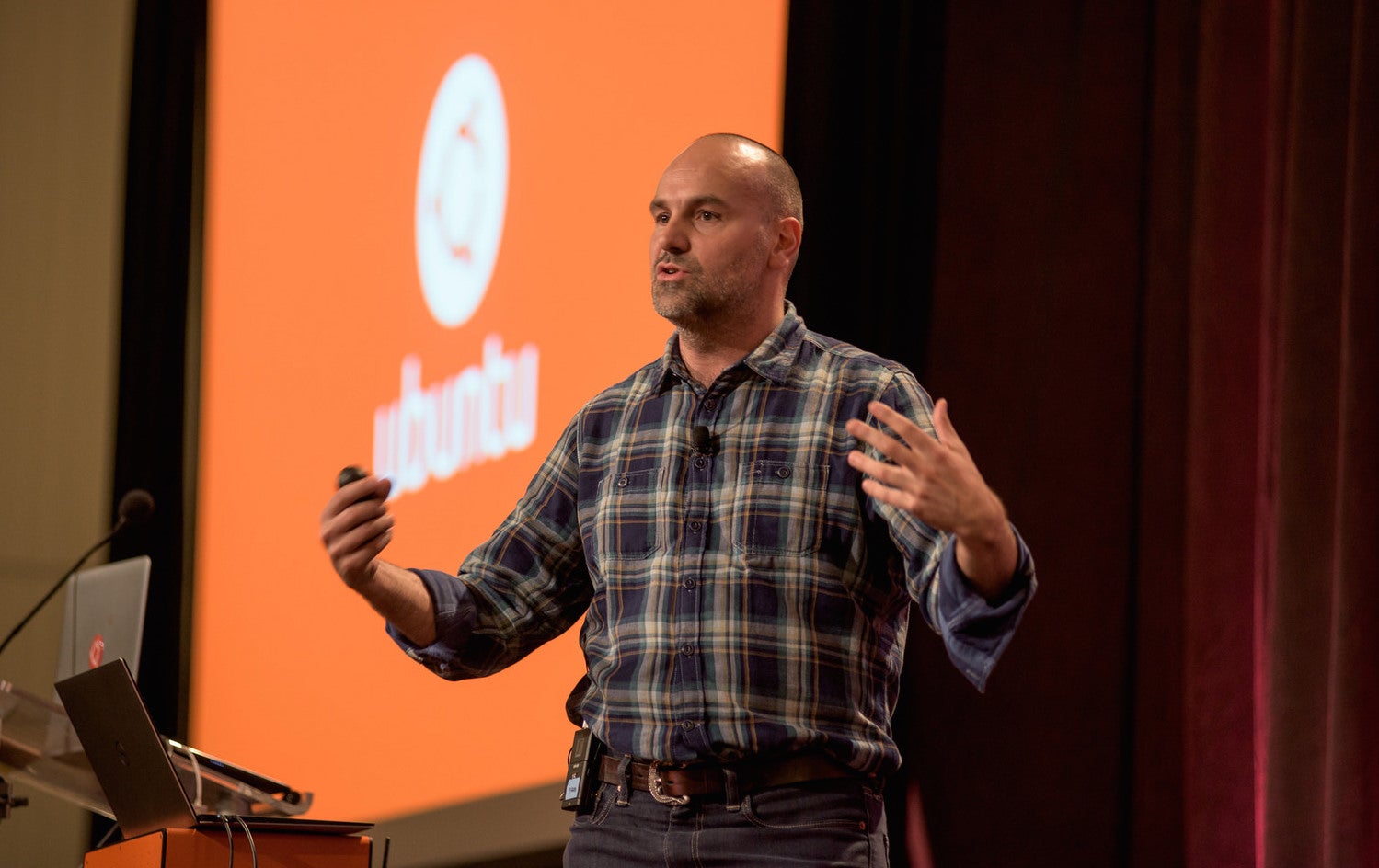
Solving operational difficulties with a modular, easy-to-use system was the solution Mark Shuttleworth laid out in his keynote entitled “More Fun, Less Friction” at Apache Big Data in Vancouver in May.
“If we take the friction out, we can unleash all sorts of creativity,” Shuttleworth said.
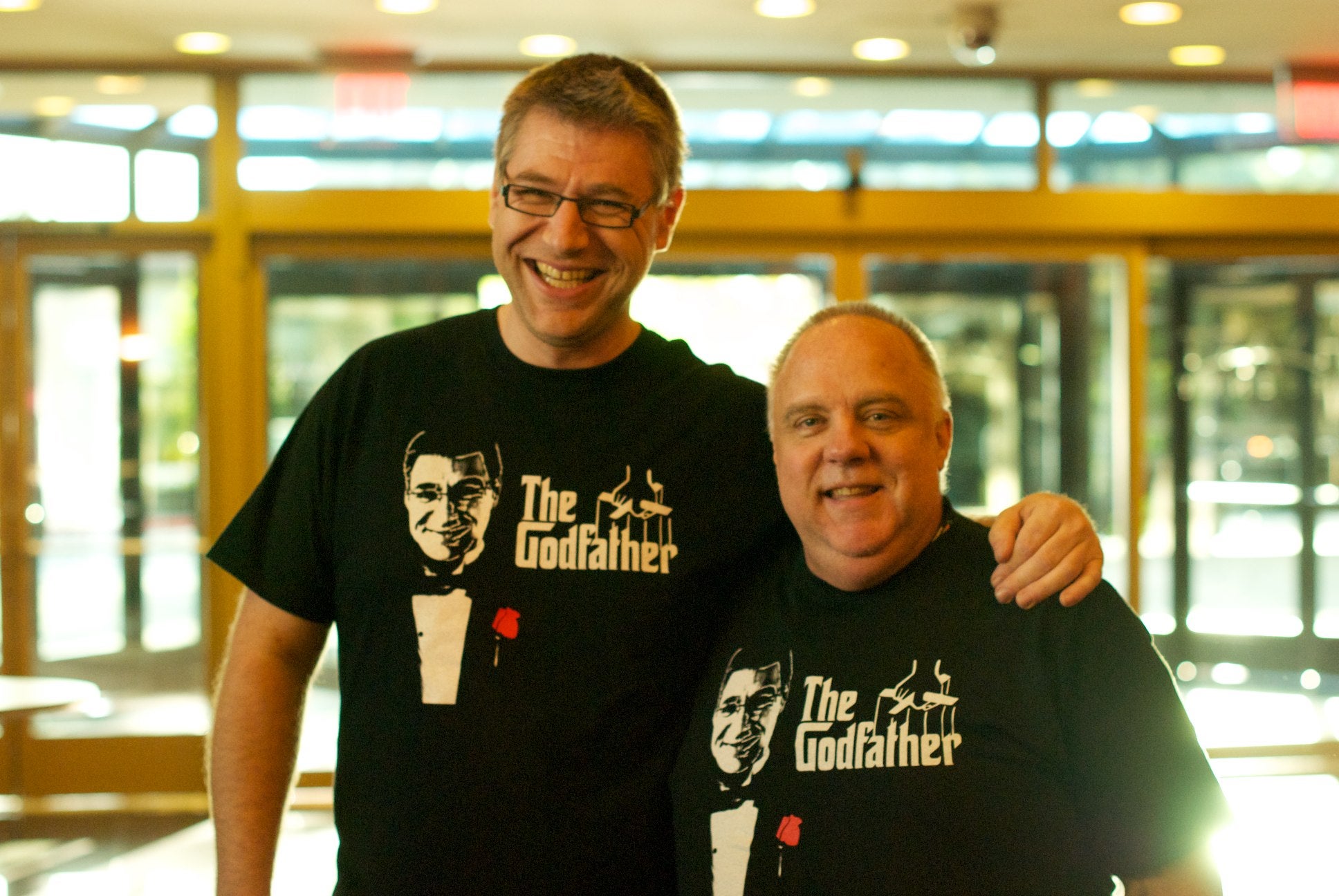
Patrick Debois is best known as the founder of DevOpsDays and as a creator of the DevOps movement, which explains why some refer to him as the “Godfather of DevOps”. As CTO of Small Town Heroes, an interactive video company, he puts these DevOps practices to the test on a daily basis to deliver mobile applications, and he recently organized a new event, Mobile Delivery Days.
Patrick Debois is the CTO of Small Town Heroes and Godfather of DevOps.
Linux.com: Why are so many organizations embracing DevOps?
Patrick Debois: Some organizations, of course, will just do it because it is a buzzword. I hope most organizations implement it to be more competitive in their business and become more efficient. In the early days, this was to be ahead of the pack, but these days it’s a must to survive amongst others implementing it.
Linux.com: Why are individuals interested in participating?
Patrick: The cultural aspect of collaboration gives everyone an equal seat at the table; both dev and ops are important. And this means there is more mutual respect. This also creates more empathy for each other’s problems, resulting in nicer environment to work in.
Linux.com: What’s the primary advantage of DevOps?
Patrick: The biggest advantage is the insight that we work in a system. We have to optimize for the whole system and not just for the silo. By optimizing for the whole, we are improving for the business, not just for IT.
Linux.com: What is the overwhelming hurdle?
Patrick: We’ve been structured in the past to believe that putting different expertises in different groups makes them most efficient. Idle time is considered to be bad. Many people, individuals and bosses alike, believe that empowering individual people just doesn’t work. I used the word “believe” on purpose because in some cases it’s exactly that. Do you believe putting people together and having them collaborate is more efficient than strict documentation and rules? Overcoming that hurdle is the hardest one.
Linux.com: What advice would you give to people who want to get started in DevOps?
Patrick: To think. This might sound like strange advice, but many will get to know DevOps through some tool that is related to DevOps practices. The tools are important, but they only get you so far. I never wanted to set anything in stone, so people had to keep thinking. If you do need a guideline, think of the Agile Manifesto but with a broader mind. Find your most important bottleneck, and try to work together with different groups to improve on it. As you solve one bottleneck, you’re likely to find that your bottleneck has now moved to a new location. For example, you solve the bottleneck in your delivery pipeline, and then you find that the bottleneck has moved to your HR policy for hiring.
Learn more about DevOps from leaders in the field.
Read these Q&As with Kris Buytaert, one of the instigators of the current DevOps movement and organizer of DevOpsDays and Config Management Camp, and Michael Ducy, known by many as the goat whisperer and co-host of the Goat Farm podcast and blog focused on DevOps in the enterprise.
Paulus Schoutsen created Home Assistant in 2013 “as a simple script to turn on the lights when the sun was setting,” as he told attendees of his recent Embedded Linux Conference and OpenIoT Summit presentation, “Automating your Home with Home Assistant: Python’s Answer to the Internet of Things.”
Ensuring U.S. government agencies have a compliant cloud-based infrastructure is the task of the General Services Administration’s 18F digital services, which created cloud.gov, a Cloud Foundry-based hosted cloud service specifically for federal agencies.
In this episode of The New Stack Makers embedded below, The New Stack founderAlex Williams and co-host Lee Calcote sat down with Diego Lapiduz, 18F software engineer and cloud.gov director, Bret Mogilefsky, innovation specialist and product lead at 18F, as well as with Barton George, senior principal engineer in Dell’s Office of the chief technology officer. The interview took place during the Cloud Foundry Summit 2016. Follow along to learn more about how both 18F and Dell have utilized open source and Cloud Foundry to develop not only secure technology for today’s federal agencies but flexible infrastructures across the cloud.
Good code is cheap; it’s operational knowledge that’s holding back big data from solving the great problems of our time.
Solving those operational difficulties with a modular, easy-to-use system was the solution Mark Shuttleworth laid out in his keynote entitled “More Fun, Less Friction” at Apache Big Data in Vancouver in May.
“If we take the friction out, we can unleash all sorts of creativity,” Shuttleworth said.
Shuttleworth is the founder of Canonical and is known for his work on the Linux distribution Ubuntu, which was created for the purpose of making the open operating system as easy as possible to use.
Now Canonical is working on a system called Juju, which models applications and services together to be deployed on any cloud database system. Those models are called charms, and companies from IBM to Cloudera to Couchbase to any number of Apache projects are creating them to run on Canonical’s system.
During his keynote, Shuttleworth spent the first half of his talk — about 8 minutes — spinning up a containerized Linux server on a laptop, an Amazon Web Services server, and a physical server rack using Juju, demonstrating how each environment handled the application cluster with the exact same commands.
“We’re using a common modeling language to describe these different applications, and then essentially binding all of those to the underlying resources needed in each of those environments,” Shuttleworth said. “Why is this interesting? It’s interesting because free software is becoming expensive… Scarcity, what’s rare, is not the code anymore. What’s scarce is the knowledge on how to operate that code.”
By reducing the complexity of spinning up servers to run dozens of combinations of different types of big data technology, and then getting those systems to play nice with each other, Shuttleworth and Canonical are trying to enable people working on big data to focus effort on making money, doing groundbreaking research into things like AI, or just making cool stuff.
“There are 33 big data projects in Apache. How many people know how to operate all of those?” Shuttleworth said. “And the complexity of those architectures is growing. It’s not two apps across two machines, it’s many apps across many machines. And architecture today is really a discussion about how we map those things together.
“We call this a phase change … because all of these pieces of software … they all have that same line crossing — the software is becoming free, but the operation is becoming expensive.”
Reducing complexity means reducing expense, and that means increased adoption and — hopefully — increased results.
So, you’ve just written some kick-ass code that you want to give out to the community as an open source project. You get a GitHub repo and push your code up for everyone to consume, your website and blog are looking slick, and you have managed to obtain the appropriate Twitter handle, so the last thing to do is choose an open source license. Which, as anyone who has looked into the huge range of open source licenses can attest to, is easier said than done.
For those that are overwhelmed, there are a number of sites that attempt to guide you through the process of selecting the correct license for your project.
Weaveworks announced the public beta of its Weave Cloud hosted cloud product. It combines versions of Weaveworks’ container networking and management software.
Of particular interest: Weave Cloud offers native Docker container integration with Amazon Web Services (AWS) Virtual Private Cloud (VPC), so that Docker containers can run directly on AWS VPC.
Like many trends in software there’s no one clear view of what ‘Serverless’ is, and that isn’t helped by it really coming to mean two different but overlapping areas:
Serverless was first used to describe applications that significantly or fully depend on 3rd party applications / services (‘in the cloud’) to manage server-side logic and state. These are typically ‘rich client’ applications (think single page web apps, or mobile apps) that use the vast ecosystem of cloud accessible databases (like Parse, Firebase), authentication services (Auth0, AWS Cognito), etc. These types of services have been previously described as ‘(Mobile) Backend as a Service’, and I’ll be using‘BaaS’ as a shorthand in the rest of this article.
Serverless can also mean applications where some amount of server-side logic is still written by the application developer but unlike traditional architectures is run in stateless compute containers that are event-triggered, ephemeral (may only last for one invocation), and fully managed by a 3rd party.
At Travix we run about half of our 100 in-house developed applications in Google Container Engine, Google’s hosted version of the Kubernetes container management cluster. We started using it in May 2015 when Kubernetes was still in Alpha, and since then embraced it and use it as our default hosting platform for any new application.
In this article I’ll describe how to deploy your application to Kubernetes and expose it as a public service.
There are many ways to work with Git. The workflows vary depending on the size of the team, organization, and on the way of working — is it distributed, is it sprint-based, is it a company, or an open-source project, where a maintainer approves pull requests?
You can use vanilla-Git, you can use GitHub, BitBucket, GitLab, or Stash. And then on the client side you can use the command line, IDE integration, or stand-alone clients like SourceTree. The workflows differ mostly in the way you organize you branches and the way you merge them. Do you branch off branches?