Home Blog Page 821

New Functional Programming Language Can Generate C, Python Code for Apps

The open source Futhark makes it easier to program for GPUs that speed up machine learning and other math-intensive apps.

Researchers at the University of Copenhagen’s Department of Computer Science recently unveiled Futhark, an open source functional programming language designed for creating code that runs on GPUs, for use in machine learning and other high-performance applications.  

Futhark is meant to be more convenient to use than standard C/C++ frameworks for programming GPUs. It can automatically generate both C and Python code to be integrated with existing apps.

Read more at InfoWorld

Blueprint: Top 10 Use Cases for OpenStack SDN

Years ago, Linux opened up the data center and made it programmable, uncorking a Genie’s bottle of previously unimagined use cases, wealth and possibilities that became known as the cloud. For years after the data center became a software-programmable cloud, networking remained the bottleneck in an otherwise programmable environment.

Today, we’re seeing a similar transformation with the advent of SDN and NFV. Launching in 2010, a free and open-source software infrastructure-as-a-service (IaaS) platform for cloud computing, OpenStack, made it easier to configure cloud infrastructure by linking compute, storage, and networking resources to support a range of use cases. Now, SDN is not just supporting but driving some of the biggest innovations in cloud services. Enabling users to easily deploy and manage resources from a single pane of glass, production services that used to take months to provision are now live in mere minutes.

To illustrate this evolution, here are 10 top use cases that have emerged for OpenStack SDN including both as-a-services and vertical examples:

Read more at Converge

Can OCI Specs Protect Against Balkanization of Containers?

Open Container Initiative, the vendor conglomerate from different platform camps (Docker, CloudFoundry, etc.) with the promise of creating vendor neutral container standards, has announced the release of new image specification for container images. I thought this is a good time to reflect on the balkanization of containers and do a reality check. If you read further, keep in mind that there is an undercurrent of sarcasm in my commentary :-).

Read more at KrishWorld

Prepare for New OpenStack Admin Certification Exam With The Linux Foundation

With some studies showing the majority of private cloud deployments are on OpenStack, it’s essential that that today’s SysAdmins and DevOps pro’s are proficient on this important technology. That’s why today at OpenStack Summit in Austin, The OpenStack Foundation announced the availability of a Certified OpenStack Administrator (COA) exam. Developed in partnership with The Linux Foundation, the exam is performance-based and available anytime, anywhere. It will enable professionals to demonstrate their OpenStack skills and employers to be confident new hires are ready to roll, and existing employees stay up to date on the latest advancements.

The Linux Foundation offers an OpenStack Administration Fundamentals course, which serves as preparation for the new certification. Starting today, that course is available bundled with the COA exam, enabling students to learn the skills they need to work as an OpenStack administrator and get the certification to prove it. The most unique feature of the course is that it provides each learner with a live OpenStack lab environment which can be rebooted at any time (to reduce the pain of troubleshooting what went wrong). Customers have access to the course and the lab environment for a full 12 months after purchase.

Like the exam, the course is available anytime, anywhere. It is online and self-paced, meaning students can learn on their own schedule, can skip sections they are already familiar with, and retake ones in which they need more preparation. Making this type of training and certification more accessible should help meet the growing demand for qualified OpenStack talent and provide ongoing career opportunities well into the future.


Zscaler Wants to Eliminate VPNs with Cloud-Based Private Access Tool

Zscaler recently announced its new Zscaler Private Access (ZPA) tool, which ups security by separating data and network access for users.

On Tuesday, cloud security provider Zscaler announced Zscaler Private Access (ZPA), a new tool that the company said will eliminate the need of “insecure” VPNs (virtual private networks). Like a VPN, the cloud-based ZPA offers a secure way to access an organization’s internal resources when an employee is outside of the corporate network. As the business world becomes increasingly mobile, especially with the rise of BYOD in the enterprise, the need for secure access to corporate assets is huge.

Read more at TechRepublic

How to Set Access Control Lists (ACL’s) and Disk Quotas for Users and Groups

Access Control Lists (also known as ACLs) are a feature of the Linux kernel that allows to define more fine-grained access rights for files and directories than those specified by regular ugo/rwx permissions. 

For example, the standard ugo/rwx permissions does not allow to set different permissions for different individual users or groups. With ACLs this is relatively easy to do, as we will see in this article.

This is a content summary only. Visit Tecmint for full links, other content, and more!

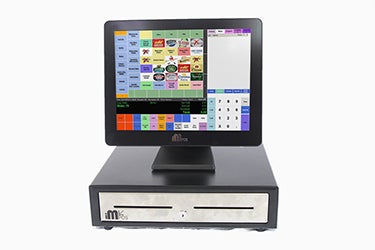
Choosing the Best POS Solution for Your Retail Business

In case you are a merchant, then it’s really likely that you are already informed how important

a POS solution is in regards to improving the efficiency of your business. POS software is

capable of serving retail businesses with excellent solutions that improve the smooth flow of

business actions, including gift cards, stock control and customer’s bonuses throughout the

year.

Main benefits of the POS Solution

1. It is simple to customize. This is one of the great benefits that you’ll get from a POS

solution for your retail business. You have the opportunity to personalize the software so that

it meets the specific demands of your business.


2. It offers a broad assortment of services. A POS solution can provide services that are

bound to help your business stick on top. These services incorporate training classes,

technical support, inventory import and menu improvements.


3. It is safe. You’ll find plenty of POS software available that are not just providing the best

type of communication in more than 5 stations but also secure your business from theft. The

great thing regarding the software is that it ensures that your daily procedures will continue to

run smoothly.


4. It doesn’t require you to invest too-much. You’ll never find it difficult installing the POS

software into the current PC systems you use, and this is a big help if you don’t like to invest

a considerable amount for the installation process.


Practical Tips in Finding the The Best POS Solution for your Business


Finding the best Point of Sale (POS) software for your business must be done carefully. You

should not simply choose any software that works in scanning items, calculating totals or

printing receipts. You need to start seeing some tips that can help you with buying a POS

solution that can offer advantages which are actually beyond what you have anticipated.

Below are great tips when choosing the right POS software for your business:


1. Always evaluate the software. When purchasing, be sure that you examine if the hardware

for the POS system, for example the computers, printers or scanners are applicable enough

for your choice. When possible, buy a package that already comes with the hardware and the

software so you will no longer fight the irritation of finding a more compatible solution.


2. Determine your requirements. You can’t simply purchase any POS system on the market

while not identifying what your business truly requires. Be aware that different sorts of

business also need different sorts of system. Find a system which is trusted to satisfy the

needs of your own retail business.


3. Identify a POS system provider, which has a good customer support team. You need to be

sure that your provider has a trustworthy customer support which is able to answer all your

questions and provide immediate support when your system stops to perform its services.


4. Choose a simple to operate software. Choose a POS system which has easy to use options

and software and doesn’t come with complicated codes because this will prevent you from

making material mistakes, in that way helping your business to improve its efficiency.

Create a Desktop/Online Office on Ubuntu with ONLYOFFICE Desktop Editors

This tutorial explains how to install ONLYOFFICE Desktop Editors and connect them to your web-office account to get a desktop/online office suite on your Ubuntu machine. ONLYOFFICE Desktop Editors comprise viewers and editors for text documents, spreadsheets and presentations that allow to work with your documents offline and easily switch to the online to co-edit, review, comment or discuss them with others.

Read more at HowToForge

Idea – Open Source Textbooks As AI-Book-Bots

I believe this idea is one of my more interesting ones. Inspired by those advanced AI chat bots or assistants. Would it not be interesting if there were a free and open source educational chat bot that would know the contents of your university textbooks. I mean the idea is simple. We remember better if we are engaged. So I thought. If the students would chat with the software bot they would remember much better. I think this would work much better than if they were just given steps to follow.

This could also work for smartphones. Maybe also in refugee educational situations. Here you want a better way to get the information than to read the whole thing on a small screen. Then why not use text to speech and text chat. Voice recognition if it works would be awesome . Just place the phone next to the pen and paper.

So the idea is for an educational chat bot for math, physics and other subjects. Let the bot read or present the theory to you while at the same time you can interrupt it and ask questions. Even if they are standard questions to begin with. It will be quite powerful. // peroglyfer.se

How to Test Mir and Unity 8 on Ubuntu 16.04

So, Ubuntu 16.04 LTS is finally here and many of us are already getting our hands dirty with the final version of the most popular distribution that is using the X window system. While this long-term support release does look good, the upcoming major changes planned for Ubuntu 16.10 have generated great excitement.