Home Blog Page 832

Cinnamon 3.0 Desktop Environment to Let Users Rename Battery-Powered Devices


Now that we’ve told you about some of the features that are coming to the Linux Mint 18 operating system in the next few months, the time has come to get a glimpse of the new goodies offered by Cinnamon 3.0.

As reported the other day, the upcoming Linux Mint 18 “Sarah” operating system will be available with the Cinnamon 3.0 and MATE 1.14 desktop environments for the official editions, bringing users a new look and feel based on the Arc GTK theme and Moka icon set.

Read more at Softpedia

Hortonworks Announces New Alliances and Releases; Hadoop Comes to Fork in Road

As Hortonworks’ Hadoop Summit event kicks off in Dublin today, the Hadoop distribution vendor has a full slate of announcements. The announcements themselves are substantial and impressive, and I’ll cover each of them here.

As you read through them, however, keep in mind that they at once highlight and reinforce the idea that the “retail” Hadoop world is becoming split in two — as Hortonworks and Cloudera each introduce unique components in their distros that often meet corresponding needs and requirements.

Read more at ZDNet

5 Reasons to Use Docker for Productivity Software Installation

5 reasons to use Docker for productivity software installation

When Docker brought new life to Linux containers at the beginning of 2013, the technology quickly gained popularity among software developers. Today Docker has millions of container downloads, thousands of community contributors, and countless third party projects who are using it. What explains this extraordinary popularity? 

Read more at OpenSource.com

Let’s Encrypt is Leaving Beta, Has New Sponsors

Lets Encrypt is leaving beta today. Were also excited to announce that founding sponsors Cisco and Akamai have renewed their Platinum sponsorships with 3-year commitments, Gemalto is joining as our newest Gold sponsor, and HP Enterprise, Fastly, Duda and ReliableSite.net are our newest Silver sponsors.

Since our beta began in September 2015 weve issued more than 1.7 million certificates for more than 3.8 million websites. Weve gained tremendous operational experience and confidence in our systems. The beta label is simply not necessary any more.

We set out to encrypt 100% of the Web. Were excited to be off to a strong start, and with so much support across the industry.

From the very beginning, Akamai has been committed to supporting Lets Encrypts vision of enabling greater use of SSL/TLS across the internet, says Stephen Ludin, Chief Architect at Akamai. This milestone is confirmation of Lets Encrypts ability to execute on that vision and have a tremendous impact to the Internet ecosystem.

Cisco is committed to improving the security of the Internet, not only for our customers and partners, but for everyone else as well, says David Ward, CTO of Engineering and Chief Architect at Cisco. Lets Encrypt has been doing impressive work toward that goal. Our support of this community towards real-time, on-demand certificates will make the Internet more secure.

Were very proud to be a Gold Sponsor for Lets Encrypt which leverages our industry-leading hardware security modules to protect their certificate authority system, says Todd Moore, Vice President of Encryption Product Management at Gemalto. Encryption by default is critical to privacy and security, and by working with Lets Encrypt Gemalto is helping to deliver trust for the digital services that billions of people use every day.

Lets Encrypt depends on industry and community support. Please consider getting involved, and if your company or organization would like to sponsor Lets Encrypt please email us at sponsor@letsencrypt.org.

Interpreting, Enforcing and Changing the GNU GPL, As Applied to Combining Linux and ZFS

An FSF statement by Richard Stallman, published on April 11, 2016.

Preamble
This article explains some issues about the meaning and enforcement of the GNU General Public License. The specific occasion for this article is the violation of combining Linux with ZFS, and that concerns specifically GNU GPL version 2; however, most of the points apply to all versions of the GNU GPL and to the GNU Affero GPL as well. “GPL” or “GNU GPL” refers to any version of either of those.

While stating our understanding of the meaning of the license that we publish, we must point out that this is not legal advice.

Read more at FSF

Canonical Is Delighted to Collaborate with Nexenta on Optimizing ZFS for Ubuntu

Today, April 11, 2016, Canonical was proud to announce the extension of their partnership with Nexenta to provide their customers with a joint software-defined storage solution.
The joint solution formed by Nexenta, the world's most popular OpenSDS (Open Source-driven Software-Defined Storage) developer, in collaboration with Canonical, the company behind the world's most popular Linux kernel-based operating system, is here to pair the Ubuntu OpenStack platform with the award-win… (read more)

Cloud Computing Infrastructure Spending to Surge, Says IDC

Public cloud will grow faster than private cloud infrastructure spending as traditional data center demand downshifts.

Survey: How valuable is SDN to the enterprise?

Take Tech Pro Research’s survey on Software Defined Networking (SDN). Is it in use at your organization?

Remix OS Could Make Nexus Tablets Live Up to Their Potential

Remix OS has quickly gained a well-deserved cult following, thanks to its clever way of taking the Android OS and making it work a little bit more like a desktop OS. It offers proper windows, a browse-able file system, keyboard shortcuts, and full access to official Google Play apps. It is in many ways everything that Google ought to be doing wth Android. And now, as 9to5Google reports, it’s available for Google’s own tablets, the Nexus 9 and Nexus 10.

Putting a desktop OS on a tablet is one of those Bad Ideas that we would normally scoff at, but given the state of Android on tablets (at least until the split-screen and possible multi-window versions come later this year), any progress seems like good progress. And if you have a…

Continue reading…

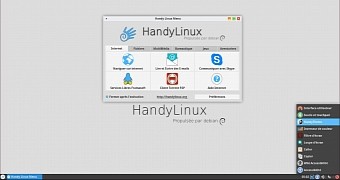
HandyLinux 2.4 Is Based on Debian GNU/Linux 8.4, Iceweasel Replaced with Firefox

The developers of the Debian-based HandyLinux distribution have announced the immediate availability for download of HandyLinux 2.4, a maintenance release in the 2.x stable series of the OS.

HandyLinux 2.4 comes only ten days after the release of the Debian GNU/Linux 8.4 "Jessie" operating system, on which the French distro is now based, offering users new installation mediums that include the latest security patches and software updates pushed upstream.

However, HandyLinux 2.4 has… (read more)