
In a previous article, I talked about what it’s like to work on a community-driven project from within an Open Source company. Today, I’m going to shift gears and talk about what it’s like to work in the Marketing department of such a company (next month, I’ll be looking at Engineering).
Luckily, I work in the marketing department at SUSE. I’m not sure if that qualifies me as the world’s foremost expert on the topic, but I have opinions! What follows are my personal reflections on my experiences here over the past two years.
Being in marketing within a company focused on, and dedicated to, Open Source (and Free) software is an interesting thing; Open Source projects are not often associated with being particularly great at marketing and communication. The focus tends to be on the software being developed, with a mindset to let the quality of the software speak for itself. That doesn’t negate the need for great communication and marketing, though. (Even truly amazing software won’t have a lot of users if nobody knows it exists.)
Perhaps the best way to convey some of what working in open source marketing is like… is with a personal anecdote. Specifically, how I came to work at SUSE in the first place.
In November of 2013, SUSE invited me to SUSECon to cover the event. On the day before the conference officially kicked off — with keynotes, sessions, and the like — the company set aside time for the press, with briefings on the announcements, scheduled time to interview executives, and so forth. Pretty standard fare for this sort of conference.
But, there was something unique about it all.
Over the course of the day, as I talked to one SUSE executive after another, I was rather brutal on them. I asked them tough questions, and as I grilled these executives, something dawned on me. They had answered every single question I asked. They didn’t ever hesitate or dodge. For a tech journalist, this was like finding a unicorn.
So, I asked the VP of Marketing about it, and what he said really stuck with me. He said (and I’m paraphrasing for the sake of brevity), “Of course. We’re Open Source. It’s who we are. It’s in our DNA. It affects how we do business and go about… everything. Not just how we write code. We are… open.”
In the conversation that ensued, I asked a simple question. “Why don’t you tell people about this? Why don’t you show the world what you just showed me? Jeeze. You guys must really suck at marketing.” I’m paraphrasing again, but I think I actually said that last sentence.
A few weeks later, they called me up and asked if I’d like to come work with them. I told them I’d still need to be able to write stories for whatever periodical I wanted. They agreed. I told them I would never censor myself for SUSE. They agreed. I said, “Seriously?” They said, “Yep.” More than two years later, I’m still doing marketing work with SUSE, and they still have never tried to censor me.
So, what does this little story relay about the marketing within an Open Source company? This experience (and many others) actually taught me a few things. Below, I’ll lay out “Lunduke’s 4 Truths of Open Source Marketing” based on my experiences so far.
1. There Are No Secrets (At Least, Not Many).
It’s hard to have the existence of a piece of software be a complete secret when the people building it are Free Software advocates. And the license is the GPL. And the code is up on GitHub.
This one may seem like a bit of a no-brainer, but it’s worth remembering that we live in the Free and Open Source world. Sure, there can still be new announcements that are a surprise to the public. But, for example, say a company produces a Linux distribution. And the people working at said company are submitting multiple patches to the Linux kernel to support a new feature… there are good odds that new feature is going to show up, in some way, in the next version of that Linux distribution.
This is not, at all, a bad thing. In fact, it’s rather fantastic. But, it does make it much harder for someone to stand up on stage and announce “one more thing” that nobody ever saw coming.
2. The Community. Always Consider the Community.
Every company — certainly every sizable company — in every market has a community to consider. But Open Source communities… are a bit different.
As an example: If Microsoft is making a new commercial about Windows 10, they don’t normally need to think about how that commercial is going to make Bill Gates feel when he watches it.
In Open Source marketing, if we make an advertisement that really ticks off Linus Torvalds and Richard Stallman? That’s a problem. And, it’s not just a few people that should be considered. It’s the broader Open Source community (or, rather, communities).
Luckily, we are part of that community. So, considering a community we are part of — both as individuals and as an organization — isn’t terribly difficult. But, it’s definitely different from, say, being in marketing for a proprietary software firm.
3. Coopetition is Groovy.
Cooperation + Competition = Coopetition.
This can make things… interesting. Here’s a very simple example: SUSE uses the Linux kernel. Red Hat uses the Linux kernel. Not only do both companies benefit from the kernel… we both contribute to it. Sometimes by collaborating on the exact same feature.
This, like the first two “truths” I’ve listed, is not at all bad. Not in the slightest. It is, in fact, rather wonderful. But, it does make marketing a bit different from working in a proprietary company. Could you imagine if Microsoft and Apple worked together on the same kernel — and shared a large portion of their code with each other?
4. Be Goofy.
My fourth truth of Open Source marketing is simple. Goofiness rules.
Software is important. Mission-critical software, even more so. It’s serious work performed by brilliant software developers who create something that straddles the line between being an engineering marvel… and a beautiful work of art. But, marketing those engineering marvels? A little goofiness helps.
Case in point: You want to inform people about the existence of a feature that allows the Linux kernel to be patched — such as to fix a security vulnerability — without requiring a full reboot of the system. What’s the best way to tell the world about that? Music video. Obviously.
Next up: I’m going to be quiet (not easy to do) and let a few engineers within SUSE talk about what it’s like working within a company focused on Open Source.

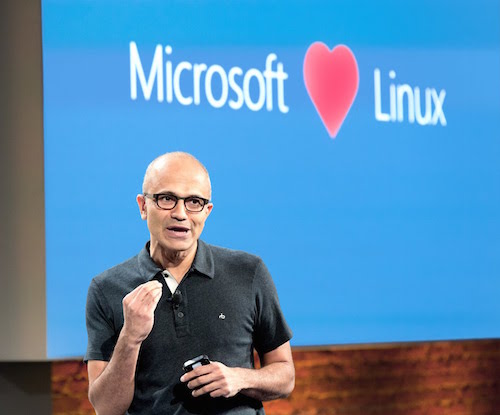 This week in Linux news, Microsoft is releasing its SQL Server database management program for Linux, Linux Mint tightens its security after major vulnerabilities were exposed last month, and more! Get your fill of the latest Linux and open source headlines below.
 Joanna Rutkowska from the Qubes OS project has had the great pleasure of announcing the release of Qubes OS 3.1, along with its immediate availability for download.