
Five Google developers share the lessons from ten years of container development in this ACM Queue article. “Though widespread interest in software containers is a relatively recent phenomenon, at Google we have been managing Linux containers at scale for more than ten years and built three different container-management systems in that time. Each system was heavily influenced by its predecessors, even though they were developed for different reasons. This article describes the lessons we’ve learned from developing and operating them.”…
“To cope with these kinds of requirements, configuration-management systems tend to invent a domain-specific configuration language that (eventually) becomes Turing complete, starting from the desire to perform computation on the data in the configuration (e.g., to adjust the amount of memory to give a server as a function of the number of shards in the service). The result is the kind of inscrutable ‘configuration is code’ that people were trying to avoid by eliminating hard-coded parameters in the application’s source code. It doesn’t reduce operational complexity or make the configurations easier to debug or change; it just moves the computations from a real programming language to a domain-specific one, which typically has weaker development tools (e.g., debuggers, unit test frameworks, etc).“
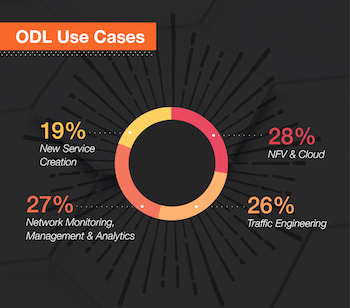 In the past few years, the networking industry has made great strides toward building software-defined networks and in particular, open source SDNs. We’ve gone from tire-kicking to proofs-of-concept to the broad end user adoption we see today.
 There are two kinds of Linux users: the cautious and the adventurous. On one side is the user who almost reflexively tries out ever new option which hits the scene. They’ve tried handfuls of window managers, dozens of distributions, and every new desktop widget they can find.
 In the latest survey by Tech Pro Research, 68% of enterprise IoT users reported at least some return on investment.