Home Blog Page 942

elementary OS 0.3.2 “Freya” Brings UEFI Fixes, Now Downloaded Over 5.3 Million Times

elementary-os-0-3-2The awesome guys from elementary have just announced a few minutes ago, December 10, 2015, the release and immediate availability for download of the elementary OS 0.3.2 “Freya” computer operating system.

According to the release announcement, elementary OS 0.3.2 “Freya” is here to improve the support for 64-bit UEFI (Unified Extensible Firmware Interface) and SecureBoot systems, as well as machines running BIOS and Legacy Boot, which means that the infamous GRUB boot error has finally been patched.

Read more at Softpedia Linux News

Top 10 Linux Gifts for the 2015 Holidays

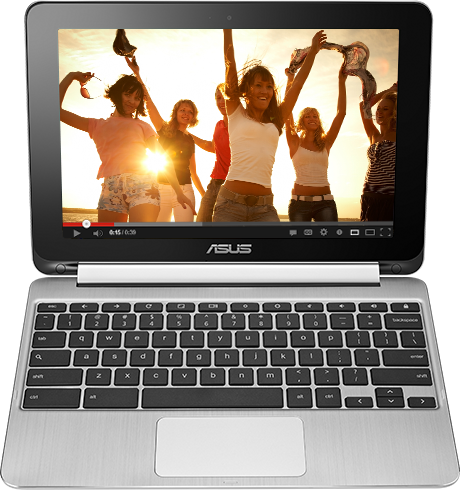
Asus Chromebook flipThis fourth edition of the Top 10 Linux Gift Guide has presented some tougher choices than last year’s guide. Despite the fact that Android-only devices are again omitted from the list, there are plenty of tuxified consumer electronics out there to choose from, from mini-PCs to home automation hubs to drones.

The list is intended to be more representative than absolute — I have not tested all these products — but it should provide an overview of what’s available with Linux for under $350 while perhaps helping to fill in your last-minute gift list. Click on the Gallery link below to see the slideshow.

The 10 products listed here all began shipping this year, and can be bought now in the U.S. with shipments within two weeks. They either run Linux as the sole OS or are available with Linux as a preloaded option, typically dual-booting alongside the Linux-based Android.

While some of these products appeal more to hackers than others, many if not most, could be safely bought for people who had never heard of Linux and don’t much care. Open source is considered a positive attribute here, not a prerequisite.

Gallery


View Gallery
(10)

Some categories have been omitted to ease the selection process. These include industrial, enterprise, and vertical-market equipment, as well as single board computers like this year’s Raspberry Pi 2, BeagleBone Green, or the recent, $5 and up Raspberry Pi Zero.

PCs and laptops are allowed, but the $350 limit keeps those in check. Here we include a touch-enabled, convertible Chromebook and a smattering of Linux mini-PCs and media players, all of which are faster and cheaper than in previous years.

High prices, limited availability, and lack of maturity have conspired to disqualify Linux phones and tablets. The first Tizen and Ubuntu based phones shipped this year, and the Ubuntu phones in particular look intriguing, but there are no under $350 models available in the U.S. In any case, the phones are still rough enough around the edges that they are not Parrot hydrofoil dronerecommended as gifts. (The same goes for puppies.)
Connected devices are precisely where Linux is seeing the greatest growth. We’ve only included one home automation product in here, as they generally require too much of a commitment to make them suitable as gifts. Yet, almost all of the hubs and many of the smart devices controlled by them run Linux.

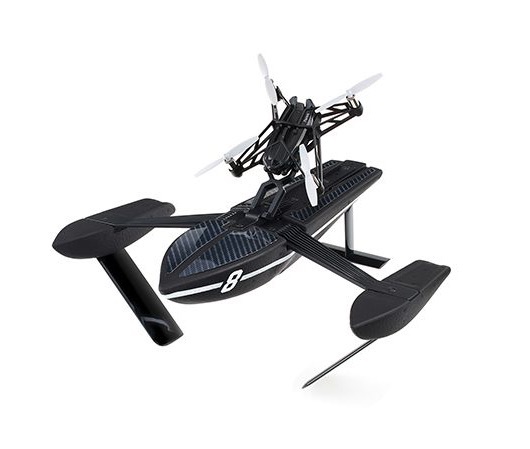
Tuxified drones and robots were also big this year, but most are priced well above the $350 cutoff. I couldn’t resist one of Parrot’s latest Linux-based toys, however: The Hydrofoil Orak is a hackable quadcopter that also can hydrofoil across water. This year’s list also includes a Linux-based NAS device that doubles as an Android media player, a speedy OpenWrt-ready WiFi router, and one of the coolest gizmos you can buy for under $50: Google’s $35, Chromecast Audio, which turns any dumb speaker into a smart media streamer.

There have been plenty of announcements and crowdfunding campaigns this year for intriguing new Linux-based products that ship in 2016. Products that could make next year’s list include the Dojo home security gateway, the Amazon Echo-like, Ubuntu Snappy Core based Mycroft wireless hub, and the 3D depth sensing Orbbec Persee camera computer, just to name a few.

Top 10 Linux Gifts for 2015

Asus Chromebook Flip

Aside from the novelty of the touchscreen, convertible design, and Rockchip RK3288C CPU, Asus’ 10-inch Chromebook Flip tempts with a $249 price, superior keyboard and IPS display, and 11+ hour battery life.

Chromecast Audio

With Google’s $35, audio-only version of the Chromecast, you can turn any speaker system into an Internet radio that can play Spotify, Pandora, and Google Play. You can also stream from an Android phone via WiFi without Bluetooth pairing.

GeekBox

This $110, Kodi-ready media player and mini-PC dual boots Ubuntu and Android on a Rockchip RK3368 with 2GB RAM. Remove the mainboard and plug it into a $30 carrier board to turn it into an open spec hacker SBC.

Hydrofoil Orak

Parrot’s $160, Bluetooth-controlled Hydrofoil mini-drone can’t shoot video like the BeBop, but it can fly acrobatically for nine minutes, taking still photos, and you can attach it to a hydrofoil to navigate on water. There’s even a Linux SDK.

Linksys WRT1900ACS

Belkin’s major upgrade to the AC router moves to a faster dual-core SoC with 512MB RAM, and adds an open source OpenWrt Linux stack. This latest Linksys offers dual-band 802.11ac, four GbE ports, plus eSATA and USB.

MintBox Mini

The $295 Mini is a Linux Mint version of CompuLab’s Fitlet mini-PC. The 10.8 x 8.3 x 2.4cm device features a quad-core AMD A4 with 4GB DDR3, a 64GB SSD, five USB ports, plus GbE, WiFi, HDMI, microSD, and mSATA links.

Roku 4

Yeah, it’s pricey at $130, and it’s not open source, and it’s bigger than other Rokus, but the Roku 4 adds 4K support and faster access to Roku’s excellent, 3,000+ channel lineup. The 802.11.ac media player also adds microSD and optical audio.

Samsung SmartThings Home Monitoring Kit

The $249 SmartThings home automation kit boasts easy installation, extensive device support, and a faster, second-gen hub. You also get a discounted smart electrical outlet and mix of ZigBee-linked motion, door, and window sensors.

TAS-268

Qnap’s latest home NAS device has dual SATA bays for up to 12TB storage. The $249 TAS-268 runs Qnap’s mature, Linux-based QTS NAS stack, and when you connect the HDMI port to a display it turns into a Kodi-ready Android media player.

Ugoos UT3S

Ugoos’ latest media-oriented mini-PC supports 4K video, and runs Ubuntu and Android on a quad-core Rockchip RK3288 with a Mali-T764 GPU. The $149 UT3S ships with 4GB RAM and 32GB flash, plus microSD, GbE, WiFi-ac, and more.


 

Cloud Budgeting Emerging as a Challenge for Enterprises: Survey

A survey from Dimensional Research and Cloud Cruiser finds that IT pros are having a tough time measuring cloud use and its financial impact to their companies.

Organizations are increasing their usage of the public cloud, particularly in terms of business applications, but are being “left in the dark” on details concerning cost and cloud consumption, according to a new survey from Dimensional Research sponsored by Cloud Cruiser, a hybrid cloud analytics company. Forty-two percent of 350 IT professionals polled by the companies at the Amazon Web Services (AWS) re:Invent conferences in 2014 and 2015 said they found it difficult to properly allocate public cloud costs and usage. 

Read more at Datamation

Virtually There: The Hard Reality of the Gear VR

gear with phone.0Releasing the Gear VR headset the weekend before the Thanksgiving holiday in the US was one of the smartest decisions Oculus and Samsung ever made. For a medium that’s stereotypically asocial, virtual reality turns out to be a fantastic form of family bonding — little is more fun than defusing bombs with the people you love, or showing your parents their very first 360-degree video. For the holiday weekend, my Gear VR review unit was more than a gadget; it was a portal to completely new experiences.

But when the holidays are over, what will happen to the Gear VR? Is the headset a novelty or, as many of its developers and fans suggest, the start of a new medium? Once you’ve given everyone you know five minutes of virtual reality…

Read more at The Verge

Linux Foundation and Microsoft: A Great Start to a Great Partnership

The lines between open source and proprietary software are blurring. Increasingly organizations are building even in-house technologies with open source methods. This includes Microsoft.

From participating in Node.js, the Core Infrastructure Initiative and other Collaborative Projects at Linux Foundation to its recent partnerships with Red Hat and SUSE, Microsoft is demonstrating a sincere, smart and practical approach to how it builds new technologies and supports its vast customer base. Microsoft open sourced .NET; it open sourced key parts of its web browser; and it uses Linux for its Azure Cloud Switch. The Linux Foundation and Microsoft share a common, strategic approach to technology development: balance internal R&D with external R&D to create the most important technologies of our time.

The Linux Foundation and Microsoft also share a commitment to SysAdmins who are running the world’s most critical, complex IT systems. Today’s SysAdmin requires knowledge of both Windows and Linux. Professionals and their employers who invest in training and certification that demonstrate this hybrid knowledge will benefit.

Professionals who can run both Linux and Windows systems, as well as understand hybrid environments and the development behind them will rise to the top of their field with better pay and career prospects. And employers who invest in these skills among their team members will be assured of their skillsets and will be able to support future workloads as we move toward a world dominated by cloud computing.

Today’s news that Microsoft’s Azure certification will require candidates to pass a Linux Foundation Certified SysAdmin exam underscores these trends and commitments from Linux Foundation and Microsoft. The winners, above all, are SysAdmins.

Microsoft, many times over, is demonstrating a strategic approach to open source in order to serve its customers and work well with the global community. This is just the beginning of what we expect to be a long and successful partnership.

Read more at Jim Zemlin’s Blog

Challenging, Rewarding, and Fulfilling: A Q&A With Shuah Khan on Linux Kernel Development

shuahkhShuah Khan was the very first engineer to join Samsung’s North American Open Source Group shortly after it was founded in 2013. Since then, she has been extremely valuable to the company through her contributions to the Linux Kernel. She was recently elected to the Linux Foundation Technical Advisory Board, presenting her with a wonderful opportunity to help direct the Linux Kernel community from the highest technical level.

We asked Shuah some questions to get a better sense of what took for her to get to this position and what it means for herself and for Samsung.

Can you tell me about your work as an open source developer?

I am a Linux Kernel developer, maintainer, and contributor. I maintain the Kernel Selftest sub-system and actively contribute to the Media sub-system, and I enjoy working on features that span multiple kernel sub-systems. Working on an open source project, like the Linux Kernel, allows me to collaborate with a diverse group of talented individuals from all over the world; I find this to be challenging, rewarding, and fulfilling.

What was your first contribution to the Linux Kernel?

I started my open source career at Hewlett-Packard on a Linux middleware project. This experience gave me the opportunity to learn how to work in open source and how to balance product and employer commitments with open source commitments.

I wanted to take this further by contributing to the upstream Linux Kernel independently. As I started to educate myself about the Linux Kernel community, I came across a new project initiative asking for volunteers to contribute to the Android Driver Mainlining effort. I joined this effort and my first contributions followed shortly. This work involved understanding the Android drivers and kernel features, and determine if the feature exists in the upstream, or if a new feature needs to be added. My first contribution was a new driver to the LED sub-system.

You’ve been invited to participate in multiple Kernel developer panels, including some that involve Linus. How were you selected for these?

I have been invited to be on the Kernel Developer Panel twice. The first panel focused on challenges involved in working across sub-systems. I was invited because I contribute to more than one sub-system and I often add features that involve working with maintainers and developers who span multiple sub-systems. The second panel focused on the growing complexity of the Linux API and how developers are working to make them simpler. I was chosen the second time because I have been working on features and frameworks to enable media resource sharing across drivers from different sub-systems.

Congratulations on being elected to the Linux Foundation Technical Advisory Board (TAB)! Could you explain how this came about?

Thank you very much! I am excited to have the opportunity to serve on the TAB.

A good TAB member is well respected by the community, is a ready listener, is comfortable discussing both technical and social issues, and has a good understanding of how the Linux community works. Since the TAB deals with a wide range of issues, the ideal TAB candidate should be prepared to consider issues outside of their own area of expertise. Sometime the most important characteristic of a TAB member is recognizing when an issue is beyond their depth and to go searching for the right person to consult.

The TAB members select a Chair and Vice Chair of the TAB from among their members to serve a renewable 1 year term. The TAB Chair and Vice Chair are selected 6 months after the TAB election. The Chair or Vice-Chair prepare an agenda for and preside over monthly meetings of the TAB.

Self-nominations are accepted from any person, via email to the TAB mailing list, up until the time of the election. In my case, I was encouraged to consider running for the TAB and I nominated myself. 17 candidates ran for the 5 open positions. I am humbled and thankful for the trust my fellow Linux developers have placed in me by choosing me to represent them to the Linux Foundation.

When an employee is elected to the TAB, how does this benefit the company?

There are two necessary abilities for any company that wants to successfully build quality, competitive products using open source: the ability to influence code and policy. Good contributors are able to influence code, but you need good maintainers to influence policy through organizations like TAB. It is a unique and special opportunity for a developer and his/her employer.

What are your goals for the future?

Developers are vital to the continued success of Linux, and encouraging and mentoring new developers to become successful contributors ensures the current and future Linux development needs are met. I plan to use my time on the TAB to mentor and help new developers become successful contributors. I have a wonderful job that allows me to work on an open source project that touches many lives, and I want to continue to expand my knowledge and expertise in Linux. More importantly, I want to continue pursuing this passion for the rest of my career.

This article is republished with permission from the Samsung Open Source Group Blog.

Hashcat Is Now Open Source

Several Phoronix readers have written in that Hashcat — both in its CPU and OpenCL/CUDA forms — have been open-sourced. 

Hashcat is one of the most popular “advanced password recovery” tools and claims to be the world’s fastest. The program was proprietary, but some days ago it became open source. 

Read more at Phoronix

​Open Source Encryption? Now Netherlands Votes to Help Fund Security Projects

passwordIn what some might see as swimming against the political mainstream, the Netherlands parliament has just decided to back open-source web security with hard cash.

While November’s Paris attacks prompted US and European governments to revisit the debate over back-door policies to soften data encryption, the Netherlands lower house has voted to fund projects to strengthen it.

In total, the Dutch lower house agreed to spend €500,000 ($547,000) to support the open-source OpenSSL, LibreSSL, and PolarSSL web-security projects.

Read more at ZDNet News

How to install and configure ZFS on Linux using Debian Jessie 8.1

ZFS is a combined file system and logical volume manager. The features of ZFS include protection against data corruption, support for high storage capacities, efficient data compression, integration of the concepts of filesystem and volume management, snapshots and copy-on-write clones, continuous integrity checking and automatic repair, RAID-Z and native NFSv4 ACLs. This tutorial will show you how to install ZFS on Debian 8.

Read more at HowtoForge

Bright Cluster Manage Integrates with Dell PowerEdge Servers for HPC Environments

linux-cluster-rackview

Today Bright Computing announced that the latest version of its Bright Cluster Manager software, version 7.1, is now integrated with Dell’s 13th generation PowerEdge server portfolio. The integration enables systems administrators to easily deploy and configure Dell infrastructure using Bright Cluster Manager.

The latest version of Bright Cluster Manager is deeply integrated with Dell’s industry-leading PowerEdge servers to simplify the management and operation of clusters.
 
Read more at insideHPC