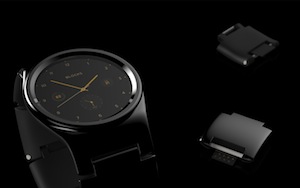
 Blocks, which has been developing a modular, open source smartwatch for several years, has re-emerged with a resoundingly successful Kickstarter campaign, and a new Android Lollipop based operating system. UK-based Blocks has already hauled in more than $700,000 for its Blocks smartwatch, and packages starting at $195 are still available through Nov. 19, with shipments due in May 2016.
When Blocks was first announced a year ago, it ran Tizen on an Atom-based Intel Edison module. (Blocks was a top-10 finalist out of 400 entries in an Intel Make It Wearable challenge.) The company then switched to Android Wear, and when that proved too limiting, created its own Android 5.0 based OS and UI stack. The OS runs on Qualcomm’s dual-core, 1.2GHz Snapdragon 400 processor, the standard platform for Android Wear.
Blocks’ unique, modular approach to smartwatch technology remains the same. The device starts with a base level watch, which you can augment with add-ons built into individual chain links of the wrist band. You can then hot-swap these using plug connectors. One limitation of the design is that the number of modules one can wear ranges only from three to five, depending on the size of your wrist, although to be fair, it’s hard to imagine being able to cram more modular options into a watch-piece itself.
The company was inspired by UK-based Phonebloks, which also inspired, and has since been aligned with Google’s Project Ara. Like these modular smartphone projects, which also include the open source Fairphone 2 (see below), the Blocks watch is billed as being “future proof. The idea is that you can continue to improve its capabilities without having to buy a new watch and dispose of the old one. In other words, it’s good for your pocketbook and for the environment, too.
With the hot-swap capability, you can customize the watch on the fly depending on your planned activities. In the latest iteration, you can choose up to five chain-link modules, or none at all. Not surprisingly, most backers opted for the $250 or $260 packages, since sold out, which ship with four modules of your choice. The same kit is still available in $275 and $285 packages, plus $30 for the fifth module. The initial set of modules include an extra battery, heart rate sensor, GPS, NFC, or an adventure module with altitude, pressure, and temperature sensors.
Planned for next year are a SIM card module with GSM, letting you send and receive text messages or reply to emails using voice. Also in the works for 2016 are fingerprint and LED add-ons, as well as a programmable button module that “can be used as an emergency (SOS) alert for the elderly, for taking cheeky selfies, or controlling your music,” says Blocks.
Eventually, Blocks plans to add air quality, camera, flash memory, and stress-monitoring (galvanic skin sensor) modules. Beyond that, the company is considering making the watch screen itself modular, with different sizes, shapes, and display types available. Currently, only the color of the watch-piece is customizable.
The base watch-piece has a round-faced, 1.35-inch color display with 360 x 360 pixels. Like most Android Wear watches, Blocks provides 512MB RAM, 4GB of eMMC flash, Bluetooth 4.1 BLE, a microphone, and accelerometer, gyro, and vibration functions. Like most, it’s also IP67 certified for resistance against water, with plans for fully waterproof IP68. The battery is said to last 1.5 days, extendable via the extra battery module.
Unlike most Android Wear models, it also offers WiFi, enabling more autonomy away from a connected smartphone. A smartphone app will be available for Android and iOS, letting users receive selected notifications, as well as download customized watch faces and apps.
According to a June TechCrunch report, Blocks decided against Android Wear due to its lack of support for iOS phones, as well as its overall limitations, especially in its support for cellular. Android Wear has since added iOS support, but it offers a fairly limited subset of features.
A year ago, when Blocks was a Tizen project, the company said it would make both the hardware and software components open source. Now, however, it says only that it’s an “open platform.” The company has already signed up 1,500 developers who are waiting to receive the SDK and Module Development Kit (MDK).
Much of the delay in getting Blocks off the ground came from difficulties finding a manufacturer. Compal is now on board, however, and much of the Blocks technical team has moved to Taiwan to work closely with the OEM firm.
Blocks is challenged by the fact that it’s tough for a small startup to deliver a wide selection of modules from the start. Blocks’ solution is to have the modules developed and sold by a variety of partners using its open platform. The partners will be able to sell modules and apps at a planned BlockStore, where customers can also trade old modules with other users.
Assuming the company can quickly ramp up with additional modules before a wider retail launch in 2016, Blocks has a chance in the still unformed smartwatch industry. One big challenge, in addition to the limitations on the number of modules that can be worn at once, is that there is no way to upgrade the processor without buying another $195 watch. However, if their plans for a modular screen go through, that would make the mainboard modular as well, reducing the cost.
Blocks’s chain-link design mitigates the technical integration issues of modular interconnects in a monolithic form-factor such as a phone. In many ways, wearables, being a fashion accessory, are a better fit for modular technology, with more demand for customization.
Fairphone 2 Beats Project Ara to Market
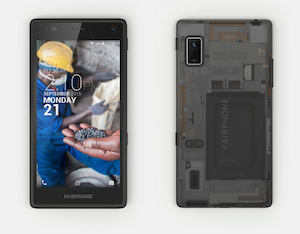 While Project Ara is being redesigned to fix its magnetic connection technology, another modular smartphone called the Fairphone 2 is available for 529 Euros on pre-order, with shipments due in November. The new version adds modularity, with snap-in modules including the mainboard, display, microphone, rear and front cameras, and a 2420mAh battery.
The modular design makes it easier to replace and repair components, leading to a longer product lifespan, says Amsterdam-based Fairphone. In particular, being able to quickly replace the screen at a reasonable price has considerable appeal.
The dual-SIM, LTE-ready Fairphone 2 has advanced to a faster, quad-core Snapdragon 801 with 2GB of RAM, 32GB storage, and a 5-inch, HD display. The phone offers both 8- and 2-megapixel cameras, as well as the typical array of wireless and sensor features.
Like the original Fairphone, the Fairphone 2 is based on Android and is fully open source in hardware and software. It’s also claimed to follow exceptional standards for environmental and social impact.

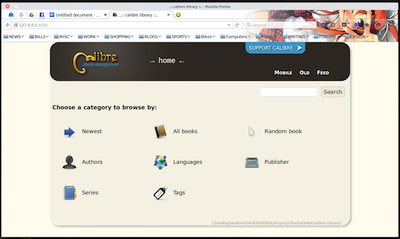 It is 2015 and your home library that once resided on bookshelves and milk crates now exists on either a handheld reader, your laptop, or your desktop. That, of course, is not to say the end of physical books is nigh. But when you want the most convenient way to either read or keep your library with you, e-books are the way to go. This is especially true for larger, heavier textbooks.
 Once you click Get, the e-book file will download and you can then open it in your local copy of Calibre (or whatever e-reader you choose).
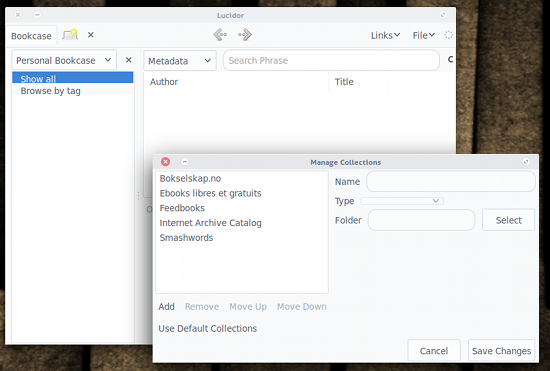
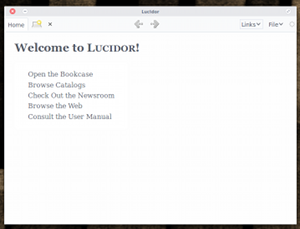 The interface is quite simple to use. You click on the Links drop-down and select what you want to open. Let’s open up the Personal bookcase in a tab and then add a book. Click Links > Bookcase and the new tab will open, defaulting to the Personal Bookcase. Now click File > Open File. Locate the .epub file you want to add and then click Open. When the file opens in the Lucidor tab, you will prompted whether you want to add the file to the current Bookcase (Figure 4). Click Add and the book will now be available in your personal bookcase.
 At this point, you can click the Tab button, click Open Bookcase, and start the process over to open a new book.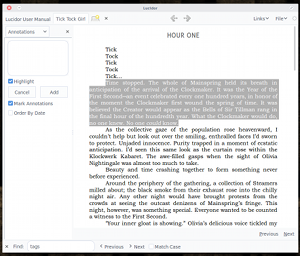
 Red Hat has
  The Ubuntu MATE project posts the details about the donations they’ve received each month, detailing who gave money and where they are going. They’ve been doing this for quite some time, and many times they used those funds for donations to other projects. Now they are saving the money because Ubuntu MATE 15.10 for Raspberry Pi is coming out, and they think it’s going to be a hit. …It’s a known fact that Ubuntu and all the flavors will get new updates next week, on October 22, but it looks like the Raspberry Pi platform will be supported too, even if it’s not on the official list.
 Release Candidate (RC1)