Home Blog Page 989

Telstra Partners with HP for Network Function Virtualization

Australian telco Telstra has partnered with HP, F5, and Nuage to announce a proof of concept for a multi-vendor, open NFV solution. 

HP has announced a partnership with Telstra, F5 Networks, and Alcatel-Lucent startup Nuage Networks to design a proof of concept (PoC) for a multi-vendor network function virtualisation (NFV) solution, certified by the European Telecommunications Standards Institute (ETSI). NFV is a technology used by telecommunications providers to virtualise their networking services, providing them with a faster, more scalable, and cost-effective solution.

Read more at ZDNet News

Mate Makes Robolinux Raptor Soar

mateRobolinux Mate Raptor v8.1 is a stunningly gorgeous and well-tuned operating system that soars with unmatched functionality. This release of the Robolinux distro line runs the newest iteration of the Gnome 2 fork desktop Mate. It is fast and slick. The integration of Mate as a modern desktop environment is growing on me. This assessment becomes even more true with how Mate is paired with the really cool features in Robolinux. Raptor is a long-term support release that will keep you flying fine until 2020.

Read more at LinuxInsider

Liberty Is First OpenStack Release Under ‘Big Tent’ Model

The Liberty release, the second major OpenStack update this year, includes a wealth of new projects and features, while core technologies continue to evolve.

The OpenStack Liberty release, set to become generally available on Oct. 15, will provide users of the open-source cloud platform with new projects and features. The second major OpenStack update in 2015, the Liberty release followsKilo, which debuted on April 30.OpenStack Liberty is noteworthy for many reasons, not the least of which is the fact that it is the first release under the “Big Tent” model, which takes a more inclusive approach for projects. 

Read more at eWeek

Linux Kernel Developer Workspaces Video: Mark Brown

Mark Brown is the Kernel Working Group technical lead at Linaro. He is responsible for looking at anything that isn’t explicitly covered by some other part of Linaro. Upstream, he maintains a few subsystems related to embedded systems — ASoC (audio for embedded systems), regmap, regulator, and SPI — as well as other things when he has time.

Mark says the thing he likes most about his workspace is the portability, which is pretty unusual for kernel developers. He likes being able to set up anywhere that he can get Internet access, including in the park on a sunny afternoon. We’re impressed by the minimal elegance of his setup, which fits in a laptop bag and is entirely self-sufficient.

He has a desktop setup at home with more test equipment (more boards, and things like a TV and 5.1 decoder for HDMI testing). However, much of what he does is code review and, with this portable setup, he can do that anywhere.

Check out the video to see Mark’s super streamlined travel setup that allows him to stay in touch with his team and stay productive even when he’s working from a hotel room.

https://www.youtube.com/watch?v=jwIXeFMzSlQ?rel=0″ allowfullscreen=”true” frameborder=”0″ width=”425


Syncloud: personal services device

Project overview

Syncloud is open source software which allows users without any technical knowledge to have popular services running at home on cheap hardware like raspberry pi with UI similar to modern mobile app store solutions. With almost one click install within seconds user can have complex services like ownCloud ready for use otherwise impossible to install without an admin friend with experience.


Usual scenario includes buying a single board computer with preinstalled syncloud or manually flashing downloaded board image to an existing device. After attaching device to a home wifi network preferably with a network cable and powering on it can be discovered with syncloud mobile app using either Android or iPhone.


User is then offered to select a domain name under syncloud.it so it can be accessed outside of home. This is done with DNS server to circumvent dynamic IP inconvenience, all data goes directly from user to his device.


When device is discovered and saved it is ready for app installations. Syncloud mobile application will save user device details for quick access otherwise it can be accessed from personal page on syncloud.it which shows user activated domain names.


Device main Web UI offers simple responsive navigation to access app store, installed apps and system settings. Currently user can attach external hard drive and use all its space inside apps.

Current state

We have started this project about two years ago and it is has gone through several major architectural changes before we came to more or less stable form as we see it right now. Instead of adding more apps we have concentrated on just one (ownCloud) to design the platform and try different packaging approaches. Currently we package apps as copy-deployable independent archives similar way it is done for modern mobile platforms.


We also support several major single board computers like raspberry pi and beagle bone black. Image building process is another interesting area and we call it extract-merge. We have a set of scripts and a build server which can produce syncloud image specific to any single board computer given a base (original) image usually with two partitions. Build server will extract bootloader and first partition and simply attach them to our root file system with needed kernel modules taken from the base image.


Now we are ready to add more apps like mail server, social network node and many more.


Motivation

The original idea came from the simple need for storing personal images with easy access from any device; and observation that current state of the internet is very centralized. After thinking about this a little bit more we have realized that today’s internet is all about proprietary centralized services probably built on top of open source software. I think this is at least not very promising way of software evolution.


I would like to see more open and distributed internet and that is why I am doing this project.


Imagine having social network node truly personal, your data, your device, you decide who to give access and who to revoke. Same story for email server and many others.

Architecture

Key driver here is usability.

System contains two main parts: on-device software (Platform) and public dns server (Redirect) to host its domain name. Device regularly updates its DNS record and also maintains public access port on home router using UPnP protocol.


Platform contains application manager (Sam) and a set of system tools hidden under Web UI.


Platform itself is written on Python and uses uWSGI webserver with Flask web framework. Recently we have added an LDAP server so users automatically get same credentials on each app they install.


Applications on the other hand can use any technology out there, for example ownCloud uses NginX, PHP and postgresql

Users do not have to pre-configure apps as it is usually very complex instead we make all needed decisions beforehand.

Monetization

As we all know making end user product is very resource consuming process especially when open source project is not your day job. As a result we came with an idea of combining free nature of software and commercial nature of hardware end product. So we try to sell preconfigured devices.


Give it a try and tell us about your experience.


Syncloud website

Questions: support at syncloud.it

 

Experts Target Wi-Fi Routers Under New Internet Security Plan

“We can’t afford to let any part of the Internet’s infrastructure rot in place,” said Vint Cerf, co-inventor of the internet. 

It’s not just security researchers who are fed up with hearing day after day about a new security vulnerability in a widely-used Wi-Fi router. Even the co-inventor of the internet, Vint Cerf, has had enough. In a letter to the Federal Communications Commission (FCC), the government body that regulates the airwaves and internet services, more than 260 leading internet experts argued that new proposals could lead to “buggy and insecure software” for off-the-shelf home and office routers, 

Read more at ZDNet News

University of Cambridge Study Finds 87% of Android Devices Are Insecure

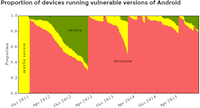
2015-10-13Study blames OEMs for a lack of updates; ranks Nexus devices as the most secure. It’s easy to see that the Android ecosystem currently has a rather lax policy toward security, but a recent study from the University of Cambridge put some hard numbers to Android’s security failings. The conclusion finds that “on average 87.7% of Android devices are exposed to at least one of 11 known critical vulnerabilities.”
Data for the study was collected through the group’s “Device Analyzer” app, which has been available for free on the Play Store since May 2011.

Read more at Ars Technica

Ubuntu Phones Will Run Any Linux Application on Top of Unity 8

ubuntu-phonesWe have some hot news from the Ubuntu land, as Canonical’s Michael Hall has just teased us with a photo from his Nexus 4 smartphone running the latest development version of the Ubuntu Touch mobile operating system.

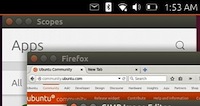
In the respective image attached to the right side of the article, you can see applications like the Mozilla Firefox web browser and the GIMP image editor running on top of the Ubuntu Touch’s Unity 8 interface. 

Read more at Softpedia Linux News

Google Introduces New Developer Tools for Cloud Platform

Google’s Cloud Datalab and Cloud Shell continue company’s efforts to help developers with apps running on Cloud Platform. 

The developer community has been a key focus area for Google in its strategy to drive broader enterprise adoption of the company’s Cloud Platform service.Over the past couple of years, Google has released a variety of new tools and services to help developers build, run and manage applications on its hosted cloud services infrastructure.Building on those efforts, the company this week announced two new services

Read more at eWeek

Idea – A Smart Linux Home Screen?

The idea is simple. The desktop home screen on Linux and Android gets cluttered after a while. Could we innovate a smart home screen? At least on Android I would like to easily hide some icons. On my current Linux distribution with the MATE desktop environment I could imagine having tabs on the desktop or a icon page selector as on Android. // peroglyfer.se

DesktopIconsTabs